
Rural Development Ministry Launches Upgraded NMMS Mobile App Built With IIT Madras Tech Support
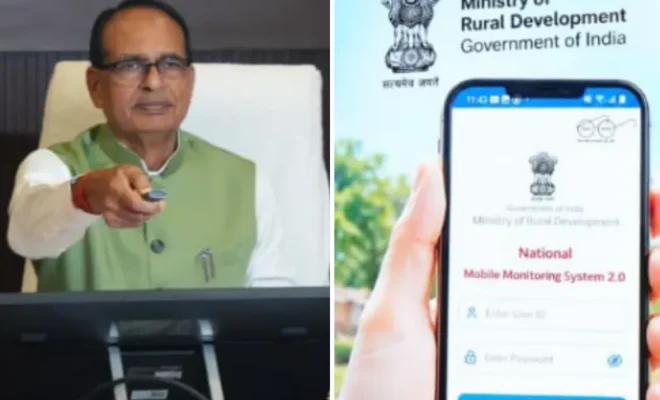
A new version of the NMMS mobile application has been introduced by the Union Ministry of Rural Development with a view to ensuring better attendance checks and safeguarding wage payments against fraudulent entries under the Viksit Bharat-Guarantee for Rozgar and Ajeevika Mission (Gramin), known as VB-G RAM G.
The updated version of the NMMS mobile application was unveiled by Union Minister for Rural Development Shivraj Singh Chouhan on October 23, 2026. The improved application has been developed with the assistance of technical experts from Indian Institute of Technology (IIT) Madras and other technical institutes.
AI-Based Verification to Prevent Fake Attendance
The updated version of NMMS App uses the same face recognition technology which was introduced back in March 2026. It was introduced to avoid any kind of impersonation and claiming of salaries in the names of people who did not show up at work.
This new update has made several security-related changes. This includes the inclusion of Device Security Checks, Google Play Integrity, Liveness Detection as well as Protection Against App Cloning and Tampering. This would ensure that attendance is done through a legitimate app and that the person in front of the camera is actually alive.
The ministry has improved upon its AI-based face recognition system to take into consideration geographical variations.
Offline Attendance to Address Network Problems
Inadequate connectivity may become a problem for workers and field officers working in distant villages. In order to overcome this hurdle, the updated version of the application enables the recording of attendance in offline mode in case of lack of connectivity at the workplace.
It is possible to upload the data once the connectivity becomes available in accordance with the set procedure after closing of the muster roll.
The government has laid stress on the fact that the technology should enhance accountability and not stop the actual workers from gaining access to their employment or wages because of inadequate connectivity.
Attendance Verification Does Not Automatically Trigger Wages
It should be noted that using the NMMS app for tracking the attendance will not necessarily determine the wages being paid. The payment procedure involves other verification measures to determine whether the work has been completed.
The AI-based system of photo de-duplication helps identify any suspicious photographs. Where there are some doubts regarding some photos, the wage lists and Fund Transfer Orders are withheld until verification is done.
The volume of work done is verified using electronic Measurement Books from the physical measurements done by technical engineers. Approved wages are directly transferred to bank accounts of the workers via the Direct Benefit Transfer System.
Rural Employment Scheme Records Significant Progress
As per the ministry, the VB-G RAM G Scheme has created close to 46 crore person-days employment, out of which about 40 crore have been created using face authentication.
The works have been carried out at 31.23 lakh worksites in over 2.41 lakh Gram Panchayats. Close to 3.65 crore workers from 2.89 crore rural households have been given employment under this scheme.
For 2026-27, the central government has released ₹95,692 crore for this scheme. The total allocation, including that of the state, is well above ₹1.51 lakh crore.
Strengthening Transparency in Rural Development
The improved NMMS application is an example of how the government intends to marry digital monitoring and protection of the rights of workers. Improved authentication will go a long way towards addressing the problem of fake attendance, while offline operations and exception handling may be able to address the difficulties in rural settings.
What the new application will depend on will be proper implementation and prompt verification and payment of salaries. The government seeks to ensure accountability while maintaining the rights of the worker.
Breaking Developments: Digital Rules, Clean Energy & Public Safety
Why Is Kerala’s Wellness Industry Seeking a Stronger Law?
Discover why a high-level committee has called for comprehensive legislation to safeguard Kerala’s wellness industry and address concerns surrounding spa operations.
What Will SIM-Binding Rules Mean for WhatsApp Users?
Explore the reported SIM-binding guidelines for WhatsApp and Telegram, including the proposed 2027 timeline and what users may need to know.
Why Did Maharashtra FDA Act Against a Blinkit Warehouse?
Learn about the reported licence suspension and FIR involving expired food inventory, and understand the implications for quick-commerce food safety.
Can Grassroots Rehabilitation Help Curb Punjab’s Drug Menace?
Explore why experts are advocating community-level rehabilitation, stronger support systems, and treatment-focused approaches alongside enforcement measures.
Why Is AWS Capacity Reportedly Sold Out Through 2027?
Discover what Amazon CEO Andy Jassy’s reported capacity update could mean for cloud computing demand, AI infrastructure, and businesses relying on AWS.