
UPI Transaction Fee Rules 2026: NPCI & Govt Clarify Charges on Merchant Payments Above ₹2,000
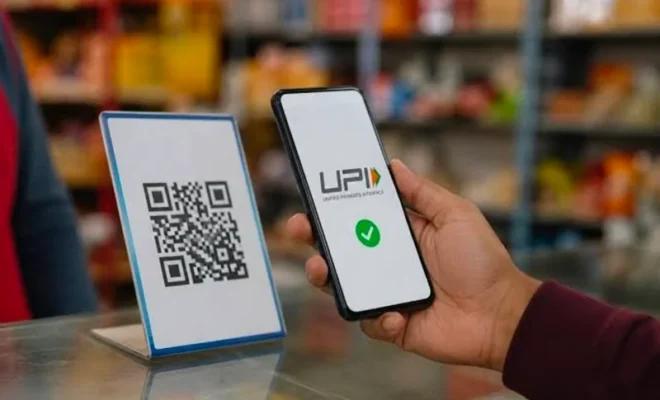
The rules around UPI charges are changing from October 15, 2026, but the biggest clarification from the government is that ordinary users will not be charged for sending or receiving money through UPI. The new framework introduces a Merchant Discount Rate, or MDR, on certain merchant payments above ₹2,000.
The distinction is important because MDR is a charge within the merchant-payment ecosystem. It is not a fee that the customer pays while completing a UPI transaction. The Ministry of Finance has also clarified that UPI will remain free for all person-to-person payments, regardless of the amount involved.
What Is Changing in UPI From October 15?
Under this new scheme, there would be 0.4% MDR for certain P2M UPI transactions exceeding ₹2,000. Transactions greater than ₹75,000 would be capped to a MDR of ₹300 per transaction.
This does not mean that the ₹2,000 cap means customers suddenly start paying 0.4% for scanning a QR code. It is within the payment ecosystem and is supposed to fall within the payment ecosystem of merchants.
Merchants have been explicitly told by the government not to make customers pay this MDR as an additional UPI charge. UPI apps cannot levy any platform fees on customers either.
Will You Pay a UPI Charge on Sending Money to Someone?
Number. The person-to-person transactions will continue to be absolutely free, regardless of the amount that is being sent.
For instance, when you transfer ₹5,000 to your friend, ₹50,000 to your relative, or perform any other P2P transfer, the revised MDR structure does not levy a transaction fee on you.
This is one of the most critical aspects of the clarification issued by the government since there has been a lot of confusion about the new norms owing to the perception that all UPI transactions are charged equally. They are not.
What Happens When You Pay a Merchant More Than ₹2,000?
The situation is different when the payment is made to a merchant.
For specified P2M transactions above ₹2,000, the new MDR is 0.4%. The charge is distributed among participants in the payment ecosystem, including banks and payment service providers.
For example, on a qualifying ₹10,000 merchant payment, 0.4% works out to ₹40. However, this does not mean the customer will automatically see ₹40 added to the bill. MDR is an ecosystem charge rather than a customer-facing UPI fee.
This distinction is crucial for consumers who may otherwise assume that scanning a merchant’s QR code for a large purchase will result in an additional deduction from their bank account.
Will Small Merchants Have to Pay MDR?
A zero-MDR structure specifically for small merchants has been made by the government.
Those merchants who are being paid via UPI QR code payments in amounts up to ₹1 lakh per month under the P2PM category will keep getting zero MDR on their transactions. This policy is aimed at safeguarding street vendors, local neighborhood shops, and other small merchants from extra charges for payments.
In other words, this regulation is not intended to treat a local neighborhood vendor making small value digital transactions in the same way as a big merchant with high UPI volume.
What About Payments Up to ₹2,000?
Merchant payments up to ₹2,000 will continue to remain free of MDR.
This covers a large portion of everyday UPI usage, including routine purchases at shops, restaurants and other participating merchants.
The government estimates that approximately 96% of P2M transactions will remain unaffected, either because they fall below the ₹2,000 threshold or because they are covered by the zero-MDR framework for small merchants.
Are All Payments Above ₹2,000 Charged at 0.4%?
No, the system uses various specific categories with different charges.
Transactions greater than ₹2,000 in critical and low-profit areas, such as rail transport, telecom, insurance, fuel and agriculture inputs, shall attract a fixed MDR of ₹5 per transaction instead of 0.4% normal.
There is a separate MDR of 0.02% for capital market transactions, which include payments by mutual funds, securities, stock brokers and dealers, limited to ₹300 per transaction.
It shows that users cannot take for granted that all UPI transactions over ₹2,000 are subject to the same charges.
Is MDR a Tax Collected by the Government?
Not at all. This is yet another clarification of significance.
The government has clarified that MDR is not a tax or charge collected by the government or NPCI. Instead, it is shared among the participants of the payments ecosystem for sustaining and growing UPI.
This clarification will help address the confusion regarding the nature of the tax imposed by the government on the digital payment system.
Why Is the New MDR Framework Being Introduced?
As per the government’s claims, the purpose of this framework is to ensure the sustainability of the UPI eco-system in the long run, while still protecting the consumers and small merchants.
There has been a huge increase in the use of UPI in India, and sustaining the infrastructure needed for massive and quick transactions will require banks, payment applications, technology firms, and other entities.
This new framework aims to provide a business model for some of the bigger transactions of merchants, without charging everyone using UPI. As per the earlier announcement by the government, any future MDR would be minimal.
What This Means for Everyday UPI Users
For the vast majority of people, the effect would be far more modest than many media headlines suggest.
When making a payment to someone else using UPI, there is no new fee charged. When making a payment to a merchant that is less than ₹2,000, there is no MDR. In case of a small merchant who comes under the category of zero-MDR, the payment falls out of MDR as well.
In other words, the new fee will apply to certain merchant payments as per the government’s estimation, which is just about 4% of merchant payments in total.
What About a ₹90,000 College Fee Payment?
It all depends on the merchant category and whether the transaction qualifies for the new system framework.
In the case of a qualified P2M transaction of over ₹2,000, the MDR rate is 0.4%, but the maximum limit still applies. In addition, the client is not supposed to pay this charge separately.
This depends entirely on how the recipient falls in the scheme of payments, so the users should not assume that all ₹90,000 UPI transactions will always have the same MDR rate.
Will UPI Stop Being Free?
In case of consumers, no. It is explicitly clear from the statements of the government that in case ofUPI, there would be no transaction fees charged to consumers as part of the newly introduced MDR structure. Similarly, even payments to merchants below ₹2,000 are exempt from MDR, and many merchants continue to operate in a zero-MDR structure.
Thus, the modification of MDR structure should not be seen as an introduction of a charge for UPI transaction fees for citizens.
Explore What’s Changing in UPI Payments
Could UPI Charges Affect Your Payments?
Check out what new transaction fees could mean for digital payments.
What Are UPI’s New Daily Limits?
Find the latest UPI transaction limits and security updates.
Will New MDR Rules Impact Retailers?
Uncover how revised merchant fees could affect large retailers.
Can UPI Sustain India’s Digital Future?
Dive into the challenges shaping UPI’s next decade.
Will Apple Pay Arrive In India?
Explore the October 2026 rollout, contactless payments, and UPI support.
Conclusion
UPI transaction fee rules 2026 have made the headlines on account of ₹2,000 ceiling, but there is a lot more to the system.
Since October 15, transactions above ₹2,000 by specified merchants will be subject to MDR, with 0.4% being the norm and ₹300 being the ceiling for ₹75,000 and above transactions. However, the P2P transactions will be exempt from fees, ₹2,000 or less merchant transactions will be exempt from fees, and small eligible merchants will enjoy zero-MDR exemptions.
The bottom line for the customers is that the new MDR is not the new UPI fee imposed by banks.