Time Gets Makeover! Leap Seconds to End From May 2027
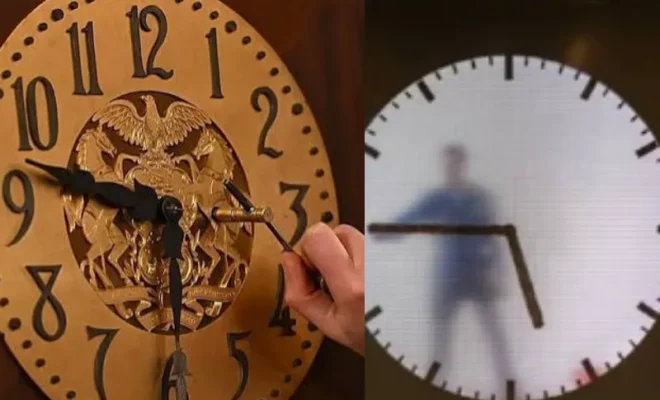
The world’s leap-second system is set for a major change. On 15 October, delegates at the 28th General Conference on Weights and Measures (CGPM) in Versailles approved “continuous Coordinated Universal Time (UTC)”, due to take effect on 20 May 2027.
The leap second change means clocks will no longer receive occasional one-second adjustments to keep official time close to Earth’s changing rotation. The aim is to make time more reliable for digital systems.
What is a leap second?
Most clocks follow UTC, the time standard based on highly accurate atomic clocks. But Earth does not spin at a perfectly steady speed. Its rotation changes, so atomic time can slowly move out of step with time measured by the Sun’s position in the sky.
A leap second is an extra second added to UTC when the gap gets close to a set limit. Since the system began in 1972, 27 leap seconds have been added. The most recent was at the end of 31 December 2016.
Why are timekeepers removing it?
One second may seem insignificant, but there are computer systems that require time stamps to match exactly. Clocks are used in networks, satellite services, financial systems, power grids, and telecommunications, and are tightly synchronized. There are also inconsistencies in systems due to various methods of dealing with leap seconds.
But now, this risk has grown more imminent due to the recent increase in the rotation of the Earth. The scientists said that one day a “negative leap second” may be required. That would mean deducting one, not adding one. It has never been attempted, and experts say that there is a 30 per cent chance that one will be needed by 2035 according to the old rules.
What changes in 2027?
The new plan will have UTC become continuous from 20 May 2027, thereby eliminating further UTC jumps. The allowed deviation between UTC and the Earth’s rotation time, called UT1, will slowly increase from the current 1 second to up to 3,600 seconds (1 hour). The new limit will be used to ensure the continuity of UTC over the next few centuries.
The change should be imperceptible to most of the audience. No phones, computers or the public timepiece will auto-correct for one hour. The regular time zones will continue to be observed. The difference between UTC and UT1 can still be derived from specialized services for scientists and systems that require highly accurate knowledge of Earth’s rotation.
This does not shorten the time that the Sun spends in the system. It provides the globe with an additional window of opportunity for a bigger correction to be required. There is no need for the public to stop what they are doing or for technology; the goal is to keep the world’s shared clock more stable.
Pop Culture Buzz, Tech Launches & Career Updates
What’s New in LEGO Super Mario for 2027?
Discover the newly announced LEGO Super Mario minifigures, including the characters and features fans can look forward to in 2027.
Is Heeseung Really Leaving ENHYPEN?
Find out what sparked the viral rumors about Heeseung’s future with ENHYPEN and what is actually known so far.
Why Is Gen Z Choosing Solo Dates?
Explore why spending time alone is becoming a popular form of self-care among Gen Z and how solo dates fit into modern lifestyles.
What Do the Xiaomi 17 and 17 Ultra Offer?
Check out the India launch details, prices, specifications, and standout features of Xiaomi’s latest flagship smartphones.
How Can You Apply for RBI Assistant 2026?
Learn about the RBI Assistant recruitment process, including eligibility criteria, vacancies, and the steps to apply.