
Aadhaar-Face Authentication Expansion- How Digital ID Verification Is Replacing OTPs
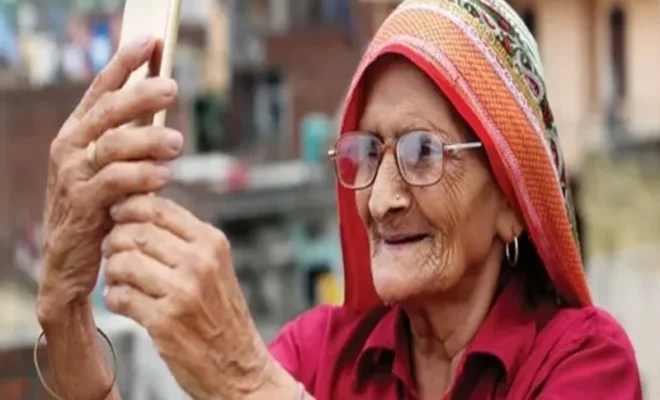
The digital identity framework of India is gradually evolving from the use of OTP-based methods, and Aadhaar facial authentication is gaining popularity as yet another means for confirming the user’s identity.
Facial authentication allows checking one’s face image against the identity details in the Aadhaar identity card instead of relying completely on one’s mobile number and a one-time password.
This transition is a result of the shift towards more convenient and faster ways of identity verification. It may help in eliminating problems connected with OTP and using it in certain types of identity verifications within supported applications.
It should be noted that facial authentication does not replace OTP in all the services. Different methods of Aadhaar authentication may be used depending on the service’s preferences.
What Is Aadhaar Face Authentication?
Aadhaar face authentication is a way by which a person’s identity is verified through their face in order to prove that the person using it is the Aadhaar holder.
This normally involves the use of an application capable of capturing a live image of the person. The image is authenticated through the Aadhaar ecosystem.
Whereas in the case of OTP, a user has to type the OTP received on their registered mobile phone number manually, Aadhaar face authentication does not involve any typing of code at all.
This is especially helpful in situations where users fail to receive OTP because of technical issues.
How Does Aadhaar Face Authentication Work?
The procedure is intended to be relatively straightforward on the part of the user.
A supported application requests the user to go through the face authentication procedure. The face is captured by the camera and verified by the system in terms of the biometric data submitted against the Aadhaar identity document.
If the authentication is successful, the service will be able to verify that the individual is indeed the Aadhaar holder.
The key element here is that the face authentication procedure is not merely checking whether the photo corresponds with the document. It is a biometric authentication procedure created for the purpose of verifying one’s identity via Aadhaar.
Why Is India Moving Beyond OTP Verification?
OTP has been one of the most common methods of digital authentication in India. However, it has limitations in real-world use.
One may not get messages instantly due to bad connectivity. In some cases, one might have switched his/her phone number or may have trouble accessing the SIM card registered for the service.
Face authentication provides a way out that is not dependent on having to receive and enter a one-time password manually.
For digital services with many users, face authentication could prove to be a faster and easier method.
Does Face Authentication Mean OTPs Are Being Removed?
No. It is a very important point of difference.
The adoption of the Aadhaar face authentication facility is not indicative of OTP verification being discontinued universally.
This is because there are multiple means through which one can authenticate himself in the Aadhaar system, and the means adopted will vary from one service to another.
OTP authentication still continues to be a very vital authentication process.
Where Can Face Authentication Be Useful?
Face authentication using Aadhaar can be very useful for those cases when there is a need for digital authentication without presenting physical documents.
It can be used for services where biometric authentication can be considered appropriate, such as some governmental and digital public services.
Available services may differ from one organization to another as more companies incorporate face authentication based on Aadhaar into their systems.
Thus, each user should verify whether the particular service or application allows the use of face authentication or not.
Why This Might Be More Convenient for Users
The main advantage will be convenience.
Users will not have to wait for the SMS with the code of six digits or something else, but just use their smartphone cameras for the process of identity verification.
This process will be especially convenient for people who often use digital governmental services and face problems with delivery of the OTP.
What About Privacy?
Privacy is always a key issue in situations involving biometric data.
Unlike passwords, faces can not be just changed once the biometric information is compromised. Hence, privacy is an issue worth considering.
Thus, it is better to use only official applications related to Aadhaar and service providers who are responsible for the implementation of face authentication procedure.
Users should not download any unknown applications that offer verification services or provide Aadhaar verification data to unknown sources.
Convenience and safety of biometric verification are the two sides of the same coin and should not be separated.
Is Aadhaar Face Authentication Safe?
There is no digital verification tool which is completely safe from any risk of breach.
However, biometric verification is created with the goal to make the process of identity verification more complicated for any person other than the legitimate owner of the device and credentials.
Safety of the verification procedure will depend on the security of the app, the infrastructure of authentication, the device and personal safety measures of the user himself/herself.
It is better to protect one’s smartphone from any possible threats and use only known applications.
What Users Should Do Before Using It
Before conducting Aadhaar face authentication, the user must ensure that he or she is using a legitimate application associated with the service they intend to access.
It will help if the smartphone has a properly working front-facing camera, and the user might be asked to grant certain permissions.
Appropriate lighting will assist the camera in taking a good-quality image of the user.
Above all, a user should never provide OTP, password, PIN, or any other form of confidential authentication data with the individual stating that they are working for the bank, government, or customer-care representative.
Why This Is a Major Digital Identity Transformation
This shift towards face authentication is part of the larger transformation in the digital ecosystem in India.
More and more digital services require a fast and convenient method of identity verification, which is what the OTPs provided. However, biometric authentication is another way to verify one’s identity.
Therefore, Aadhaar face authentication is not just about replacing the password with the camera. It is a part of the digital transformation towards the use of biometric and device-based digital identification system.
For many millions of users, it would mean nothing more than verifying their identity via their face instead of a notification from their phone.
Conclusion
The expansion of Aadhaar face authentication could make digital identity verification considerably more convenient by reducing reliance on OTPs in supported services.
However, it is not a complete replacement for OTP authentication. Instead, face verification is becoming another authentication option within India’s growing digital identity ecosystem.
As adoption expands, users should focus on one simple rule: use only trusted applications and understand exactly what service they are authorising before completing any Aadhaar verification.
Your face could increasingly become the password for India’s digital services but convenience should never come at the cost of biometric privacy or security.
Related Reads — Stay Ahead with These Essential Digital Updates
Can UPI Stay Sustainable After Growth?
Check out what India’s digital payments ecosystem needs for a sustainable future.
What Could UPI Fees Mean?
Find out how transaction charges could affect India’s digital payment users.
How Can India Stop Digital Arrests?
Uncover key cybercrime awareness measures that can help prevent digital arrest scams.
Why Is RBI Targeting Mule Accounts?
Track down how nationwide RBI guidelines could strengthen protection against cyber fraud.
How Can Students Link APAAR Records?
Explore how DigiLocker helps students connect and manage their academic records online.