
The Ghosts of 2016: Why Calls for ‘Demonetisation 2.0’ Ignore India’s Digital Cash Reality
The 2016 demonetization of currency in India is one of the most significant economic decisions made in the country. A decade after that, the debates on a potential “Demonetization 2.0” raise many issues related to black money, counterfeit money, circulation of money, and the efficacy of digital payment systems. But the Indian economy today has moved a long way from what it was in November 2016. The introduction of the Unified Payments Interface (UPI) and mobile banking facilities has ensured that there is a parallel economy of both cash and digital transactions.
Thus, any discussion on demonetization needs to take into account not only its benefits but also its economic costs.
What Did Demonetisation Achieve in 2016?
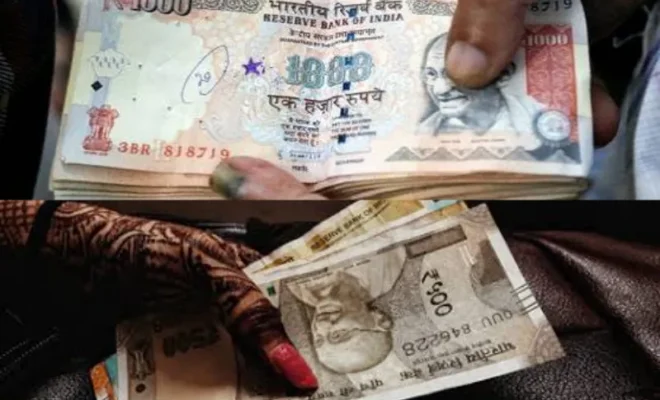
In November 2016, the government of India decided to withdraw the legal tender status of ₹500 and ₹1,000 denominations. These currency notes comprised around 86.9% of the total currency denomination in India then.
The declared purposes of the demonetization policy were to curb black money, counterfeit currency, corruption and terror financing while promoting electronic payment systems and formality in economic activities.
The RBI annual report of 2017 mentioned that around 99.3% of the designated currency notes came back to the banking sector. The statistics brought up some doubts as to how much illegal wealth was eliminated by this act of currency destruction.
This measure also resulted in short term problems. Small businesses, agriculture, daily wage labourers and other such cash-dependent people had issues getting their money from banks.
This demonetization measure promoted electronic payments but has been controversial in terms of economic impacts.
India’s Digital Payment Revolution Has Changed the Landscape
The most compelling reason for not taking the same route as in 2016 is the changed infrastructure of payment mechanisms in India.
UPI has brought about revolutionary changes in the way payments happen by providing the means for instant digital payments via smartphones. It has become common for street vendors, small stores, service providers, and corporations to receive digital payments.
As per NPCI, UPI handled around 25.47 billion transactions worth ₹31.53 lakh crore in October 2026.
This highlights the extent of digital payment usage in the country.
Digital payments do provide transaction data for accounting purposes.
But the popularity of digital payments does not equate to the demise of cash.
Why Cash Still Matters to India’s Economy
The economy of India comprises many individuals who are without regular access to smartphones, internet connectivity, and banking facilities.
The small-time agriculture markets, village traders, construction laborers and informal sector units continue to rely on physical cash for conducting their transactions.
As pointed out by the RBI research on cash and digital transactions, it is critical to note that there is growth in digital transactions while the requirement for cash continues unabated. Physical cash continues to serve as a valuable asset and an alternative mode of payment.
This combination is important as any sudden policy move to reduce cash availability would affect individuals whose options are few.
Would Demonetisation 2.0 Actually Eliminate Black Money?
Black money is not only limited to currency. There are other ways to hold black money such as undeclared properties, gold, benami properties, foreign bank accounts, and complicated financial mechanisms.
Withdrawal of banknotes will not help in solving these problems.
A better strategy would be improved tax administration, proper documentation of property dealings, disclosure of beneficial ownership, financial intelligence, and law enforcement to curb money laundering.
Digitalization of transactions can assist in this process, but it won’t help in establishing that all sources of wealth are clean and transparent.
Policy makers need to understand the difference between financial transparency and disruption just for the sake of shifting to digital transactions.
The Risks of Disrupting an Economy That Has Adapted
Any further withdrawal of money would lead to uncertainty amongst the household, firms and the financial sector. Working capital, payments and consumption can be affected by any such action, especially small businesses.
Even the digital system is not free from danger like cyber frauds, failures, privacy issues and even technical failures. For the economy to be resilient, there must be several alternatives available for making payments.
The ultimate aim should be to make the digital transactions safe, inexpensive and accessible with sufficient liquidity in cash.
A Better Strategy Than Repeating 2016
The following stage of financial reforms in India should be about building up the already existing infrastructure.
Enhancing digital literacy, rural banking, cybersecurity, and the adoption of digital payments by small business entities would bring about long-term advantages.
The government should take actions to investigate hidden assets and to improve tax compliance and financial regulation.
These steps would deal with the root causes of financial opacity without burdening common people with new expenses.
India’s Financial Future Needs Stability, Not Shock
The experiences of 2016 must shape policy choices ahead rather than serve as a model for a second round of large-scale currency disruption.
Digital payments have progressed in India but cash will continue to play an important role in its economy. Both can coexist even as financial transparency increases.
“De-Monetisation 2.0” must not be seen as a way out of problems requiring systemic changes in institutions, implementation and financial inclusion. The future prosperity of India hinges on creating trust in its payment systems and protecting its vulnerable population.
The true test of reform is how much transparency and productivity it adds without imposing unnecessary costs on those who sustain the economy.
Infrastructure, Government Jobs, New Rules & Public Services
What Makes Alluri Sitarama Raju International Airport a Major Project for Andhra Pradesh?
Explore the proposed greenfield airport, discover its key infrastructure features, and understand how it could improve regional connectivity and economic development.
How Can Candidates Apply for BPSC TRE 4 Recruitment 2026?
Discover the expected vacancy details, check eligibility requirements, and explore the selection process for Bihar’s teacher recruitment drive.
What Changes From August 1, 2026, Could Affect Everyday Financial Services?
Explore the latest updates to ITR filing, CKYC 2.0, Tatkal bookings, and banking rules, and understand how these changes could affect individuals.
How Can You Complete Digital Census 2027 Self-Enumeration Online?
Discover the official self-enumeration process, explore the required information, and follow the steps to submit household details through the census portal.
What Is the New Odisha SIR Electoral Roll Schedule?
Understand why the submission timeline has been extended, check the revised deadlines, and discover when the final electoral roll is expected to be published.