
Indo-Mediterranean Corridor & Vision 2047- India’s Strategic Maritime Ambitions Explained
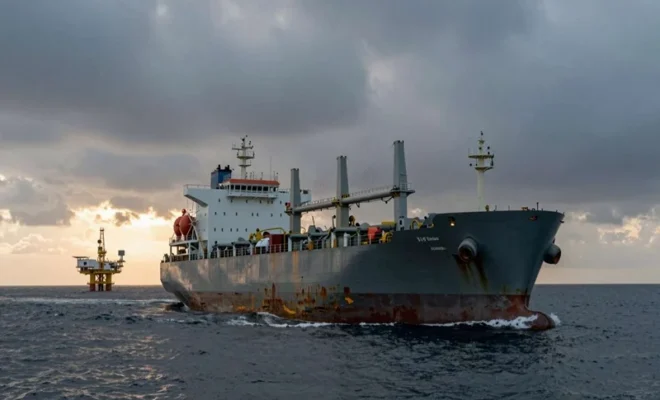
India’s maritime strategies have increasingly gone beyond their focus on the Indian Ocean, with the Indo-Mediterranean Corridor being a notable idea as the country looks to enhance its role as a key maritime, logistics, and economic power through improved connections between India, the Middle East, Europe and Mediterranean region as a whole.
The concept is part of a much bigger picture under the Maritime India Vision 2030 and Amrit Kaal Vision 2047 aimed at increasing India’s port capacity, improving logistics operations, enhancing the maritime infrastructure and increasing the country’s contributions to international business.
What is the Indo-Mediterranean Corridor?
The Indo-Mediterranean Corridor can generally be described as a strategic connection network from India to markets located in the Middle East and Mediterranean through various maritime, port, rail and logistics infrastructure.
As opposed to a physical route, the concept is much broader and encompasses a wide connectivity environment. Ports in India can act as entry points for the movement of cargo towards the Arab Peninsula and further to Mediterranean markets, among others.
The importance of this corridor is that it can significantly help in reducing the chain of supplies and provide better opportunities for Indian firms to access European and Middle Eastern markets.
How Vision 2047 Fits Into the Maritime Strategy
Longer-term policy frameworks include the Vision 2030 for Maritime India and the Amrit Kaal Vision 2047.
India aims at creating a maritime eco-system through ports, shipping, shipbuilding, coastal shipping, inland waterways, logistics clusters and IT systems.
The goal by 2047 would be to transform India into a globally competitive maritime economy with greater capacity to move larger volumes of trade and logistics at lower cost and better efficiencies of cargo movement.
Maritime infrastructure thus emerges as an important element of India’s economic policy.
Why does the Mediterranean matter to India?
The Mediterranean offers access to some of the world’s largest business and logistics markets. Improved connectivity to Mediterranean countries will allow Indian exporters to reach their destinations in Europe via shorter routes.
Mediterranean Sea serves as a key corridor for connecting a number of important trade routes that connect Europe, North Africa and Western Asia. Establishing of better maritime and logistics ties with Mediterranean countries will open up additional opportunities for trade and supply chain diversification for India.
It becomes especially relevant as companies all over the world seek alternatives to concentrated supply chains and ways to insulate themselves from potential geopolitical disruptions.
India’s Ports Are at the Centre of the Plan
The success of the strategy of Indo-Mediterranean lies in the fact that the key will be India’s ports.
It should be noted that the ports located on the coast of India have the geographic advantage to connect via shipping in the Arabian Sea in the direction of Gulf, Red Sea and Mediterranean.
Modernisation of these ports, increasing their cargo handling capacity and better connectivity of ports and industrial centers may increase the importance of India as a regional logistics centre.
Development through ports may result in job creation and industrial activities in the vicinity of the major maritime clusters.
Middle East as a Strategic Bridge
In particular, the Gulf is an extremely important region due to its position between India and Europe.
There are many investments being done by the states of the Gulf region (the UAE and Saudi Arabia), and their geographic position is quite suitable for the development of cooperation and India-Middle East-Europe connectivity.
In other words, the increased cooperation with Gulf economies in terms of maritime activities is quite useful for the country not only from a commercial perspective but also strategically speaking.
The India-Middle East-Europe Economic Opportunity
The Indo-Mediterranean approach is also related to the wider concept underpinning the India-Middle East-Europe Economic Corridor or IMEC.
The India-Middle East-Europe Economic Corridor Initiative (IMEC) was launched by India, USA, UAE, Saudi Arabia, EU, France, Germany, and Italy in 2023. It envisions building a connectivity corridor through maritime and land infrastructure such as railways that would link India with the Arabian Peninsula and Europe.
Despite the impact of geopolitical events on the progress of the initiative, the core idea behind IMEC holds great significance for India’s future connectivity projects.
It involves the creation of new trading corridors between the economic regions and improving logistics and supply chain efficiencies.
Why Geopolitics Makes Maritime Connectivity Important
The current approach to maritime connectivity goes beyond trade.
Maritime corridors and supply lines have become inseparable from national security and economic resilience.
In the case of India, secure access to the Indian Ocean and its neighboring regions is vital as a significant part of external trade and energy supplies are transported via sea.
That is why maritime connectivity and cooperation in the Gulf, Arabian Sea, and the Mediterranean hold special significance for India.
Vision 2047 and India as a Maritime Power
The larger Vision 2047 objective is to transform India from a major maritime participant into a leading global maritime power.
Achieving that goal will require more than physical infrastructure. India will need competitive shipping services, modern ports, efficient customs systems, advanced maritime technology, domestic shipbuilding capacity and a skilled workforce.
Digitalisation will also become increasingly important as ports adopt automated cargo handling, data-driven logistics and integrated tracking systems.
The maritime economy can consequently become an important pillar of India’s broader industrial and economic transformation.
What Could the Corridor Mean for Businesses?
For Indian businesses, stronger Indo-Mediterranean connectivity could eventually translate into faster movement of goods, greater access to international markets and more diversified supply chains.
Manufacturing sectors, exporters, logistics companies and businesses operating in industrial corridors could particularly benefit if infrastructure investments reduce transportation time and costs.
The opportunity also extends to sectors such as warehousing, shipping, shipbuilding, port services and maritime technology.
Challenges Ahead
The Indo-Mediterranean vision faces significant challenges. Large infrastructure projects require substantial investment, coordination between multiple countries and long-term political commitment.
Geopolitical instability is another major factor. Disruptions around the Red Sea and other critical maritime routes demonstrate how quickly regional conflicts can affect international shipping.
For the corridor to reach its full potential, participating countries will need reliable infrastructure, secure trade routes and effective coordination across borders.
Conclusion
The Indo-Mediterranean Corridor represents a broader shift in how India views maritime connectivity. It is not simply about moving containers from one port to another; it is about building an integrated network connecting Indian production and consumption centres with some of the world’s most important economic regions.
Under the larger Vision 2047 framework, India is seeking to strengthen ports, logistics, shipping and maritime infrastructure while expanding its role in global supply chains.
If these initiatives progress as envisioned, India could emerge as a much more influential maritime and logistics power by 2047.
India’s maritime ambition is moving from being connected to global trade routes to becoming a strategic hub within them. The Indo-Mediterranean Corridor and Vision 2047 could play an important role in making that transformation possible.
Stay informed on the latest shifts shaping India’s maritime security, global trade, and energy strategy.
Why Does India Need Port Security?
Check out why India’s new port security bureau could reshape maritime protection.
Why Is Hormuz Tension Rising Now?
Find out why US-Iran tensions are putting the vital Strait of Hormuz under pressure.
How Could Hormuz Disrupt India’s Oil?
Uncover how the Gulf standoff could affect crude supplies and India’s import costs.
Why Did US Sanction Indian Firms?
Explore how new US sanctions are increasing maritime compliance pressures on Indian companies.
How Is India Rethinking Central Asia?
Dive into how the Middle Corridor is influencing India’s trade and strategic priorities.