
US-Iran Gulf Conflict Intensifies- How the Strait of Hormuz Standoff Impacts Global Crude Oil & India’s Import Costs
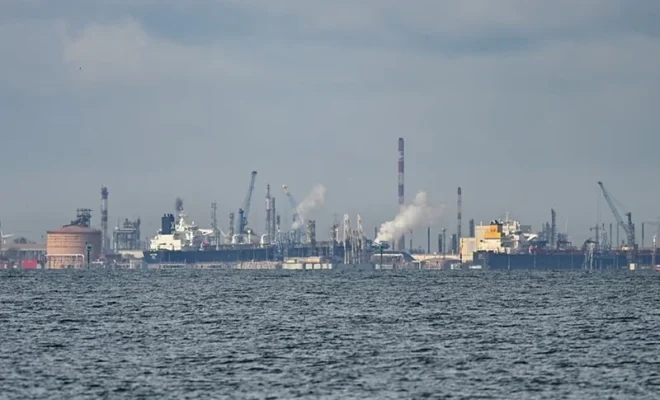
Once again, the tension between the US and Iran has escalated, bringing the Strait of Hormuz into focus once again in the global energy crisis. On August 31, the price of crude shot up by more than $2 per barrel following the US attack on two launchers on Iran’s Larak Island in the Strait, which followed an attack by Iran on US military facilities in Jordan.
This is a situation that has repercussions way beyond the Gulf region. The Strait of Hormuz is one of the most critical chokepoints in the global energy trade. Any disruption can impact the availability of crude oil, the cost of transportation, insurance and ultimately the price paid for energy.
For India, it is a matter of concern because the country has a very high dependence on imported crude oil. This recent energy crisis has impacted the cost of energy imports to India and is forcing the nation to find new sources and routes for energy delivery.
Why the Strait of Hormuz Is So Important
The Strait of Hormuz is a strategic passage connecting the Persian Gulf to the Gulf of Oman and Arabian Sea.
Prior to the current conflict, about 20 percent of global crude and refined petroleum product movements occurred through the Strait of Hormuz. Thus, the disruption brought about by the current conflict has had consequences that went well beyond the US and Iran. Reuters reports that crude oil deliveries from Asia in August were about 14 percent lower than the average during the three months prior to the outbreak of the conflict.
But it is not simply delays in delivery that make for problems here. Any long-term conflict may require ships to take other routes and lead to higher insurance and freight charges, which ultimately feed into the cost of crude.
What Is Happening to Global Crude Prices?
There has been an immediate market response in terms of increased oil prices. On 31st August, Brent crude rose back above $90 per barrel following new strikes in the US that have dampened the hopes of any diplomatic resolution.
So far the shock has been quite big. According to the recent analysis by Centre for Research on Energy and Clean Air, Brent has been averaging around $93 per barrel between March and August when compared to the much lower levels expected prior to the conflict. Brent hit a brief peak of $105 per barrel in July.
As long as the crisis remains ongoing, there is a bigger possibility of traders pricing in a supply risk premium in their valuations. This may happen even if the crude continues to get delivered in some markets because of the inherent uncertainty in pricing.
Why India is More Vulnerable
India is among the biggest crude oil importers in the world. Therefore, the international oil prices have an influence on the economy.
This means that when crude oil becomes more expensive, then India’s refineries have to spend more on the same volume of oil. The effect of this does not end at the refineries because this increase can affect transportation, aviation, manufacturing, logistics and other various industries.
This can also affect India’s trade deficit and the currency markets since the import of crude requires large amounts of foreign exchange.
MUFG in an earlier analysis had pointed out that a prolonged disruption at the Hormuz straits would have a great impact on the rupee, especially when the oil prices remain at around $100 per barrel or go even higher.
What Has Been the Cost of the Crisis to India So Far?
The impact is not theoretical anymore. According to the latest analysis done by the Centre for Research on Energy and Clean Air, the estimated cost of additional fossil fuel import expenses for India between March and August 2026 owing to the energy price shock caused by the Hormuz crisis stood at $22 billion. This includes an estimated cost of $20.5 billion only for crude oil.
According to the analysis, India’s net additional fossil fuel costs are estimated at $14.4 billion, which is roughly 0.38% of the GDP.
India Is Trying to Diversify Its Crude Sources
The crisis has made Indian refiners to adapt more flexibility towards crude sourcing.
In particular, Russian crude has assumed a vital significance. According to data presented in Times of India, Russian crude imports by Indian refiners were likely to hit their record levels in June, as they tried to make up for crude shortage coming from Middle East.
In addition to Russian crude, Indian refineries have also turned their eyes towards supplies from the Atlantic Basin, Venezuela and elsewhere to offset the shortfall from the Gulf region.
This strategy offers some degree of protection, but it cannot completely immunize from consequences of a serious disruption in the vicinity of Hormuz.
And the explanation is very simple – changing the source of crude does not always imply changing its price. Longer distance of transport, different qualities of crude, increased freight and insurance charges may result in more expensive import of the product.
Would Petrol and Diesel Prices Immediately Increase?
Not necessarily.
Crude prices on the international market constitute just one factor determining the ultimate price of petrol and diesel in the domestic market. Taxes, refining margins, changes in exchange rate, marketing expenses and government policy affect domestic fuel pricing as well.
This means that an increase in international crude price does not automatically entail the same price growth at Indian fuel stations.
However, if the situation will be prolonged, it will become harder and harder for the oil marketing companies and the national economy to bear the burden.
The effect may appear indirectly through increasing freight expenses and influencing the prices of food products and manufactured goods.
The Rupee Is Another Pressure Point
A lengthy period of disruption to the global oil supply chain may lead to a second challenge facing India: the rupee.
India needs to pay a large part of its oil import bill in dollars. Higher costs in this regard might lead to increased demand for the greenback, and thus exert pressure on the rupee.
A weaker rupee would make any imported oil more expensive in local currency terms.
And that is why the Hormuz crisis is at once an energy, inflation, trade, and currency issue for India.
What Happens If the Standoff Escalates Further?
The major concern for global markets is not a temporary rise in the price of oil. The risk lies in a prolonged supply disruption.
Reuters reports that August’s Asia imports of crude oil were still considerably lower compared to the pre-conflict levels despite a recovery of some Middle Eastern cargoes from their April lows.
If the shipping through Hormuz continues to be restricted, supplies may become even tighter. Producers may try to redirect their shipments via alternative pipelines and terminals; consumers will use up the inventory and source their crude from elsewhere.
Yet alternative routes have limited capacity, which makes it difficult to substitute all the usual Hormuz traffic.
Why Will Asia Be Hard Hit by the Crisis?
The particular importance of the situation for Asia is determined by the fact that most of the largest purchasers of Gulf oil reside in Asia.
India, China, Japan, and South Korea are all quite vulnerable in relation to energy shipments through Gulf waters.
And that means competition for alternative sources will be intensified if Gulf supplies become interrupted.
While India may compensate partly for this problem with non-Gulf oil, such as Russian one, the same applies to other Asian countries.
What It Means for Indian Consumers
For ordinary Indians, the effects may not appear immediately as a dramatic jump at the fuel pump.
Instead, the impact could emerge gradually through transportation costs, airline fares, logistics expenses, manufacturing costs and prices of goods that depend heavily on petroleum-based inputs.
If crude prices remain elevated for months, inflationary pressure could become more significant.
India’s ability to manage the situation will depend on the duration of the disruption, availability of alternative crude supplies, domestic fuel-price policy, currency stability and the eventual direction of the US-Iran conflict.
Conclusion
The Strait of Hormuz standoff has turned a geopolitical confrontation into a global economic problem.
The latest escalation on August 31 has once again pushed crude prices higher and raised questions about whether the energy disruption will remain temporary or become a prolonged supply shock.
For India, the challenge is particularly serious. The country has already faced billions of dollars in additional fossil-fuel import costs, while refiners have been forced to diversify crude supplies and adjust procurement strategies.
The biggest question now is not simply how high oil prices can go, but how long the disruption around Hormuz lasts.
The Strait of Hormuz is more than a narrow shipping route. For India, it is a critical link between global energy markets and the domestic economy. If the US-Iran standoff continues to disrupt that link, the consequences could extend from crude prices and India’s import bill to the rupee, inflation and household costs.
Explore More on Maritime Security & Energy
What Is Operation Sankalp’s Key Role?
Check out how the Indian Navy is strengthening maritime security in the Arabian Sea.
How Is India Protecting Energy Imports?
Uncover how India is safeguarding vital energy supplies amid Red Sea shipping threats.
Why Are Strait Crude Prices Rising?
Find out how the Hormuz standoff is affecting crude oil and global energy markets.
What Happened in Strait Attack?
Reveal the impact of Indian casualties and the attack on global shipping routes.
Why Is US Naval Presence Expanding?
Track down how US naval plans and Iran’s claims are escalating Hormuz tensions.