
Ministry of Health Issues Advisory Against Adulterated Sweets Ahead of Festive Season
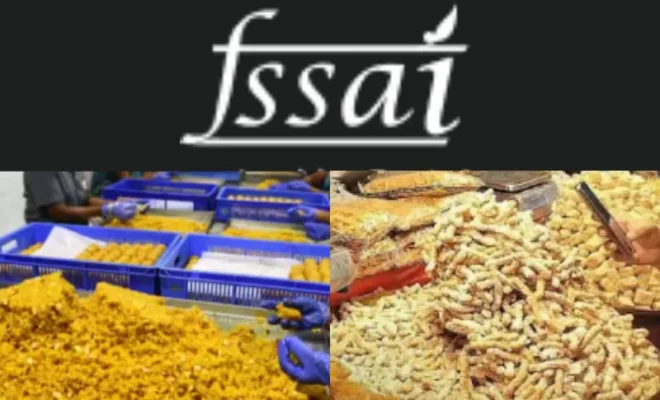
In view of the approaching festive season, the Food Safety and Standards Authority of India (FSSAI) under the Ministry of Health and Family Welfare has advised the states and Union Territories to conduct more frequent inspection drives regarding food safety. This advisory was issued by the FSSAI on September 29, 2026 and is meant to increase surveillance over foods such as sweets, dairy products, oils and others so that there is no case of adulteration or food safety violation in the market.
The advisory has been issued in the wake of increasing demand for traditional sweets and food products in Navratri and Diwali festivals.
States Asked to Increase Inspections and Sampling
As per the advice from FSSAI for the state food commissioners and regional directors, the inspectors need to go for inspections and collection of food samples in the markets and from manufacturing units and also from those areas which have been pinpointed to be very sensitive in nature.
Surveillance would mainly cover such food items that are in more demand during the festivals and would include:
- Sweet preparations and desserts
- Milk and dairy products like khoa, paneer, and ghee
- Edible oils and beverages
- Namkeens, snacks, papad
- Region-specific festival foods
FSSAI has also requested the authority to pinpoint adulteration hotspots in respective regions.
Food Safety on Wheels for On-the-Spot Testing
An important aspect of the advisory is that of using FSW (Food Safety on Wheels) mobile testing kits wherever available.
The kits will be deployed in market places or places determined through intelligence inputs. The kits will help in conducting food testing at the spot and also improve the public’s understanding about food quality.
FSSAI has also asked that the inspection results, sampling, and testing results be noted by the officials in FoSCoS and FoSCoRIS of FSSAI.
Why Festive Food Adulteration Is a Concern
Seasonal rise in demand can lead to chances of unscrupulous vendors to employ low-grade ingredients and also substitute milk and add colors illegally.
Adulteration of foodstuffs can prove to be dangerous for one’s health in the form of digestion troubles and poisoning based on what the food contains.
FSSAI carries out enforcement activities during festivals to ensure compliance with the Food Safety and Standards Act, 2006.
What Consumers Should Keep in Mind
Buy your sweets from authorized and trusted sources, inspect the packages and expiration dates, and avoid products that have an abnormal appearance, odor, or texture.
This advice makes it incumbent upon the authorities to step up their monitoring while cautioning consumers to be vigilant. This is aimed at ensuring that the festive occasions are not marred by unsafe food products.
Policy Shifts, Global Alliances & Tech Developments
Why Must SAP Restore Nayara Energy Services?
Discover why the Delhi High Court ruled that EU sanctions do not automatically prevent SAP from fulfilling its contract with Nayara Energy.
What Do New Veg and Non-Veg Markings Mean?
Find out how the proposed government rule could change labelling requirements for soaps, shampoos, toothpaste, and other personal care products.
What Is the ‘Partners for Multilateralism’ Alliance?
Explore UNGA 2026 developments and learn why S. Jaishankar has co-sponsored this initiative alongside global leaders.
How Can Electoral Roll Revision Affect Voters?
Understand how voter verification works, why electoral roll revisions matter, and what they could mean for democratic participation.
What’s New in Qualcomm’s Snapdragon Flagship Chips?
Discover the next-generation Snapdragon processors and explore how built-in on-device AI features could shape future smartphones.