
PM Modi Targets 500 GW Additional Non-Fossil Energy Capacity by 2035: Key Highlights from Energy Summit
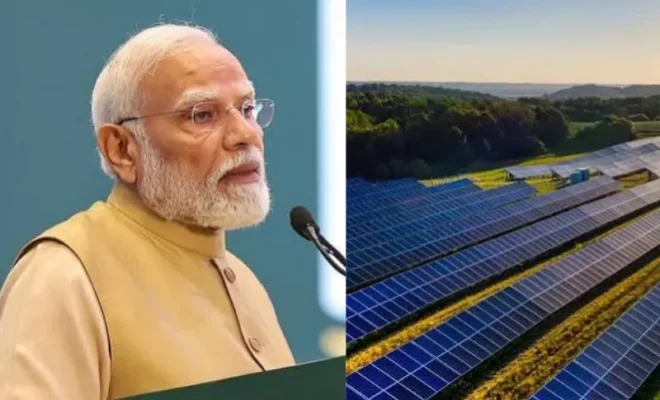
India’s Prime Minister, Narendra Modi, has set out the agenda for the next stage of expansion of the country’s clean energy. He set a target to increase non-fossil fuel-based power capacity by 500 GW over a period of 10 to 11 years. He made this declaration while inaugurating the Bharat Renewable Energy Summit and Expo 2026 at Bharat Mandapam, New Delhi, on November 2.
This declaration comes after India’s commitment to achieve 500 GW non-fossil fuel power capacity by 2030. Narendra Modi added that the country has already achieved 300 GW of non-fossil fuel power capacity.
India Expands Its Clean Energy Ambitions
While addressing industry leaders, investors, and international representatives, the Prime Minister pointed out the role of renewable energy in making India’s energy security stronger.
The Prime Minister mentioned that more than 50% of India’s current electricity generation capacity comes from non-fossil fuel energy sources, meeting its target related to capacity five years ahead of the scheduled year of 2030 through the Paris Agreement.
The expansion of 500 GW of electricity generation capacity will increase the share of clean energy sources such as solar energy, wind energy, hydropower, and nuclear energy in India’s electricity generation mix.
Modi also focused on the role of renewable energy in decreasing dependence on imported fossil fuels.
Key Announcements from the Bharat Renewable Energy Summit
Several important areas featured in the Prime Minister’s address:
- Investments in green energy: India has received about ₹15 lakh crore in investment in renewable energy in the last decade. The government anticipates investment opportunities worth over ₹20 lakh crore by the end of the decade.
- Solar manufacturing: Solar manufacturing in India has reached 200 GW in the current decade, as compared to 2 GW in the previous decade.
- Green hydrogen: Under the National Green Hydrogen Mission, the target for annual production of green hydrogen is five million tonnes by 2030.
- Energy storage: Modi highlighted the necessity of developing our own battery technology and energy storage capacities to ensure clean and reliable electricity.
- Green Energy Corridors: The government is working on upgrading the transmission network for transporting the electricity generated through renewable sources to the consumers.
Farmers and Households to Play a Bigger Role
The PM motivated farmers to act as energy providers through the installation of solar panels on idle agricultural land and field boundaries.
He also emphasized the use of rooftop solar, solar for irrigation, and also the possibility of domestic users being able to cook with the power produced locally.
The government plans to promote the use of solar energy in public buildings, schools, hospitals, and infrastructure.
Global Participation and Investment Opportunities
This summit, lasting for four days from November 2 to 5, is expected to attract delegates from more than 130 countries. It is scheduled along with the International Solar Alliance Assembly and the International Conference on Green Hydrogen.
These deliberations are centered around finance, manufacturing, technology, energy storage, and international cooperation.
India’s plan to add 500 GW of capacity over and above its 2030 goal shows that the country is looking forward to a more distant future than its 2030 deadline.
Diplomacy, Healthcare, Weather Alerts & Economic Developments
Why Has India Demanded Action Over the Embassy Defacement in Slovenia?
Understand India’s diplomatic response, the MEA’s demand for strict action, and how the Vienna Convention applies to diplomatic premises.
How Will India’s Nursing Registration and Tracking System Work?
Discover how the new system aims to track the nursing workforce, improve registration records, and support healthcare workforce planning.
What Is Driving the Heavy Rain Alert in Gangetic West Bengal?
Explore the intensifying Bay of Bengal low-pressure system, expected rainfall, and the IMD weather warning for the region.
How Will Hyderabad’s New Gig Worker Hub Support Delivery Partners?
Find out how EV charging, rest facilities, and dedicated infrastructure could improve working conditions for gig workers.
What Does the India-Namibia Trade Deal Mean for Businesses?
Explore the JTC’s finalised terms for the SACU Preferential Trade Agreement and what the proposed trade arrangement could mean for bilateral commerce.