
Indian Armed Forces Accelerate AI Integration and Local Warship Production at DEFCON 2026
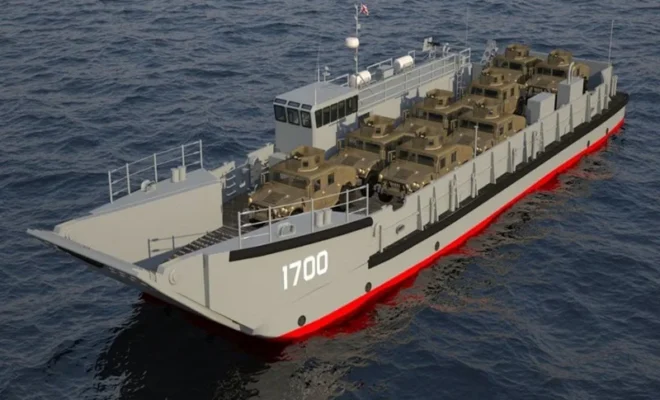
Defence strategy in India is moving towards a tech-oriented era where the subjects like artificial intelligence, military networks, autonomous systems and indigenous manufacturing have been seen as DEFCON 2026 held in New Delhi.
The discussion forum held on September 24 saw the participation of Defence Minister Rajnath Singh, General N S Raja Subramani who is the Chief of Defence Staff along with several high-ranking military officials and defence industry officials to deliberate on how India could ready itself for technological warfare in the coming years.
AI Is Moving From Experiment to Battlefield Capability
One of the most obvious takeaways from DEFCON 2026 was that artificial intelligence will become an operational element of India’s defence planning.
India’s Defence Minister Rajnath Singh stated that India is working on its own AI-based defence technologies and AI will be applied in threat prediction, early warning, and improved decision-making. The importance of technology along with the terrain and strategic analysis in modern warfare was also stressed by him.
The more specific insight into this revolution was given by Lieutenant General Puneet Ahuja. According to him, AI is unlikely to replace the soldiers but change the way they fight.
As Ahuja says, the Indian Army considers the usage of AI in such areas as target acquisition, surveillance, target recognition, logistics, predictive maintenance, decision making support, large data processing, and cyber defence. The concept of human-machine teeming also arises, according to which the soldiers will control many unmanned systems.
The Future Soldier Will Work With Machines
As per the talks held at DEFCON 2026, the Indian future soldier is not just about weaponry and physical skills on the battlefield anymore.
According to Ahuja, the future soldiers will have to understand AI, drones, cyber, space, electronic, and information operations along with the qualities that any good soldier is supposed to have – leadership, discipline, bravery, and responsibility.
It implies that the incorporation of AI is seen as an enhancement rather than replacement of military personnel.
The training can also be affected. As per expectations, the future of military training will be more and more related to AI assisted training and simulations.
“Software Is the King” of Future Warfare
General N S Raja Subramani, Chief of Defence Staff, gave perhaps the most eloquent statement regarding why the military world is moving so fast in terms of technology.
In his opinion, future battlefield capabilities will rely more and more on networked systems, data, algorithms, and software, and less on independent weapon systems.
As an illustration of what he meant by a military network, he mentioned India’s Unified Payments Interface and suggested having similar military networks which would help connect various systems and enable fast transfer of information between them. His point was that it was not enough to have advanced weapons if the systems themselves could not work together.
Interoperability becomes central to India’s future defense framework.
Data Is Becoming a Strategic Defence Asset
Moreover, the CDS stressed that data is becoming increasingly more relevant.
Since AI technology is only as useful as the data it receives, and the military produces huge amounts of data through surveillance technologies, sensors, communication networks, and operational platforms,
Subramani highlighted that India must tear down data silos and build systems by which information can be accessed securely and applied in various military contexts.
This is a significant departure from the traditional approach to defense. As opposed to treating data merely as an administrative tool, the armed forces now see it as a strategic one.
Indigenous Manufacturing Takes Centre Stage
AI was just one of the topics that were discussed at DEFCON 2026. There were other significant issues raised at the event.
For example, Rajnath Singh stated that the defence budget in India had grown from ₹2.5 lakh crore to ₹7.5 lakh crore, and that there has been a four-fold rise in the country’s indigenous defence manufacturing industry. He also mentioned platforms like INS Vikrant and India’s indigenous missiles and aircraft manufacturing programs.
The overall theme of the DEFCON conference was that the concept of self-reliance goes beyond the mere design of weapons in the country. India also needs the capacity for large-scale manufacturing and system modifications.
Why Local Warship Production Matters
Naval capacities of India are also an integral part of this larger drive toward indigenous production.
INS Vikrant has been cited by Rajnath Singh as one such instance of domestic maritime capability. This domestic aircraft carrier marks the capacity of constructing progressively more sophisticated vessels in India itself, without depending completely on foreign shipyard capacities.
However, this larger mission does not end there with just building individual warships. It also entails creating a domestic naval industry comprising shipyards, parts makers, electronics manufacturers, propulsion systems, sensors, weaponry, etc.
Such an industry would also be useful for upgrades and maintenance in the future.
From Self-Reliance to Global Defence Manufacturing
Another important theme at DEFCON 2026 was the evolution of India’s defence ambition from self-reliance toward becoming a global defence manufacturing partner.
India’s defence ecosystem now includes established public-sector organisations alongside private companies, startups, MSMEs and research institutions. The CDS specifically called for this wider ecosystem to participate in developing and sustaining future military capabilities.
The emphasis is increasingly on delivery at scale. According to Subramani, it is not enough for the industry to demonstrate a small number of sophisticated prototypes. Manufacturers must also be capable of rapidly increasing production when military requirements change.
The Defence Industry Is Becoming a Technology Ecosystem
Defcon 2026 can serve as another example of how defense is getting increasingly integrated into the larger picture of technological development in India.
Those firms that deal with AI, cybersecurity technologies, electronic equipment, robotics, research institutions and startups can be incorporated into the development of military capabilities which used to be exclusively created by traditional defense enterprises before.
This is all the more important considering the fact that technological developments nowadays occur faster than acquisition of defense capabilities through conventional means.
The ability to identify, assess and use the emerging technology in the system will be as important as the production of conventional weapons.
What Defcon 2026 Means for India’s Future Defence Industry
The talks at Defcon 2026 imply that India’s defence industry will be built on three key capabilities: intelligence, connectivity and indigenous production.
Artificial intelligence can help to analyze information and make decisions. Connectivity will help to link up sensors, people and platforms. Indigenous production will help to ensure the manufacturing of those capabilities.
All these components together imply a shift from viewing defence in terms of individual platforms to seeing it as technological and industrial ecosystem.
Conclusion
DEFCON 2026 has revealed the pace at which India is changing its priorities in terms of defence. Artificial intelligence is increasingly being used in many domains such as surveillance, logistics, decision-making and cyber defences, while the armed forces’ leadership is underlining the importance of networks, data and software in warfare in the future.
Furthermore, indigenous production in India is not limited anymore to single weapons and platforms, but is now aiming at building an industrial base able to sustain the Indian Armed Forces as a whole.
The integration of AI and robotics with military networks and domestic production could thus be one of the main characteristics of India’s defence strategy in the coming years.
Explore India’s Defence and Military Updates
How Is India Countering Drone Threats?
Check out DRDO’s anti-drone system for India’s armed forces.
What Happened to Sailors Near Yemen?
Find out how 22 Indian sailors reached safety after the incident.
Which Naval Combatants Did Modi Dedicate?
Uncover the frontline naval vessels dedicated on Indian Army Day.
How Were Captive Soldiers Released?
Browse the developments behind India’s efforts to secure their release.
Which Indian Air Force Helicopters Stand Out?
Explore five notable Indian Air Force helicopters and their roles.