India-Russia Defence Ties Enter a New Era: From Arms Deals to AI and High-Tech Warfare
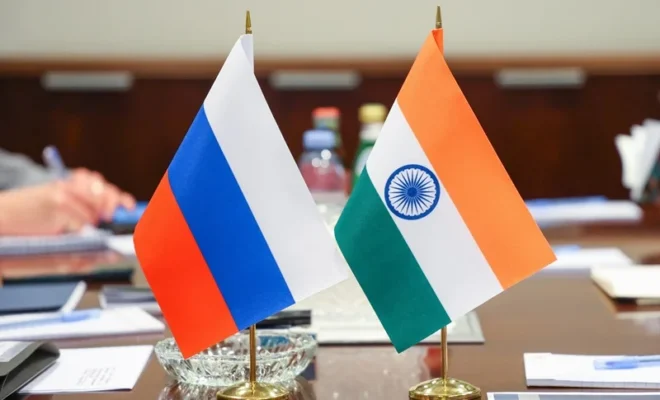
India and Russia are embarking on a new phase in their decades-long collaboration in defence that is more centred on technology, with the focus of their collaboration shifting from arms trade to research, production, technology transfer and advanced military capabilities.
These latest moves come on the heels of a discussion on defence collaboration between the two countries by Prime Minister Narendra Modi and President of Russia Vladimir Putin on the sidelines of the BRICS Summit in New Delhi a few days ago. The two leaders have also decided to continue building the “Special and Privileged Strategic Partnership” between the two countries in the face of changing geo-political realities.
This is also evident from recent engagements at the military level, with India’s Army Chief General Dhiraj Seth paying a visit to Russia from September 16 to 18.
From Buyer-Seller Relationship to Technology Partnership
Russia has long been a significant supplier of military platforms to India.
However, the partnership has since undergone several transformations. The official documents issued by the Indian government indicate that the nature of the cooperation has moved from that of a buyer-seller relationship to joint research, development, and production of military technology.
This point is important in relation to India’s need for localization, transfer of technology, and more control over maintenance and upgrade of equipment as part of self-reliance policies.
The military-technical cooperation arrangement signed for 2021-2031 is entirely about joint research, development, and production and after-sales support.
Why Artificial Intelligence Is Entering the Defence Conversation
AI is playing an ever-increasing role in modern warfare, impacting fields such as surveillance, intelligence processing, autonomous vehicles, decision support on the battlefield, electronic and cyber warfare.
India and Russia have now started exploring technology collaboration beyond the traditional arms sector into this broader technological environment. At the 2026 INNOPROM India exhibition held in September, a joint Indo-Russian technology collaboration announced collaborative agreements covering AI as well as advanced electronics, setting up an India-Russia Artificial Intelligence Centre of Excellence.
This move is notable in that it takes Indo-Russian technology collaboration beyond just the conventional arms area to technologies that may shape future military capabilities.
Nevertheless, the focus is not only on AI but also on advanced electronics, key technologies and technology transfer.
The BrahMos Model Shows What Future Cooperation Could Look Like
One of the best instances of India-Russia collaboration in technology is the BrahMos missiles program.
A result of collaboration between India’s DRDO and Russia’s NPO Mashinostroeniya, BrahMos sets a great example where the two nations have contributed towards the creation of this highly sophisticated defence system.
The collaboration has further become international in nature, in the sense that BrahMos missiles have been exported to the Philippines. The above example shows how joint development for the purpose of meeting domestic demands can turn into exports in the long run.
This is what is currently being discussed by the two nations.
Su-57 and the Next Generation of Combat Technology
The other trend drawing interest is the Russian offer of technology cooperation in relation to the Su-57 fifth-generation fighter.
According to recent media reports, discussions relating to the Su-57 as well as technology transfer in relation to the aircraft have now been included in the larger debate about the future course of India-Russia defence cooperation.
India’s interest in such discussions is that the issues being discussed are those of technologies related to modern air warfare, such as stealth, avionics, sensors and combat networking.
It should be noted, however, that discussion of an offer or of discussions cannot be confused with an acquisition decision.
India’s Army Is Also Looking at Lessons From Modern Warfare
Army Chief’s visit to Russia has added another element in this connection.
The interactions between the army chief and the Russian military officers have ranged over matters related to professional military cooperation, training, development of capabilities, and current developments in the military domain. The army chief also visited the National Defence Control Centre of Russia and the Mikhailovskaya Military Artillery Academy of Russia.
An additional coverage of the visit has emphasized artillery modernization and sharing of operational experience.
It is relevant to note that modern wars have imparted new insights into issues related to drones, artillery, electronic warfare, surveillance systems, precision missiles, and battlefield networking.
What Does This Mean for India’s Defence Strategy?
The evolving relationship forms part of India’s broader strategy to boost its domestic defence production capacity while at the same time accessing cutting-edge foreign technology.
India is at the same time broadening its defence cooperation with multiple major countries including the United States, France, Israel and even European allies. The relationship between India and Russia should therefore be seen as an element of a much wider diversification policy.
Russia on the other hand is very deeply rooted within India’s current military setup, hence making modernization, maintenance and technology cooperation very crucial.
The Indian government has clearly outlined joint production, technology cooperation and maintenance, repair and overhaul as key aspects of the evolving relationship.
Why the Partnership Is Changing Now
Geopolitical uncertainty is one of the key drivers of this new era.
India and Russia are still in a tight strategic partnership despite many developments in the international security situation. At the September 2026 BRICS summit, Modi and Putin talked about defence issues along with energy, space, trade, and other aspects of the cooperation.
On the Indian side, it is important to have strategic autonomy by having good relations with several major players instead of having one defence partner only.
On the Russian side, India is a crucial partner for defence and technological cooperation, especially at the moment when Russia has many geopolitical and economic problems.
There are many reasons why both states would like to make their defence cooperation more industrial and technological.
What Could the Next Phase Look Like?
The next step for India-Russia defence cooperation would seem to be more about joint development, production, upgrading and perhaps even exports of complex systems than about individual acquisitions.
Advanced AI, electronic systems, unmanned vehicles, missile systems, aerospace technology and military communications could come to be included in such talks.
This does not necessarily imply that traditional military cooperation will not take place, as traditional platforms will still need to be serviced, upgraded, supplied with ammo, parts and other assistance.
Rather, the bilateral cooperation seems to be evolving along two fronts – maintaining the huge existing stock of Russian equipment while working on new areas of cooperation in advanced technology.
Conclusion
The collaboration between India and Russia in terms of their defence relations is heading into a stage where industrial and technological cooperation will assume greater significance in addition to conventional defence equipment.
Starting from the production of BrahMos missiles and Su-30MKIs to the exchange on fighter technology, artificial intelligence cooperation and modernisation, the relations are gradually taking the shape of a holistic model of research, development and manufacturing.
The key issue, however, is not just procurement of newer weaponry but rather how India and Russia can together build up the necessary technology, manufacturing skills and military knowhow for future warfare.
Exploring India’s Changing Global Partnerships
Why Do India-Russia Talks Matter?
Check out how trade, energy, and diplomacy shape the partnership.
Can India-Russia Trade Cross New Milestones?
Find out how growing trade ties and Modi’s visit could deepen relations.
How Do India-Russia-Japan Ties Evolve?
Uncover the geopolitical dynamics shaping relations among the three nations.
Why Is India Taking A Pragmatic Pivot?
Browse how India is navigating changing global trade priorities.
What Makes Belgium’s India Visit Important?
Explore how trade, defence, and EU ties feature in the visit.