
22 Indian Sailors Safe After Ships Hijacked Near Yemen, Somalia
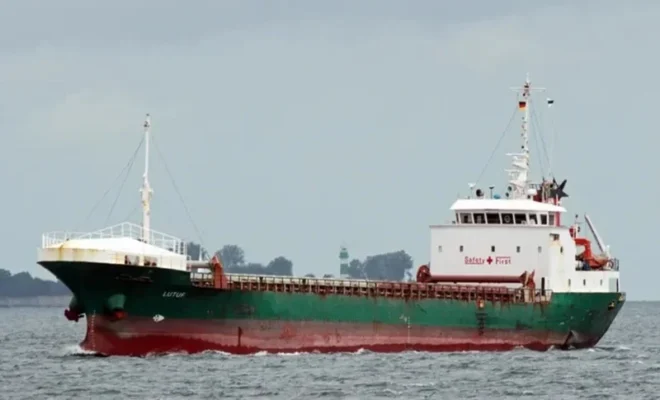
There has been yet another outbreak of piracy at sea in two of the most strategic waterways in the world after two commercial ships carrying a total of 22 Indians each were hijacked at sea in two different cases off Yemen and Somalia respectively.
Two cases of this recent outbreak of piracy are those of M.T. Sibu 1, an Eritrean oil-products tanker that was hijacked off Yemen, and M.V. LUTUF, a Cameroon cargo ship that was hijacked off Puntland, Somalia. However, what is significant to note here is that in this latest incident, the Indians onboard the oil-products tanker have been found safe.
What Happened to the Two Ships?
The first one relates to the seizure of M.T. Sibu 1, an Eritrea flag tanker in the Gulf of Aden. In this case, according to reports, six armed pirates hijacked the tanker 30 nautical miles away from the Yemeni coast. The ship had 20 crew members on board, 16 of which were Indians.
The second ship – M/V LUTUF – was seized in the waters off the Eyl district of Puntland, Somalia. According to reports, six Indians were among the crew members, thus adding up the total number of Indians involved in both cases to 22.
The seizures happened independently from each other; however, due to their closeness, there have appeared fears of a comeback of piracy.
Are the 22 Indian Sailors Safe?
There have been some comforting indications from the reports; however, the case cannot be called a complete rescue at this stage. According to the reports of the Directorate of Maritime Administration, the 16 Indian mariners aboard M.T. Sibu 1 were reported safe, whereas efforts were underway to get information about the vessel and the crew onboard.
Regarding the second ship, the reports state that there were six Indians among the crew of M/V LUTUF, which got hijacked off the coast of Somalia. Their presence on board the ship is confirmed from the available reporting, but further information regarding their current status is still unclear.
So, it is wise not to accept the heading that all 22 mariners are “safe” until a thorough confirmation comes from the Indian authorities.
Why Are Yemen and Somalia So Important for Shipping?
The incidents have occurred around a maritime region that is crucial to international trade. The Gulf of Aden connects the Indian Ocean with the Red Sea and provides an important route toward the Suez Canal and European markets.
Ships travelling through these waters can face multiple security risks. Piracy is one concern, while the wider region has also experienced military tensions and attacks on commercial shipping.
For India, the region is particularly important because thousands of Indian seafarers work aboard commercial vessels operating on international routes. Any deterioration in maritime security can therefore have direct consequences for Indian citizens and global supply chains.
Is Somali Piracy Making a Comeback?
These recent occurrences are important in the sense that they occur following years during which Somali piracy has declined significantly.
Somali piracy used to be among the most pressing problems for maritime security in the world, especially between 2008 and 2018. The efforts of international navy forces and increased ship security have been largely responsible for the decrease in attacks carried out by pirates.
However, piracy started to show signs of coming back to the area since the end of 2023 amid the general instability in the Red Sea and Gulf of Aden region.
Therefore, the recent cases of piracy bring up the question of whether piracy is once again becoming a problem in commercial shipping.
Two instances may not be enough to prove any kind of resurgence in piracy, but their clustering can serve as a warning signal.
Why the Gulf of Aden Is Becoming More Sensitive
The threat of piracy cannot be considered without understanding the larger security context of Yemen.
There have been incidents of attacks and interference by pirates on ships operating in the region, especially in connection with shipping lanes linked to the Red Sea. It has already led to shipping companies re-evaluating routes and their security policies and insurance liabilities.
The resurgence of pirate threats has added yet another dimension to the complex maritime security situation that already prevails.
The Gulf of Aden continues to hold strategic importance for ships plying between Asia, the Middle East, Africa, and Europe.
What Is India Doing for Its Sailors?
India has had its navy active in the Gulf of Aden and the Arabian Sea earlier for the protection of merchant shipping and handling any maritime emergencies.
The Indian Navy’s efforts against piracy have included responding to distress signals, providing escorts to vulnerable ships, and rescue of crew members of hijacked ships. The maritime operations conducted by India have increased after the upsurge in attacks on merchant ships in the broader area.
These incidents will certainly be of great interest to India’s maritime forces owing to the involvement of Indians in these attacks.
For the families of the sailors, ensuring their safety is the immediate concern.
What Happens Next?
It would be necessary for the authorities to ascertain the identity of those who were behind this and also where the ships had been moved to.
It would also be necessary for investigators to determine the routes that the ships used, security measures on board the ship at the time of the attack, and communication from the vessels.
The Directorate of Maritime Administration of India had even made requests for incident reporting and subsequent updates concerning M.T. Sibu 1 through India’s e-Navigation Reporting System.
The matter might also compel shipping organizations working in the area to tighten security on board and reevaluate their risks in the Gulf of Aden and waters off Somalia.
Why This Matters for India
The safety of Indian sailors is foremost among these dangers, but the ramifications go well beyond that.
India is very much tied to global shipping, and any disruption in the region can disrupt the flow of energy, raw materials, and manufactured goods.
Frequent pirate attacks could result in ships being forced to travel long distances, incur higher insurance charges, and incur extra security expenses. These expenses, in turn, can become a factor in global shipping and price levels.
Thus, for India, the recent incidents are a matter of human security and maritime security at one and the same time.
Conclusion
The hijacking of two commercial vessels near Yemen and Somalia has brought the threat of piracy back into focus. A total of 22 Indian nationals are reported to be among the crews of the two vessels, with 16 Indians aboard M.T. Sibu 1 reported safe and six Indians aboard M/V LUTUF caught up in the separate Somalia incident.
The incidents are a reminder that the waters around the Horn of Africa and Gulf of Aden remain vulnerable despite years of international efforts to suppress piracy.
For now, the focus remains on establishing the whereabouts and safety of every crew member and ensuring that the vessels and sailors are brought out of the crisis safely.
The 22 Indian sailors are at the centre of a fresh maritime-security scare, but the situation is still developing. While the Indian crew aboard the tanker has been reported safe, authorities are continuing to monitor the separate Somalia hijacking and work toward confirming the status of all sailors.
Stay informed on the latest threats, rescues, and safety concerns facing Indian seafarers worldwide.
How Were 19 Sailors Rescued?
Check out the dramatic rescue of 19 Pakistani sailors from pirates in the Arabian Sea.
What Happened During Red Sea Attack?
Find out how the drone strike targeted an Indian vessel and India responded.
How Are 13 Seafarers Being Protected?
Uncover the emergency measures activated for 13 trapped seafarers aboard MV AMIR1 in Ukraine.
What Safety Rules Protect Indian Seafarers?
Browse the MEA’s key safety guidelines for Indians operating in the Black Sea.
How Could Hormuz Attack Impact Shipping?
Track down the impact of Indian casualties and rising risks on global shipping.