
Restoring India’s Terai Grasslands: Why Rhino Conservation Is Key to Ecosystem Survival
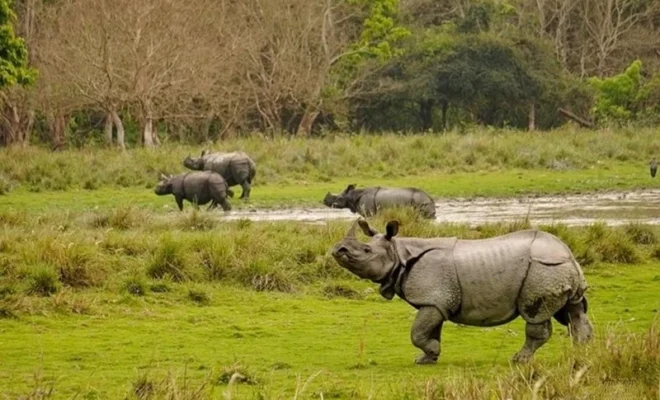
The Terai grasslands of India are one of the nation’s most crucial but at the same time most threatened ecosystems. Running along the foothills of the Himalayas, these grasslands, wetlands and riverine forests contain an amazing array of animals, from rhinos and elephants to swamp deer, wild buffalo and many bird species. But without preserving the processes that help to maintain grasslands open and diverse, their existence would be impossible.
The greater one-horned rhinoceros is the key to this narrative. Conservation of the rhino is not only about preserving the emblematic species itself; it is also about preserving the environment where many other species live.
The Terai Is More Than a Grassland
The Terai ecosystem is a living one that is constantly evolving due to factors such as the rivers, floods, fires, grazing and natural vegetation changes. Grasses are abundant in many parts of the Terai ecosystem, but co-exist with marshes, woodlands, rivers and flood plains.
With this variety, there is a creation of diverse habitats which support different species at different times of the year. Nevertheless, when the natural processes are interrupted, there is an alteration of the grassland ecosystems. Alien species, over-growth of woody plants, modification of water flows, cultivation and other activities can result in a shortage of the ideal open habitat.
Why Rhinos Matter to the Landscape
The Indian rhinoceros is an animal that spends a lot of time eating grass and vegetation in its habitat. In doing so, it is interacting with the vegetation in its environment and plays an active role in nutrient cycling.
Such large herbivores are called the ecosystem engineers due to the effect of their activity on the structure of the ecosystem. For example, in a grassland ecosystem, such an effect may ensure the existence of a mosaic vegetation structure instead of a uniform development of all sites in the ecosystem.
Rhino protection becomes only a small component of the ecological system.
Healthy rhinos need healthy grassland ecosystems. On the other hand, the preservation of grassland ecosystems provides good habitat for other animals living there. In such a way, protecting rhinos provides an opportunity to protect an entire ecosystem.
The Threat Is Bigger Than Poaching
The issue of conservation of rhinos tends to be analyzed mostly from the standpoint of poaching, which is a legitimate worry, but there is a whole different concern connected to habitat loss.
Grassland destruction can occur gradually without any radical action. The area doesn’t have to be paved or built over for the ecosystem to be altered; if the area becomes infested with invasive plants, if the natural flooding process is disrupted, if the grassland is turned into dense forest, then the habitat becomes unsuitable for grassland creatures.
And that is why restoration has to be considered an integral component of conservation efforts.
It is important to preserve rhino habitat, but restoration will give more room for other wildlife as well.
Restoration Should Follow Nature
Any effort to restore the Terai must not be limited to the simple act of planting trees in any available space. This is because open spaces have value to the environment.
Grasslands are unique ecosystems as well. There are some species of plants which require open spaces to live, and do not thrive in forests.
Thus, the most important step in restoring such areas lies in knowing how such ecosystems are formed. Invasives can be managed, wetlands conserved, and proper watering and natural floods allowed.
Rhinos and other large mammals can thus be integrated into the ecosystem as opposed to being contained in isolated patches of their habitats.
Communities Are Central to Conservation
The future of the Terai region is intertwined with the people living within it.
Agriculture, livestock, tourism, and exploitation of the resources in the landscape are all intricately linked. The imposition of conservation efforts without considering the people living in the area may cause conflict and weaken conservation efforts in the long run.
Through the involvement of the community, it would be possible to make the conservation process a collective goal for everyone. Through ecotourism, employment, conservation education, and proper resource management, economic incentives would work towards ensuring the protection of the wildlife.
The goal of the conservation effort should not be merely the exclusion of people from the protected landscape.
A Rhino Is a Symbol of a Larger Responsibility
The rhino has emerged as one of the key icons of conservation of the Terai because the continued survival of the rhino is contingent upon the presence of vast areas of habitat that function.
However, the importance of conserving the rhinos extends far beyond that.
There will be chances of protecting wetlands, grassland birds, smaller mammals, reptiles, insects and plants where rhino habitat exists. The protection of such connected habitats could also enable ecological processes like nutrient recycling, water retention and carbon sequestration.
In this respect, the rhino could emerge as a flagship for an entire ecosystem instead of being seen as an entity to be conserved in isolation.
India Needs a Landscape-Level Approach
In the coming years, conservation efforts in the Terai will need to move away from focusing only on the specific protected area. Animals do not see any borders, and ecological processes rarely stop at a park boundary.
Maintaining the connectivity of habitats, protection of river corridors, and important landscapes within the grasslands beyond the standard protected areas will help improve the conservation efforts.
Such an approach also leaves space for scientific monitoring. For example, the state of vegetation in the grasslands, the movements of rhinos, changes in water availability and invasive species can serve as good indicators of the state of the ecosystem.
The conservation effort should not be limited to the number of animals living there but also include the functionality of their habitat.
The Bigger Picture
In India, conservation successes are evaluated through the restoration of species. This is important, but it is only one part of the bigger picture.
The growth of the rhino population without enough habitat will eventually run into ecological limitations. The protected grassland without its natural herbivores will also change itself. Therefore, what we really need is to restore the connection between species and landscapes.
Conclusion
Rhino conservation in India is not merely about saving a unique creature; it is about saving an entire ecosystem consisting of grasslands, wetlands, rivers, and natural processes required to support a complete ecological community.
The Terai landscape will survive in the future only through conservation efforts that manage to incorporate not only species conservation but also habitat restoration and effective community participation.
The rhino can be a symbol for such efforts. But the ultimate objective should be greater: a viable and connected Terai landscape with harmonious co-existence of wildlife and humans.
Explore India’s Wildlife Conservation Efforts
How Did India Help Rhinos Recover?
Check out India’s conservation efforts behind the rhino population recovery.
Why Is African Catfish Threatening Kerala?
Find out why the invasive species threatens Periyar’s ecosystem.
Is India’s Green Mission Losing Forests?
Uncover key findings from the CAG’s Green India Mission audit.
How Is Kaziranga Protecting Flooded Wildlife?
Browse the latest rescue, monitoring, and habitat conservation efforts.
How Did Assam Reach 3,260 Rhinos?
See how conservation efforts and Kaziranga support Assam’s growing rhino population.