
Extending Agnipath: Strategic Defence Upgrade or Political Realignment?
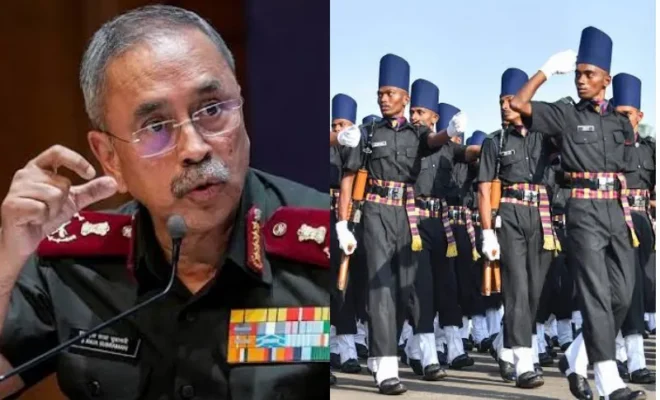
The decision by the government of the Union to provide an extension to Agniveer service duration has once again placed India’s military recruitment policies in the limelight. This decision approved by the Cabinet on November 4, 2026, is an extension of Agnipath that provides two more years of service duration for 75 percent of Agniveers who had completed four years of service. This decision paves way for regular enlistment of such eligible personnel.
The new decision indicates a change in the previous recruitment policy of India which was brought into practice in June 2022. While the government justifies this revision on the grounds of military needs and satisfactory performances, it does raise many questions regarding the intentions of the previous program.
What Has Changed Under the Revised Agnipath Scheme?
In the original setup, 25% of Agniveers could be picked for permanent enlistment after four years, based on merit and organizational need, whereas the rest 75% would exit from military service with a Seva Nidhi package.
In the new setup, the original 25% selection ratio remains the same, but the other 75% is provided with two more years of engagement, provided they agree to it. After six years of cumulative service, these eligible soldiers would have the chance to enroll as regular soldiers if they are selected.
The government has also sanctioned an increase in salary and additional Seva Nidhi perks along with seniority benefits in the new setup.
According to the Ministry of Defense, the move has come after four years of assessment. The armed forces stated that there was positive feedback about physical fitness, motivation, discipline, technical skills, and adaptability among Agniveers.
The Strategic Argument: Retaining Experience
Military experience constitutes one of the best justifications for extending the service period.
Modern day warfare requires high levels of technological advancement in the form of surveillance equipment, drones, electronic warfare and guided missiles. The personnel need to be regularly trained and gain experience in operating the equipment.
The four-year term brought up the question about how the military would be able to maintain their institutional knowledge despite having invested heavily in recruiting and training them.
With the extended two years, the problem can be solved by giving the commanders time to train and build experience, and the services the ability to evaluate their performance before recruitment.
It can also increase the morale of the Agniveers since they will have a clearer path to take as a career.
The Political Dimension Cannot Be Ignored
The timing of the move has invited political attention. It follows on the heels of the first batch of Agniveers who would serve their tenure of four years, followed by upcoming Assembly elections in places like Punjab, Uttar Pradesh, and Uttarakhand.
These are states that have been historically strong contributors to the army’s recruitment drive. Job security has continued to be an issue of much discussion ever since the program was introduced.
Various opposition parties and a few veterans had earlier criticized the four-year term arrangement for reasons that it may hamper future career prospects and professionalism in the force.
The current modification takes care of some of the issues mentioned above. Nonetheless, the political timing of the move has raised doubts whether electoral considerations had anything to do with the government’s decision.
Timing alone cannot make out the government’s motive in any way. The official reason from the government is based on organizational inputs and needs.
Financial Implications and Unanswered Questions
Moreover, the new version will affect the economic calculations of Agnipath as well. The original plan was supposed to help control long-term expenditure on salaries and pensions as well as keeping the army youthful.
An increase in salaries, bonuses, and finally, regular enlistment can result in higher expenses on personal issues. It has been stated that the new version will have regular financial assessment of its operation.
There are several other issues concerning the implementation of this program which still require clarification. Among them is the selection criteria for regular enlistment, further promotion, pension and how the experience gained during the first and the new version will be considered.
It will be required to provide some clear regulations to avoid any confusion among Agniveers.
A Necessary Correction or a Major Policy Reset?
The Agnipath extension is not merely a change in service period, but also an indication of how the government has tried to reconcile the requirement of experience and training with a youthful military.
From the standpoint of defence, the extended period of engagement could result in better continuity in operations and higher value for money in training.
From a political standpoint, it could be seen as a reaction to problems that have been plaguing the system since 2022.
The actual litmus test would be whether this new scheme manages to enhance military efficiency without compromising on either recruitment process transparency or financial burden.
Instead of seeing it as purely strategic or purely political in nature, one needs to see it in terms of its future impact on military efficiency and on the soldiers themselves.
In the end, India’s defence recruitment policy has to work for the benefit of its armed forces and the young people who join them.
Digital Rights, Market Trends, Heritage & Global Climate
What Happens If Social Media Platforms Lose Safe-Harbour Protection?
Explore the OPED debate on platform accountability, understand the legal implications of scrapping safe-harbour protections, and examine the balance between online safety and free expression.
How Are Gold and Silver Prices Moving Ahead of Dhanteras?
Check the latest 24K and 22K gold rates, track silver price fluctuations, and understand the market movements ahead of the festive buying season.
Why Have Mahabharata, Arthashastra and Rajatarangini Entered UNESCO’s Memory Register?
Discover the historical and cultural significance of these Indian works and explore what their international recognition means for documentary heritage.
How Does ISRO Plan to Clean Up Orbital Trash by 2030?
Explore the Swachh Space Initiative, understand the growing problem of space debris, and discover India’s targets for safer orbital operations.
Will El Niño or La Niña Shape Global Weather in 2027?
Explore expert climate predictions, understand possible ENSO shifts, and discover how changing ocean temperatures could influence weather patterns worldwide.