Red Sea Drone Attack Explained: India Condemns Strike on Indian Vessel Off Yemen
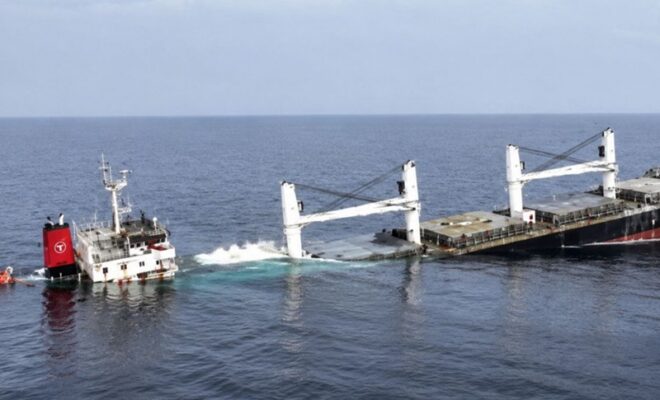
India has been very critical of the recent drone attack on an Indian-owned merchant ship near Yemen’s coast in the Red Sea, referring to it as an “unprovoked” attack on a commercial vessel. The drone attack resulted in the capsizing and sinking of the merchant ship known as MSV Faize Noore Oliya. Fortunately, all the 14 crewmen on board, who are 13 Indian and one Yemeni citizen, have been saved.
This is another of the recent attacks on merchant ships operating in the Red Sea, which is a crucial water route connecting Asia, Europe, and the Middle East.
What Happened to the Indian Vessel?
According to Indian authorities, the Indian merchant ship MSV Faize Noore Oliya was hit by a projectile while sailing in the waters near Yemen’s western coast near the area of Hodeidah, which is controlled by Houthis. This led to the capsizing and sinking of the ship.
However, Yemeni rescue personnel managed to evacuate the crew from the merchant ship safely.
Why Did India Condemn the Attack?
According to the Indian government’s Ministry of External Affairs (MEA), it was an “unprovoked” attack on a defenseless civilian ship, and the government has expressed their grave concerns about attacks on commercial ships in the Red Sea.
Furthermore, the government also appealed for ensuring safe passage through international waterways, stressing that merchant ships that carry civilian crew members must not be targeted during any regional dispute.
This latest development shows the increasing anxiety of the Indian government over the safety of Indian seafarers, who are employed by commercial ships navigating international waters.
Why Is the Red Sea So Important?
The Red Sea is one of the most vital routes for maritime traffic in the world.
Commercial ships that operate between Europe and Asia transit the Bab el-Mandeb strait, Red Sea, and Suez Canal. These waterways handle large volumes of international commerce, including oil, LNG, industrial products, and consumer goods.
Any disruption in this part of the world may raise shipping expenses, disrupt transportation of cargos, and interfere with global logistics networks.
The importance of these waterways for international commerce and economy makes commercial ship attacks one of the most pressing security issues of our times.
Why Have Commercial Ships Been Targeted?
There have been several attacks on commercial vessels in the Red Sea since the conflict in Yemen broke out.
This region has experienced attacks against the vessels with missiles, drones, and projectiles, leading several ship owners to take their vessels via the route along Cape of Good Hope, which is not only lengthy but expensive as well.
Such problems have caused an increase in costs of transportation.
Were the Indian Crew Members Safe?
Yes. In the official statements, it was claimed that all 13 Indian citizens and the only Yemeni citizen aboard the ship have been rescued successfully from the attack.
India has been working with local officials in making sure that the sailors rescued receive the needed assistance.
The successful rescue has prevented a much bigger humanitarian disaster.
What Does This Mean for Indian Shipping?
India also boasts one of the largest populations of merchant mariners in the world, numbering in the thousands serving on international cargo ships.
This most recent Red Sea drone attack only serves to illustrate the increasing dangers being faced by Indian mariners working in volatile areas.
It could also serve as a call for more security warnings and coordination for shipping companies operating in this region.
Could Global Trade Be Affected?
Yes. While a single attack may not cause much disruption in international trade, continuous attacks on commercial ships cause uncertainty in logistics internationally.
Increased costs of insurance, delays, changes in routes, and higher operational costs ultimately affect companies and consumers around the world.
The maritime community continues to keep a close eye on the situation since the long-term instability in the Red Sea might also have economic repercussions.
Top Stories You Can’t Afford to Miss Today
When Will Tata Curvv EV Launch?
Explore the confirmed launch date, expected price, battery options, driving range, and upgraded features of the Tata Curvv EV.
Why Is Income Tax Portal Slow?
Check how to clear your browser cache, verify your e-filing status, and avoid penalties under Section 234F before the deadline.
How Are India-Japan Supply Chains Evolving?
Discover how India and Japan are strengthening Indo-Pacific supply chains through new bio-gas and semiconductor partnerships.
How Can Patients Book Instantly?
Explore how AIIMS Delhi’s new WhatsApp and ABHA Health ID system makes OPD appointment booking faster and easier.
Why Did Washington Change Strategy?
Discover why the latest U.S. terror designation targets financial networks and what it could mean for future counterterrorism efforts.
Why This Case Is Important
This case is important not only because of the Indian flagged ship attacked but also because of the vulnerability of civilian ships in the most critical maritime passage in the world.
The quick condemnation by India shows its dedication to the protection of freedom of navigation and the safety of Indians sailing in international waters.
With continuing tensions in the region, security of commercial shipping will remain an international issue of great importance.
Conclusion
Recent drone attack in the Red Sea on the MSV Faize Noore Oliya highlights the precarious security situation surrounding Yemen and the dangers that the ships are subjected to in this area.
Although the successful evacuation of the ship’s crew has averted a major catastrophe, this incident stresses the immediate need for safe international maritime routes and better security cooperation in this regard.
By condemning this attack, India’s message is clear – civilian merchant ships and their crew have to be protected despite the conflicts in the region.