
Operation Sankalp Explained: How the Indian Navy Is Strengthening Security in the Arabian Sea
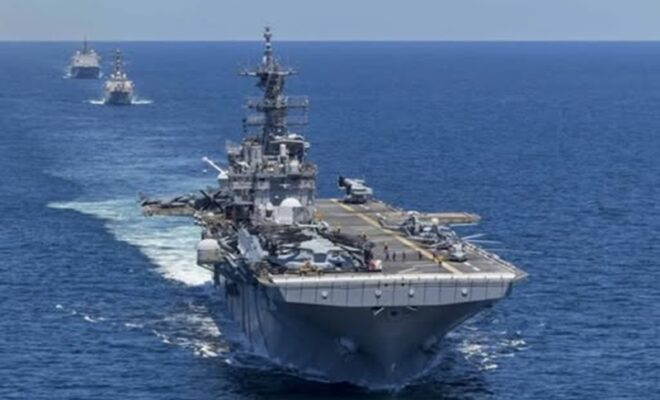
With maritime tensions running high in the Arabian Sea and its surroundings, Operation Sankalp, once again, becomes one of the Indian Navy’s most critical security operations. The operation involves the protection of Indian maritime interests and the security of the shipping route as well as the safe passage of merchant ships through one of the busiest sea lanes in the world.
Against the backdrop of growing geopolitical tension and security threat in the shipping industry, the Indian Navy has increased their surveillance activities, the deployment of frontline warships, and operational readiness.
What Is Operation Sankalp?
Operation Sankalp is a maritime security operation carried out by the Indian Navy for the protection of Indian flagged merchant vessels and shipping in the Arabian Sea, Gulf of Oman, and the adjoining areas.
Operation Sankalp was initiated by the Indian Navy in 2019 in the wake of growing tensions in the Gulf area following the attacks on oil tankers and increasing security threats to maritime shipping. Since then, it has become a continuous security operation with the aim of protecting merchant ships from any threats that may arise.
Why Is the Arabian Sea So Important?
The Arabian Sea is regarded as one of the most important maritime channels for international trade in the world.
A large amount of India’s energy imports, petroleum, and global trade transits through this area every day. The disruption in the area could cause problems in terms of fuel supply, increase in cost of shipping, and even affect the economy.
Due to its strategic importance, the Arabian Sea has experienced various threats ranging from piracy to drone and even missile attacks.
Operation Sankalp aims at minimizing these dangers through continuous naval presence.
How Does the Indian Navy Conduct the Operation?
As per the Operation Sankalp, the navy of India utilizes guided-missile destroyers, frigates, offshore patrol vessels, helicopters, and maritime surveillance aircraft for their duties.
These forces continuously keep an eye on the routes of commercial shipping, protect merchant vessels when needed, help in answering distress calls, and carry out aerial surveillance in critical maritime areas.
Through advanced radar technology, satellite information, and information exchange, naval commanders are able to detect threats at an early stage.
Such an approach helps in responding to any security threat effectively.
Protection of Merchant Vessels
One of the most important tasks of Operation Sankalp is to ensure the safe passage of merchant ships transporting goods such as cargo, crude oil, etc.
There have been several instances where Indian naval vessels were in close contact with the merchant captains and monitoring shipping traffic as well as providing timely help in case of suspicious activities.
Whenever there is a possible threat to a ship, naval vessels can quickly reach the area.
This presence helps reassure both Indian and international shipping companies operating in the region.
Responding to Modern Maritime Threats
The scope of maritime security in today’s context has widened far beyond traditional piracy.
Current maritime security threats to navies include drone strikes, missile strikes, unmanned surface vehicles, acts of sabotage, and even electronic warfare.
The operation of Sankalp has made progress in adapting to these changes in threat environment by increasing surveillance capacity and operating with increased tempo in the critical seas.
Patrolling also helps in increasing maritime domain awareness, allowing security agencies to keep an eye on any suspicious activity before it becomes a security threat.
Why Does This Operation Matter for India?
India is dependent on uninterrupted sea-based trade.
Nearly all the crude oil imports, liquefied natural gas imports, fertilizers imports, and industrial exports of India take place through the maritime route.
Any hindrance in this can affect various aspects of industries and fuel supplies in India.
Cooperation With Friendly Navies
However, although the Indian Navy runs Operation Sankalp, maritime security usually includes coordination with other friendly nations.
Information exchange, naval communication, and coordination in emergencies increase the level of security at sea.
This becomes especially critical when providing humanitarian aid, combating piracy, search and rescue operations, and protecting the international routes.
Challenges to the Mission
Providing uninterrupted security on a large area of sea water is a difficult mission.
Firstly, the Arabian Sea itself is huge, and to monitor all the commercial vessels that cross it requires constant vigilance and up-to-date technologies.
Furthermore, due to changing geopolitical conditions, security risks, and increased maritime traffic, the Indian Navy has to constantly update its strategic approach.
Nevertheless, despite all these difficulties, Operation Sankalp is still one of the most significant projects for maritime security of India.
Conclusion
The Operation Sankalp is a testimony of the Indian Navy’s resolve to secure India’s interest in the waters and provide safe navigation in the Arabian Sea.
Through the deployment of front-line naval forces, improved surveillance, and quick response to any threat, the Indian Navy further builds on its efforts for regional security and safety of the vital trade routes.
Operation Sankalp is not only a deployment by the navy but a security operation aimed at securing the trade route of India and providing stability in the region.
Top Stories You Can’t Afford to Miss Today
When Will Tata Curvv EV Launch?
Explore the confirmed launch date, expected price, battery options, driving range, and upgraded features of the Tata Curvv EV.
Why Is Income Tax Portal Slow?
Check how to clear your browser cache, verify your e-filing status, and avoid penalties under Section 234F before the deadline.
How Are India-Japan Supply Chains Evolving?
Discover how India and Japan are strengthening Indo-Pacific supply chains through new bio-gas and semiconductor partnerships.
How Can Patients Book Instantly?
Explore how AIIMS Delhi’s new WhatsApp and ABHA Health ID system makes OPD appointment booking faster and easier.
Why Did Washington Change Strategy?
Discover why the latest U.S. terror designation targets financial networks and what it could mean for future counterterrorism efforts.