China Rejects US “Economic D-Day” on Iran: Why Beijing Is Calling for Diplomacy Instead
China has come out openly in opposition to the recent “Economic D-Day” initiative from US President Donald Trump which is aimed at Iran. China believes that the economic sanctions will not bring an end to the crisis but that all concerned parties need to seek a diplomatic solution.
This move follows President Trump’s declaration of a major economic initiative that is designed to put economic pressure on Iran. In his statement, he has warned countries and companies supporting Iran economically that they could suffer repercussions from their actions.
What Is Trump’s “Economic D-Day”?
The term “Economic D-Day” was coined by Trump to refer to a comprehensive economic pressure strategy on Iran launched by the US. The US government has vowed to hit the economic and financial pathways used to fund the Tehran regime and warned other states that aiding Iran might subject them to serious economic ramifications.
According to Scott Bessent, the US Treasury Secretary, this move is meant to achieve unprecedented economic isolation through coordinated efforts. Though exact information regarding the moves is not yet available, it is clear that through its communication strategy, the US is trying to send a message that it will increase pressure on Iran and possibly firms and states dealing with the country.
Why Has China Rejected the US Approach?
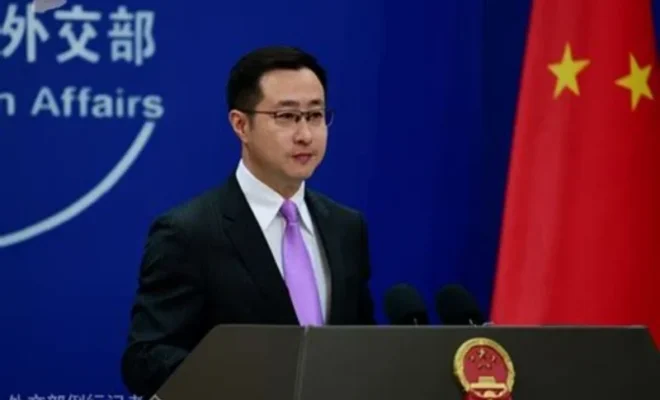
The stance adopted by Beijing has been straight forward. As stated by the spokesperson for China’s foreign ministry, Lin Jian, sanctions and coercion were not the way to go and Beijing has urged the relevant parties to be responsible and solve the crisis through political and diplomatic means.
It must be noted that China’s stance is part of its long-held opposition to unilateral sanctions that China claims to lack the backing of the United Nations or international law. China has always maintained that coercion through economics may only worsen the political dispute.
Thus, it is clear that the current stance by China not only opposes sanctions against Iran but also supports a diplomatic approach to solving major international issues.
Why China Matters in the Iran Crisis
The involvement of China is very crucial considering the economic ties between China and Iran. China is a heavy importer of oil from Iran, making it a potential candidate in any economic sanctions imposed by the US on the Iranians in order to prevent them from accessing international markets.
This puts China in a complicated position, as one the hand it is keen on securing its energy and transportation channels while on the other hand the US has signaled to Beijing that countries supporting Iran will face economic repercussions.
Bessent especially emphasized on the economic dependencies of China from the gulf region and encouraged Beijing to collaborate in the campaign against Iran.
Thus, the refusal of Beijing clearly indicates that China does not want to fall under Washington’s economic pressure strategy without hesitation.
What Exactly Did Beijing Say?
The stance that the Chinese Foreign Ministry has taken is unique in that it is exceptionally straightforward: sanctions and pressure will not settle the matter.
Jian Lin has called for responsible behavior and suggested that the parties involved should be dedicated to pursuing a political and diplomatic solution.
It does not necessarily imply that the Chinese stance supports all aspects of the Iranian stance, but that China prefers a diplomatic way to settle the dispute.
It is significant to note that China has, on other occasions, stressed the importance of regional stability, especially the Strait of Hormuz region, which is extremely vital to international energy supplies.
Why the Strait of Hormuz Makes This Bigger Than Iran
Consequences of this clash go well beyond the US-Iran conflict due to the importance of the Persian Gulf in the world energy market.
In case of long-lasting interference in the passage of ships through the Strait of Hormuz, there might be effects on oil price, transportation costs, inflation, and energy security around the globe.
China has a vested interest in maintaining these shipping routes open due to its dependency on energy supplies from the Persian Gulf. This can serve as one of the explanations why China keeps insisting on de-escalation.
Global economic effects are being closely followed by energy markets, which are currently witnessing the highest Brent crude level of the month.
Is China Directly Challenging the United States?
However, there is no doubt that the Chinese reaction is a kind of diplomatic reaction, but it is based on the principle instead of confrontational attitude.
In other words, instead of making public counter-reactions to Washington’s actions immediately, China focuses on the principle of diplomacy, responsibility, and the refusal of unilateral sanctions.
This gives the Chinese side the opportunity not to escalate the economic conflict with the US.
On the other hand, economic relations between China and Iran make Washington face problems in case of implementation of a campaign of economic isolation without Chinese agreement.
What Happens Next?
The immediate issue, however, is to what extent Washington will go ahead with its threats of economic actions, and whether it will put any pressure on China in regard to the latter’s purchase of Iranian oil.
As Bessent notes, he will give more information on the measures the United States will take at his press conference on August 24.
Only after this, one can figure out what particular Chinese firms, banks, shipping fleets, and other economic entities might be under threat.
This uncertainty will probably play a key role in world markets.
Why This Matters for the Global Economy
This conflict is emerging within the context of geopolitics, energy security, and international business.
Whereas the U.S. significantly increases the pressure on Iran through sanctions and tries to get its major trading partners comply, the firms that have business around the world will be faced with a dilemma – either complying with the rules set by the U.S. or risking getting into trouble from the Americans.
For China, this problem is particularly thorny as the problem of energy security is directly associated with this matter.
Thus, Beijing’s choice to conduct negotiations is economically motivated in addition to being politically justified.
Conclusion
The Chinese rejection of the U.S. “Economic D-Day” effort against Iran represents yet another important milestone in the evolving confrontation on the issue.
Clearly, China believes that sanctions and economic pressure are not the way forward, and that relevant parties should revert back to the path of politics and diplomacy.
As far as Washington goes, it faces the question of how well its economic efforts might succeed without the support of its trading partners like China.
For China, it seems, the key is not letting the situation escalate while protecting its economic and energy interests.
The latest spat between the U.S. and China over the Iranian sanctions issue is no longer just an issue of sanctions per se, but whether or not the new phase of the Middle East crisis would be based on economics or diplomacy.
More Stories You Shouldn’t Miss
What Can Vaishya Tekri Reveal?
Check out the latest excavation and its possible links to Ashoka’s history.
How Did Sailors Escape Hijacking?
Find out how 22 Indian sailors were safely rescued after the attacks.
Why Are India-Japan Ties Changing?
Uncover how new naval cooperation could reshape regional security.
How Is Silver Lending Expanding?
Explore Paul Merchants’ new silver loan branches under the RBI framework.
How Can You Get ₹350 Pass?
See the simple steps to apply for NHAI’s monthly pass online.