
Indian Navy Commissions INS Nipun- Features of the Indigenously Built Diving Support Vessel
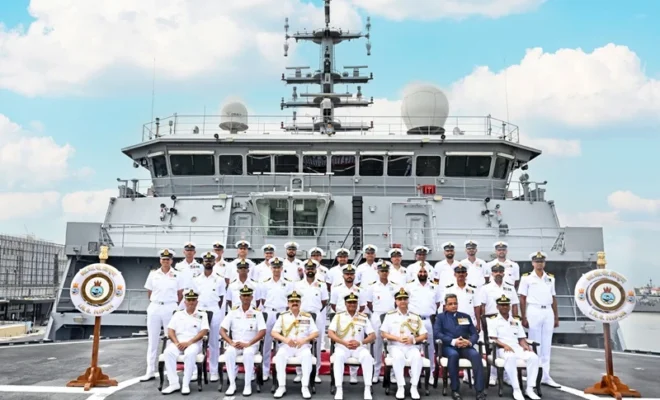
The Indian Navy has inducted INS Nipun, which is the second ship in the indigenous Nistar class Diving Support Vessels (DSVs), in a ceremony held at the Naval Dockyard, Mumbai on August 31, 2026. The induction of this specialized vessel marks an important step towards strengthening the underwater capability of India.
The new ship has been designed to handle specialized underwater missions requiring highly-specialized diving equipment along with navigation and station-keeping facilities. The induction of the ship also helps the Navy in having a DSV operating on the western coast while its sister ship, INS Nistar is available to the Eastern Naval Command. Together, the two ships enable India to have a two-ship and two-coast capability for specialized underwater missions.
What Is INS Nipun?
INS Nipun is a Diving Support Vessel, which means that it is not a combat vessel but a special kind of naval vessel meant for specialized operations. Its uses include underwater missions like diving, intervention, and submarine rescue operations.
INS Nipun belongs to the Nistar class, the sister ship of which is INS Nistar. This means that the induction of the new ship is aimed at building up on what has already been achieved by the older one.
Built for Deep-Sea Diving Operations
The most important attribute of INS Nipun is that it is built to facilitate deep-sea diving operations. Such missions could involve underwater intervention and other specialized underwater operations which ordinary naval vessels might not be equipped for.
The entire purpose behind constructing this vessel was the facility that would make it possible for trained diving teams of the Navy to undertake such specialized missions underwater.
A Major Role in Submarine Rescue
Another important task undertaken by INS Nipun is the conduct of submarine rescue operations. In cases of submarine emergencies, a quick and specialized action is required, especially where there are cases of stranding and disablement underwater.
A specialized DSV would come in handy as an underwater support facility in cases such as those mentioned above. The Navy has pointed out the submarine-rescue capacity of INS Nipun as an important boost to India’s readiness for underwater emergencies.
Commissioning is of special significance given that there are only very few navies globally that have similar specialized deep-sea diving and submarine-rescue capabilities.
Advanced Navigation and Station-Keeping Systems
INS Nipun has advanced navigation and station-keeping systems that are crucial in performing underwater operations. In order for a DSV to carry out any kind of operation in underwater environments, it needs to be well-positioned in water.
The importance of maintaining a good positioning is of more significance in cases of deep-sea diving and submarine rescue missions where any slight movement in the positioning of a ship may affect the mission in progress.
Therefore, the station-keeping capability of the vessel is one of the aspects that make it important.
Two Ships, Two Coasts
The commissioning of INS Nipun brings about an important operational advantage to the Indian Navy. The sister ship of INS Nipun, INS Nistar has been serving in the Eastern Naval Command since July 2025.
The two ships of Indian Navy are thus stationed in different coastal regions with the new INS Nipun in the Western Naval Command. This means that underwater emergencies or missions in water can be carried out with ease in case of need.
Supporting Underwater Engineering and Intervention
INS Nipun is not only used for rescue operations but has capabilities for underwater interventions and marine engineering works as well.
These might include providing assistance with inspection and repair work as well as supporting the specialized divers who perform tasks requiring access to underwater naval infrastructure and equipment.
Therefore, the vessel can become a very important asset for ensuring underwater operational readiness of the Navy, not merely for performing emergency tasks.
Why Is The Indigenous Construction of The Ship Important?
Moreover, the induction of the ship is yet another step in the process of building up self-sufficiency in naval shipbuilding by the country.
As the Indian Navy develops and adopts highly specialized ships for various missions and operations, it is becoming increasingly clear that its efforts go beyond constructing traditional warships.
Over the recent years, India has been actively increasing the number of naval ships and submarines being constructed domestically. As per government sources, Indian shipyards have already provided more than 40 indigenous warships and submarines since 2014.
Why INS Nipun Is Important For India
It should be noted that the importance of the induction of the ship does not lie in the increase in the size of the Navy fleet itself. It is much more important in the sense of the capabilities it provides.
Diving and submarine rescue are highly specialized and technical areas which require preparations and cannot be performed immediately after the accident happens.
The Bigger Maritime Security Picture
India has a long coastline and operates in a maritime environment where underwater security, submarine operations and maritime infrastructure are increasingly important.
As naval activity expands and underwater systems become more sophisticated, specialized support vessels become an important part of maritime preparedness. INS Nipun adds another layer to this capability by allowing the Navy to operate more effectively beneath the surface.
Its induction therefore represents not simply another addition to the fleet, but an expansion of India’s ability to conduct complex underwater operations.
Conclusion
The commissioning of INS Nipun marks an important milestone in the Indian Navy’s deep-sea operational capabilities. As the second Nistar-class Diving Support Vessel, it brings specialized capabilities for deep-sea diving, underwater intervention and submarine rescue to the western coast.
Together with INS Nistar, it gives the Navy a two-ship, two-coast capability, improving India’s preparedness for underwater emergencies and specialized maritime operations.
The vessel also highlights India’s growing ability to build sophisticated, specialized naval platforms domestically, strengthening the country’s broader maritime self-reliance.
INS Nipun is more than a new naval ship — it is a specialized underwater lifeline designed to support deep-sea diving, submarine rescue and critical underwater operations.
Stay updated on India’s latest naval developments.
What Makes INS Mahendragiri Truly Special?
Check out the key features of India’s new stealth frigate.
What Makes Shruti A Next-Gen Vessel?
Find the role, features, and significance of the Indian Navy’s new patrol vessel.
How Does Operation Sankalp Boost Security?
Uncover how the Indian Navy is strengthening security across the Arabian Sea.
Who Can Apply For Agniveer Apprentice?
Browse eligibility, batch dates, and the step-by-step registration process.
What Drives Commanders’ Conference 2026?
Dive into the agenda, significance, and key focus areas of the conference.