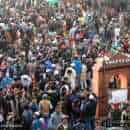
Delhi’s Mass Mobilisation vs the State: A Defining Moment for Democracy and Dissent
The current agitation by citizens of Delhi has once again thrown up the classic democratic dilemma about what should be the reaction of the state whenever citizens gather in large numbers to confront public institutions. The proposed agitational programme on October 10 under the name ‘Delhi Chalo’ has made issues relating to elections, police powers, and the right to assemble a central part of public discourse.
It is a debate not just about an agitation at Jantar Mantar. It is more about a clash of two ideas – the idea of the duty of the state to maintain law and order on the one hand, and the rights of citizens as guaranteed by their constitution to confront institutions exercising public power. Any democracy is judged not only by its conduct of elections, but also by its reaction to such demands for accountability between elections.
Electoral Roll Revisions and the Politics of Dissent
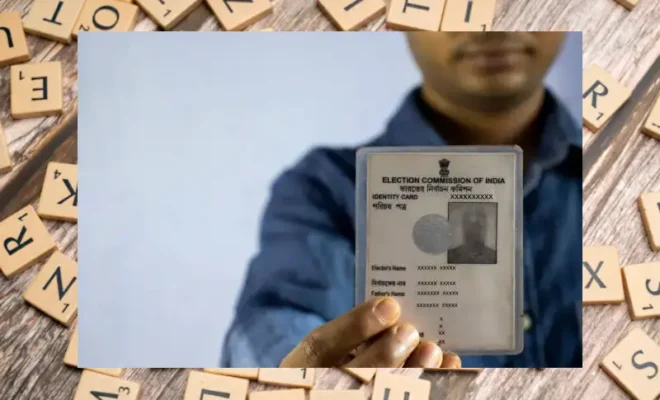
The immediate context of the mobilization is the dispute concerning the Special Intensive Revision (SIR) of electoral rolls and the demands placed on Chief Election Commissioner Gyanesh Kumar. The opposition groups and protestors have expressed concerns over the electoral roll revision process, especially regarding the likelihood of eligible citizens finding themselves unable to retain their names on electoral rolls.
On the other hand, it is within the mandate of the Election Commission to ensure that there are proper electoral rolls devoid of any errors or ineligible registrations.
It is clear then that the main issue is not whether the electoral rolls will need to be revised but rather whether the process is transparent and open to review and inquiry.
A democratic process requires both an accurate list of voters as well as mechanisms to protect eligible citizens from being wrongfully excluded from the electoral rolls when disputes arise over the process.
The Right to Protest Is Not a Gift from the State
Article 19(1)(a) of the Constitution of India provides for freedom of speech and expression, whereas Article 19(1)(b) ensures the freedom of assembly of persons peacefully and unarmed. These freedoms are vital for democracy since they allow people to voice their grievances, organize themselves and pressurize the rulers for answers.
Nevertheless, these freedoms are not absolute. The Constitution allows the placing of reasonable restrictions upon peaceful assemblies under certain conditions, among which there may be issues related to public order.
This imposes obligations on both sides. The organizers of a protest have to comply with legal requirements, abstain from violence and make sure that their demonstration does not endanger anyone unnecessarily. In their turn, the authorities have to make sure that any restriction is well-founded, proportionate and in accordance with the Constitution.
It is important to distinguish between organizing a protest and silencing dissent. Deployment of the police force, rerouting of traffic and crowd control measures may be required. However, such measures should be prompted by the actual danger rather than the mere potential inconvenience.
Security Measures and the Cost to Ordinary Citizens
Large-scale protest activity in the capital will inevitably have an impact on the functioning of public transportation services, as well as on access to governmental institutions.
However, restrictions on mobility may raise concerns, as they might adversely affect people who commute to work, go to school, hospitals, as well as small businesses.
The goal of the government is to limit the disruption of activities in such a way that peaceful assembly is not discouraged.
Selective restrictions on access to particular areas, well communicated traffic re-routing, and designating protest zones are some ways of achieving the above-mentioned goal.
Moreover, security arrangements should be open for discussion with the citizens. They should be informed about road closures, transport restrictions, as well as other mobility restrictions.
Institutional Accountability Must Work Both Ways
The Election Commission is a vital body in India’s democratic system. It is imperative that the Election Commission remain independent in order to ensure that election management is not influenced by partisan politics. Independence cannot mean protection from any queries about decision-making and execution.
Political parties and civic organizations also have to understand the difference between concrete facts and unsubstantiated allegations. Accusations regarding denial of voting rights or corruption must be verified using concrete evidence and legal process.
In certain cases courts may intervene, especially where there are queries about rights and powers under the Constitution and law. However, judicial intervention cannot be substituted by proper communication and grievance redressal.
Institutional trust requires not just power to take decisions but also legitimacy and capability to explain them legally.
What This Moment Means for Indian Democracy
The Delhi mobilisation opens up the possibility of breaking out of the well-worn cycle of protests, repression, and political allegations.
But the real challenge lies in developing a system where disputes related to electoral administration can be articulated without violence, and resolved through reliable processes.
This calls for a system of transparent voter list corrections, accessible dispute resolution process, responsible protest management and rational public discourse.
It also calls upon political actors to acknowledge that to disagree with an institution is not to undermine democracy itself, just as every complaint against an institution need not always be accepted.
Democracy is resilient when it is capable of absorbing criticism without sacrificing its responsibility and citizens are able to exercise their rights without ignoring the rights of others.
Though Delhi’s streets will form the stage for this clash of ideas, its significance transcends the boundaries of the capital.
The critical question is whether the state can manage public order without stifling dissent.
A strong democracy is one which judges its vitality not by the lack of protest but by the presence of peaceful protest and institutional accountability.
From EV Reality Checks to Gaming Rewards
Can India’s EV Ecosystem Overcome Its Biggest Roadblocks?
Explore the challenges facing India’s electric vehicle sector and what could drive meaningful improvements.
What Do SAI’s New COVID-19 SOPs Require?
Check out the fresh Sports Authority of India guidelines amid rising COVID-19 cases.
Why Has NIA Invoked the Anti-Hijacking Act?
Find out about the case involving an Omani pilot accused of attacking Captain Smit Machchhar.
Can The Gaming Project Turn $500K Into Growth?
Discover what the startup’s seed funding could mean for its gaming ambitions.
Which Free Fire Redeem Codes Can You Claim Today?
Check out the listed codes for a chance to unlock in-game rewards, subject to validity.