
India-Bangladesh Relations: Both Sides Signal Push to Repair Ties Ahead of BRICS Summit
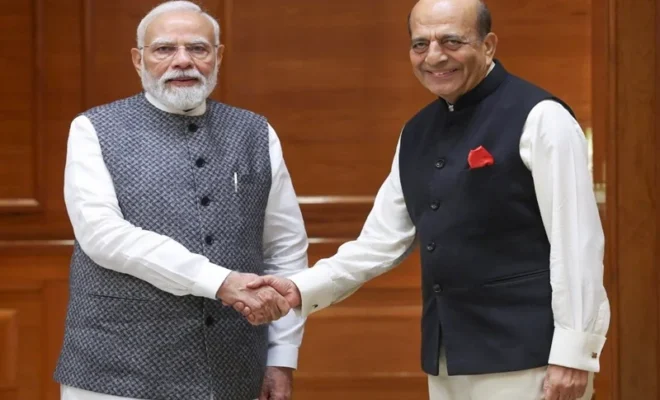
However, India-Bangladesh relations seem to be experiencing some diplomatic resetting, despite the ongoing rifts between the two countries. The recent overtures from India come at a very crucial point in time, as it invited Bangladesh Prime Minister Tarique Rahman to the upcoming BRICS summit in New Delhi on September 12-13. As of now, it is still not clear whether Rahman will accept the invitation.
Nevertheless, this gesture was considered as one of the chances for the two neighbours to go beyond the problems that arose after Hasina was ousted in 2024. At the same time, another disagreement concerning the presence of Hasina in India shows how difficult the attempt to reset the relations between the two neighbours really is.
Why India-Bangladesh Relations Need a Reset
Relations between New Delhi and Dhaka have significantly worsened after Sheikh Hasina’s government was ousted in August 2024. India had always enjoyed good relations with Hasina while in power, whereas the interim government of Muhammad Yunus pursued another foreign policy course, which led to some issues.
There were numerous questions related to the presence of Hasina in India, extradition, border control, security of minorities, trade, water sharing and rhetoric.
With a new elected government now led by Tarique Rahman, both countries have an opportunity to establish a new diplomatic framework. Recent reporting suggests that Dhaka and New Delhi are both interested in rebuilding communication, although they differ over how some of the most sensitive issues should be addressed.
More BRICS & global diplomacy stories you should not miss.
How Is UAE Leveraging BRICS?
Check out how BRICS membership is advancing the UAE’s economic and environmental ambitions.
What Makes Kazan Declaration Significant?
Find out why the Kazan Declaration is being viewed as a major step for multilateral cooperation.
Why Were Krishna Bhajans Played?
Uncover the cultural significance behind Modi’s welcome at the 16th BRICS Summit in Russia.
Could BRICS Get Its Currency?
Browse the latest developments after Putin revealed a symbolic BRICS banknote during the summit.
How Will Bhutan Grant Impact?
See what India’s approval of Bhutan’s 13th Five-Year Development Plan could mean for bilateral ties.
Tarique Rahman Signals Desire for Better Relations
The latest and perhaps strongest message sent from Dhaka was from a meeting between the prime minister of Bangladesh, Tarique Rahman, and India’s new High Commissioner to Bangladesh, Dinesh Trivedi.
It has been reported that Rahman highlighted the importance of building a “conducive environment” to help improve relations between the two countries. This meeting has come amid fresh tension following Sheikh Hasina’s recent media interaction from India.
The importance of this message comes from the fact that Dhaka is pushing India regarding Hasina’s extradition while also making it clear that it does not wish for this issue to cause a permanent damage to relations with its biggest neighbor.
India’s Outreach Is Also Becoming More Visible
India too is indicating its desire to keep the diplomatic dialogue alive.
The appointment of and outreach through Dinesh Trivedi, India’s High Commissioner to Bangladesh, has gained much attention considering the fact that the move was made during an important juncture for bilateral relations. High Commissioner Dinesh Trivedi met with Rahman in Dhaka and later met with Prime Minister Narendra Modi in New Delhi. The meetings were considered as part of ongoing diplomatic exchanges between the two countries.
It has even been noted that a meeting between Modi and Rahman would be helpful in solving some of the issues that are hampering bilateral relations.
Why the BRICS Summit Could Become a Turning Point
The upcoming BRICS Summit in New Delhi will be the most valuable occasion where the new leaders of both countries can get together.
India has extended an invitation to Rahman as a special guest; hence the intended trip will be of great diplomatic significance. In case of Rahman’s visit, it may give him the opportunity to have his first encounter with Modi in the light of the new bilateral ties.
But the matter is still unclear since the foreign minister of Bangladesh has announced that his government has yet to make a decision on whether Rahman will attend the September 12–13 summit in New Delhi or not.
In any case, the importance of this matter should not be overlooked since the upcoming summit may become the point of reset only if the two parties will treat it as such.
Sheikh Hasina Remains the Biggest Complication
However, the biggest challenge in India-Bangladesh relations is Sheikh Hasina.
Since her exit from Bangladesh in 2024, Hasina has been in India, and Dhaka has sought her extradition. After Sheikh Hasina addressed a virtual press conference held in New Delhi on August 5, the tension escalated, with serious criticisms from Bangladesh.
India’s choice to let Hasina address the virtual press conference is seen as very problematic by Bangladesh, whereas India has termed the extradition request to be under consideration through legal processes.
This indicates that as the two nations work towards cordial ties, Hasina still poses a significant hurdle for them.
Trade and Connectivity Could Drive the Reset
Apart from political differences, there are some compelling practical reasons why India and Bangladesh need to mend their ties.
India and Bangladesh are neighboring countries, with both countries sharing a long border, as well as economic, transportation, energy and social ties. Bangladesh is an important country to the Indian northeastern states, whereas India is an important economic and geographical neighbor of Bangladesh.
Good ties between the two nations would therefore facilitate better economic, transportation and energy cooperation as well as regional integration.
The ties also go beyond just bilateral interests, since both India and Bangladesh are important member nations of regional groupings like BIMSTEC.
Why Both Sides Have an Interest in De-escalation
For Bangladesh, having constructive relations with India is significant due to the geographical proximity of the two countries. For India, a friendly and cooperative Bangladesh is important from the strategic perspective in terms of border management and connectivity with its northeastern part.
It gives a powerful motivation for both governments not to allow temporary political disagreements to deteriorate permanently their relations.
Recent diplomatic messages show that both sides understand this reality well. However, the problem is how to translate this message into sustained engagement.
Can the BRICS Summit Actually Improve Relations?
The BRICS Summit can be an important occasion, but it cannot solve all problems in this regard by itself.
A successful reset of relations would require constant diplomatic communication, some tangible progress on bilateral issues, and a way to handle politically sensitive issues without letting them to define the whole process of cooperation.
The most important issue to be resolved at the moment is participation of Tarique Rahman in the New Delhi Summit. Up to August 13, 2026, Bangladesh did not officially confirm Rahman’s participation in the Summit.
His participation and meeting with Modi at the Summit can set the political tone of further relations between India and Bangladesh.
Conclusion
Relations between India and Bangladesh find themselves at a critical juncture. New Delhi and Dhaka appear to be realizing that confrontation serves no purpose and is not in the best interest of either country. Recent diplomatic efforts seem to reflect a desire to reestablish dialogue.
The process still seems vulnerable however. The visit of Sheikh Hasina to India, the extradition issue, and political considerations are all factors that are complicating matters.
In this context, the BRICS Summit is not just another forum where leaders meet. The visit of Tarique Rahman to the summit and his meeting with Narendra Modi can be seen as the first chance for the two leaders to build a new relationship following several years of political conflict.
Currently the mood from both sides seems cautiously optimistic; there is a need for repair, and neither side seems ready to shut the doors.