
The Himalayan Ecology Dilemma: India-Nepal Hydropower and the Fight to Manage Cross-Border Floods
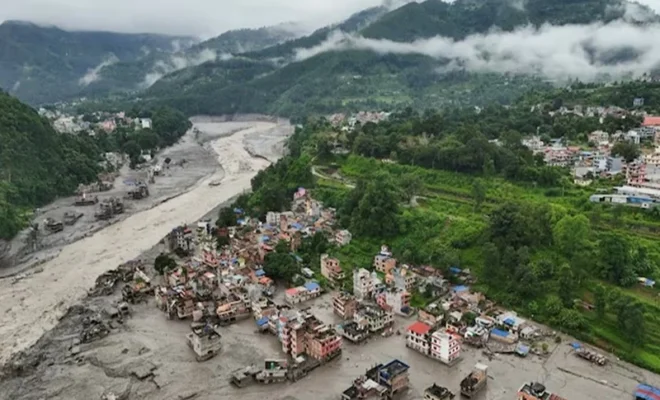
The Himalayas present India and Nepal with a complex development dilemma. The two countries need electricity and better infrastructure, including protection from the destructive effects of flooding; however, the rivers supplying them with hydropower and irrigation are at the same time carriers of serious ecological and disaster-related risks.
Mahakali, Karnali, Kosi, and Gandaki rivers pay no attention to the international boundaries between India and Nepal, which means that decisions made in Nepal may have a great impact on the people in India and vice versa, as well as changes in rainfall, landslides, sediment fluxes, and channel geometry.
Thus, India-Nepal cooperation in hydropower and flood control goes beyond the field of energy and becomes the field of environmental, economic, diplomatic, and humanitarian cooperation.
Why Do Himalayan Rivers Matter to Both Countries?
Rivers are the key source of hydropower, and the geography of Nepal allows the country to enjoy great hydropower potential. In a developing country like Nepal, hydropower is crucial since it allows the country to supply itself with electricity, earn money, and stimulate industrialization.
At the same time, India faces the problem of energy shortage and considers Nepal its potential supplier of clean energy. Thus, energy trade will help deepen the economic relations between the neighbors.
However, the rivers carrying the hydropower potential of Nepal are very dynamic. Himalayan slopes, monsoon rains, glacial systems, and instability of geology may cause a rapid change in discharge and sediment flux.
This means that the construction of the infrastructure around these rivers requires a knowledge of the whole basin rather than separate dams.
The Hydropower Opportunity
Hydropower continues to be the priority area of economic cooperation between India and Nepal.
The expansion of hydropower in Nepal will allow the country to shift from the status of energy-deficit country to the status of major electricity exporter. In addition, it will provide a huge market for Nepal since India is close to Nepal.
As for India, hydropower will supplement solar and wind energy that the country uses. Hydropower is an alternative source to other renewables due to its dispatchability.
In this way, India-Nepal hydropower cooperation may become a promising economic relationship between the countries when Nepal receives money from selling hydropower and India gets another renewable resource.
However, the question is not only about how many megawatts can be generated but also how hydropower generation may be done without increasing ecological and disaster risks.
The Ecological Cost of Altering Himalayan Rivers
The Himalayan river system is highly susceptible to any forms of physical alteration.
Hydropower development in the form of large dams could lead to alteration of the river flow, sediment retention, and alteration of downstream ecosystem. Construction of other infrastructure such as roads and tunnels that would be necessary for hydropower development could disrupt mountain slopes.
Sediment is particularly crucial in the Himalayan river systems. Due to its steep terrain and geological instability, erosion in the region is quite significant. As a consequence, there is a huge amount of sediments being transported through the rivers.
If that transportation is interrupted, consequences can be felt way beyond the project location itself.
River morphological changes may influence the flooding patterns, agriculture fields, aquatic ecosystem and stability of the river channel in the downstream locations.
None of this means that hydropower development and environmental preservation have to be considered mutually exclusive. It only implies that projects should be analyzed on the basin level and all of the cumulative effects should be considered.
The Cross-Border Flood Problem
As was said earlier, flood management creates particular complexity in the India-Nepal relations.
During the monsoon period, some rivers coming from or passing through Nepal may significantly increase in size before reaching the densely-populated northern regions of India.
Flooding may lead to devastation of property, roads, farmlands and infrastructure within several hours.
However, the problem cannot be resolved only by the actions of one of the countries involved.
Upstream precipitation and water storage in reservoirs may affect the downstream situation. At the same time, downstream infrastructure, such as embankments and drainage systems, may influence the severity of the flooding problem.
It creates the environment of common risk in which the information has high value.
Why Real-Time Data Sharing is Important
One of the most efficient solutions is improved cooperation regarding the exchange of the information in real-time.
Meteorological data, measurements of the river levels, predictions of rainfall and state of the reservoirs may provide authorities with an opportunity to warn communities about the floods.
It is especially crucial in Himalayas due to the combination of flooding with landslides, debris flows and failure of infrastructure.
Improved early warning system will allow authorities to evacuate people, livestock and other assets before the dangerous situation appears.
The Problem With Treating Every Flood as a Dam Problem
There are many potential causes of flooding in the Himalayan region.
Heavy rainfall can exceed capacity of any number of dams. Landslides can block and then release rivers. Glacial lakes can create more dangers in certain areas in the Himalayas. Silt accumulation and shifting of rivers can also affect floods.
Thus, assigning responsibility or credit for floods in the Himalayas to one hydropower project does a disservice to the complex natural system at work.
The policy challenge here is the understanding of how the infrastructure fits into this already highly unpredictable environment.
Development versus Ecology Is a False Dichotomy
Usually, the discussion of this issue is presented as a rather simple choice between economic development and environmental protection.
Yet, both India and Nepal need both.
Nepal needs opportunities for economic growth and energy supplies; India needs renewable energy supplies and improved flood management; people of the Himalayas need development in terms of infrastructure and jobs, but they also depend on healthy river ecosystems.
Thus, the question is not whether development should take place or not, but what kind of development would be suitable for a fragile mountainous environment.
Small-scale interventions, proper environmental assessment, good slope management, better sediment management and modelling of floods at the level of whole basins can potentially help with reducing certain risks of development.
Climate Change Creates Even More Complications
Climate change introduces yet another level of unpredictability to the equation.
Different precipitation patterns, more intensive rainfall events, rising temperatures and different dynamics of glaciers and snowpack affect historical patterns of river flow and thus become an unreliable base for designing infrastructure.
Designing a dam on today’s climate conditions does not guarantee success when climate conditions change in future.
Climate-resilient infrastructure becomes more and more essential for hydropower projects and flood management infrastructure.
Thus, India and Nepal should take into account not just the average amount of rainfall and river flow, but also the extreme events and changing risk patterns.
Diplomatic Aspect
Management of rivers has always been politically sensitive topic in relations between India and Nepal.
Any treaties or infrastructure projects related to shared rivers raise questions of sovereignty, environmental impact and distribution of risks and benefits among other issues.
In order to ensure the sustainability of this cooperation, communities in both countries need clear benefits from the projects.
Transparency concerning project design, environmental assessment, impacts on downstream, emergency plans, and so on can help
What a Better Himalayan Strategy Could Look Like
The key to the future of hydropower and flood management cooperation between India and Nepal will be to move from the current project-specific approach to the idea of river basin integration.
Hydropower generation, flood warning, disaster management, ecological preservation and climate modelling need to be viewed by India and Nepal as related issues.
The best option for cooperation will be to integrate energy production with transparent environmental protections and permanent mechanisms for hydrological data exchange.
This way, both countries will have an opportunity to harness the potential of Himalayan rivers without reducing it to mere energy generation or development obstacles.
Conclusion
In conclusion, the problem of Himalayan ecology is a problem of balance.
Both India and Nepal have a chance to create clean energy and enhance energy exchanges and flood preparedness. However, the Himalayan river basin is much too fragile and complicated to see it as merely an infrastructure asset.
Himalayan rivers connect India and Nepal in many ways, and thus their future will depend on cooperation which goes far beyond construction projects and bilateral negotiations.
Thus, the question is whether India and Nepal will be able to use the river basins as a basis for their future sustainable development and not yet another source of problems.
The Himalayas have the potential to energize the future of India and Nepal, but only if they are viewed as one interconnected task.
Stay Ahead of the Latest Himalayan Alerts & Regional Developments
How Are Glacier Floods Threatening Hydropower?
Check out how cross-border floods could impact India’s hydropower infrastructure.
Which Mountain Routes Face Rain Alerts?
Find the latest travel advisories for pilgrims navigating mountain corridors.
Which Himachal Routes Should Travelers Avoid?
Browse key route updates and landslide-prone stretches across the region.
What Caused Chamoli’s Deadly Tunnel Disaster?
Uncover how landslides and sudden water inflow led to the tragedy.
How Will Bhutan’s New Grant Strengthen Ties?
Explore what India’s development grant means for bilateral relations.