
ISRO EOS-05 Satellite Launch Tomorrow: GSLV-F17 Lift-Off at 2:55 AM – Why This Mission Matters
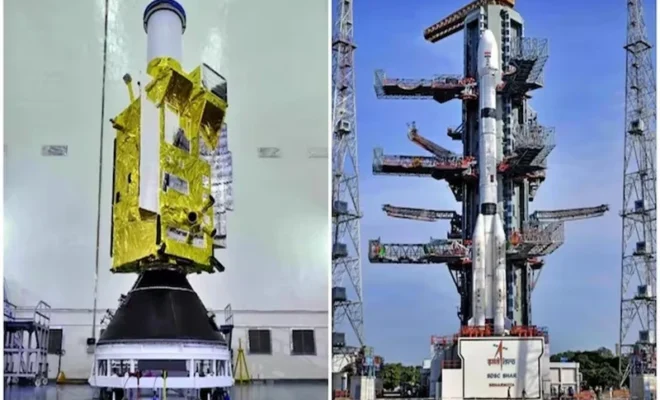
Yet another significant mission for India is being prepared since the launch of the ISRO EOS-05 satellite is set to take place at the beginning of Friday, September 4, 2026. As announced by the Indian Space Research Organization, the GSLV-F17/EOS-05 mission will take place on September 4 at 2:55 AM IST from the Second Launch Pad of Satish Dhawan Space Centre, Sriharikota.
This mission will get much attention since ISRO claims that the EOS-05 satellite is an advanced spacecraft for Earth observation that will be India’s first imaging satellite from geosynchronous orbit. The aim of this satellite will be to make observations of the Indian subcontinent regularly.
When and Where Will EOS-05 Launch?
Launch of the ISRO EOS-05 spacecraft is set to happen at 2:55 AM IST on September 4. The launch will take place at the Second Launch Pad at Satish Dhawan Space Centre in Sriharikota, Andhra Pradesh. ISRO has stated that it would be doing livestreaming of the mission.
The launch will mean that the rocket is taking off very early in the morning on the Friday for viewers within India. ISRO has confirmed the launch time through its official mission page and livestream page.
What Does GSLV-F17 Carry?
The GSLV-F17 is the launch vehicle, while EOS-05 is the satellite that is being launched. ISRO refers to GSLV-F17 as the 19th flight of Geosynchronous Satellite Launch Vehicle of India. The launch vehicle comes with a four-metre-diameter ogive composite payload fairing for the launch.
GSLV-F17 will take the EOS-05 into a Sub-Geosynchronous Transfer Orbit where it will get to its intended orbit.
This is because the rocket and the satellite have two distinct roles with GSLV-F17 being the one transporting the satellite into space.
Why is EOS-05 Different From Regular Earth Observation Satellites?
Firstly, the greatest attribute of EOS-05 is its plan to use the geosynchronous orbit as its position of operation. Normal earth observation satellites usually orbit in low positions and pass over specific places several times. With a geosynchronous imager, one is able to observe a wide region from a fixed position.
EOS-05 is intended to orbit at about 36,000 kilometres above the equator. Since the satellite’s orbital period will correspond well with the earth’s rotation, it can have a constant watch over the wide region below.
Therefore, it will provide an edge of repeated and persistent observation of the region, and not the occasional observation like in normal satellites.
How EOS-05 Can Aid in Weather Monitoring
One of the most significant uses of EOS-05 is monitoring of the weather. With the satellite’s constant view of a certain region, one will be able to observe weather changes as they occur.
It will enable frequent monitoring of cloud development and the weather conditions. During the cyclones and other severe weather systems, information will be provided. According to some reports, images are likely to be taken once every thirty minutes. Other priority targets can be monitored every five minutes.
What Does EOS-05 Mean for Disaster Management?
Earth observation technology becomes very important during natural calamities since satellite imagery provides the authority with a broader perspective of the region that is affected.
EOS-05 will be used to monitor floods, forest fires, cyclones and other quickly developing phenomena. Frequent observation of the region allows understanding how the situation changes and helps with planning the steps of disaster relief.
So, the applications of the satellite do not consist in just taking photos of the Earth. The received data can become a part of the important input for the organizations responsible for emergency relief, environmental monitoring and natural resources management.
How Can the Farmers Benefit from It?
Another sphere in which the application of earth observation satellites may have a big impact is agriculture. The satellite imagery helps to control the situation in the field of agriculture, forests and any changes that take place.
According to ISRO, the data of the Earth observation satellites is used to create applications for agriculture, water resources, rural development, forestry, environment and disaster management.
Why the Mission Is Strategically Important
The mission also holds importance beyond civilian applications. The Earth observation satellites will be able to monitor areas of interest continuously by providing more timely updates on what is happening in these areas.
It has been reported regarding EOS-05 that this satellite would help in providing security and strategic observations along with meteorology, agricultural and disaster management applications.
This particular blend of applications makes EOS-05 satellite particularly important for India in terms of its Earth observation capabilities.
Why Does the GSLV-F17 Mission Hold Importance for ISRO?
The launch also holds importance for the GSLV launch vehicle. According to ISRO, this is the 19th mission of the Geosynchronous Satellite Launch Vehicle of India. The GSLV launch vehicle holds particular importance since it has the indigenous cryogenic upper stage enabling India to put heavier loads into high energy orbits.
ISRO Team Confident Ahead of Launch
All preparations have reached their final stages. Dr V Narayanan, ISRO chairman, and other members of the mission team have visited Tirumala prior to the launch of GSLV-F17/EOS-05, as part of the traditional ISRO practice that requires taking blessings prior to launching important missions. Narayanan also voiced confidence in the technical capabilities of the mission and its success.
As the launch date is officially set for 2:55 AM IST on September 4, all eyes will now focus on the final countdown and on the work of both GSLV-F17 and EOS-05.
EOS-05 Mission Launch Viewing Details
Fans of outer space and everyone interested in the GSLV-F17/EOS-05 launch will be able to view the mission live via ISRO’s official livestream. ISRO announced that the livestream is set up for September 4, at 2:55 AM IST.
Once again, the launch will allow watching one of India’s latest Earth observation satellites being launched.
Conclusion
ISRO’s EOS-05 mission goes beyond another launch for India’s space mission calendar. It marks the next significant step towards improving India’s capability to have Earth-observing satellites from the geostationary orbit.
The concept behind EOS-05 lies in the fact that quicker and frequent access to information could help make informed decisions on Earth.
As GSLV-F17 readies to take off at 2:55 AM IST on September 4, all eyes will be set on Sriharikota as ISRO prepares for its final countdown.
Stay Ahead: Explore More Stories Shaping Africa Today
Could Zambia’s Election Dispute Escalate?
Check out the latest claims and tensions surrounding Zambia’s closely watched election count.
How Can You Watch Africa Qualifiers?
Find live streaming options, kickoff times, channels, and the latest squad updates.
What Shapes South Africa’s Israel Policy?
Uncover the political and religious connections influencing South Africa’s approach to Israel.
Why Are Shoprite Sales Surging?
See what Shoprite’s 12.2% earnings growth could mean for South African consumers and markets.
Can Springboks Silence Their Critics?
Dive into South Africa’s 33–26 victory, the tied series, and Rassie Erasmus’ response.