
ISRO Exit Rules Tightened: Why Over 100 Indian Space Scientists Quit And Took Voluntary Retirement
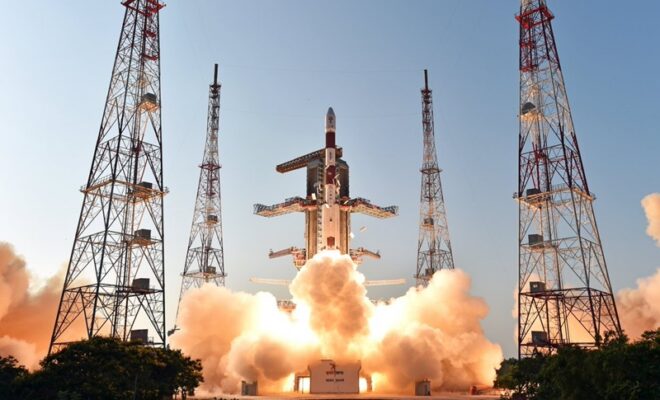
The Indian government has put in place tougher guidelines for the exit of officials from the Indian Space Research Organisation (ISRO) after reports that over 100 scientists and technical staff have resigned or made applications for voluntary retirement in recent months. The reason behind the tough measures is the belief that the exodus of officials may impact some key projects, including India’s human space flight program, Gaganyaan.
The latest guidelines by the DoS state that applications for resignation and voluntary retirement from Group ‘A’ scientific and technical officers associated with national missions will no longer be approved as usual.
Why Has the Government Tightened ISRO Exit Rules?
This comes amid a “spate of resignation and voluntary retirement” requests made by the Department of Space to experienced scientists who are working on strategic missions. As per the sources, more than 100 employees have quit or are about to quit ISRO, of which a considerable number are from the U R Rao Satellite Centre, URSC, in Bengaluru, and the Vikram Sarabhai Space Centre, VSSC, in Thiruvananthapuram.
It is expected that the loss of experienced scientists at this stage will hamper the planning, technology development, and knowledge transfer of key national programs.
Which Missions Could Be Affected?
The foremost concern for the government regarding this policy change will be the effect on the strategic programmes such as Gaganyaan, India’s first human spaceflight programme.
Other than Gaganyaan, those scientists who have been working on programmes such as satellite launches, launch vehicles, deep space explorations, etc., will also be included in this policy. This is because these projects take years to train for and it is difficult to find replacements for such experts.
As most of these projects include classified and expert technology, a few departures can affect the entire project.
Why Are Scientists Leaving ISRO?
So far, there has been no official cause stated by the government that would be responsible for this trend of resignations.
Nevertheless, some probable causes have been pointed out by experts and in various media publications. India’s booming private space sector has made available lucrative job offers. On the other hand, experienced scientists have started getting hired by startups and commercial space firms and even foreign research institutions.
Employees who had already served in public employment for many years have also taken voluntary retirement, while others have gone into the private sector due to reforms in the Indian space sector.
What Has Changed Under the New Rules?
The most recent directive issued by the Department of Space has done away with the lenient policy formulated in 2020.
Under the previous policy, the directors of each ISRO Centre enjoyed more power regarding granting permission for resignation or voluntary retirement. With the amended policy, any request for resignation or voluntary retirement from scientists working on vital national projects will have to go through a more thorough evaluation process and will not be accepted straightaway.
Will Ongoing Space Missions Be Delayed?
Though there have been reservations regarding the recent attrition, ISRO leaders have assured that all future projects will be undertaken according to plan.
ISRO has made it clear that India continues to be focused on its visionary plan in space, such as Gaganyaan, next generation rockets, planetary missions, and satellites. But one cannot overlook the need for keeping experienced scientists in the organization.
Why Talent Retention Matters in Space Research
In contrast to most other sectors, space research relies extensively on the expertise accumulated over the years through experience.
Researchers who are working on such things as launch systems, propulsion, spacecraft design, navigation, and mission control generally work for long periods. If experts leave their positions, then it will take some time to replace their expertise.
Thus, for an institution such as ISRO, keeping skilled researchers is just as crucial as the innovation of technologies.
What Does This Mean for India’s Space Programme?
The strictness of the ISRO’s exit criteria reveals one of the main problems which government-based research organizations have to face in the context of the competitive international marketplace.
With the growth of the country’s space economy and increased private sector involvement, finding a balance between career development opportunities and strategic needs is becoming crucial.
This decision demonstrates the desire of the government to ensure the success of its mission, at the same time building up India’s leadership among the top space powers in the world.
Conclusion
The new ISRO exit policies have been formulated as an immediate reaction to the exit of over 100 scientists from the most significant projects run by India in the space sector.
On one hand, the government wants to ensure the continuation of the mission and thus, tighten the policy for exit, but it also signifies the competition that has increased for talented scientists in the ever-developing space sector of India.
Indian space programs require not only good rockets but also the best scientists behind them.
Stay Ahead with the Latest Headlines That Matter Most
What Happened to Indian Sailor?
Explore the full story behind the tragic Oman coast attack and the latest official updates.
When Will SBI IPO Launch?
Discover the expected IPO launch date, GMP trends, allotment details, and key investor updates.
Why Is Services Index Important?
Check how the new monthly services index could influence India’s economic growth and policymaking.
How Will PF Transfers Change?
Explore the new EPFO transfer options and learn how the portal upgrade benefits employees.
How Is Railways Stopping Theft?
Discover the technology and CCTV measures Indian Railways is using to curb massive linen theft.