
Tamil Nadu Delta Irrigation Crisis Explained: How Monsoon Failure and Cauvery Water Shortage Are Affecting Farmers
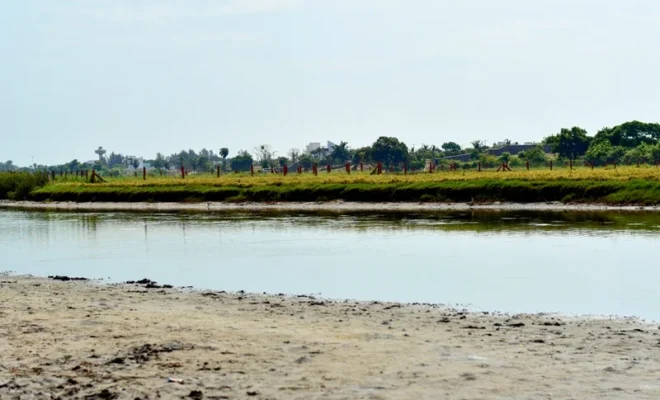
Once again, the crisis in the Tamil Nadu Delta irrigation system has cropped up, with worries about the weak monsoon season and uncertainties regarding the availability of Cauvery waters posing a problem for the Tamil Nadu State during the very important Kuruvai cropping season. Farmers from all around the Cauvery Delta region are apprehensive about a weak monsoon and lesser availability of water in the rivers, which might hinder irrigation efforts and also lead to poor paddy crop cultivation.
Why Is the Cauvery Delta So Important?
The Cauvery Delta is also known as the “Rice Bowl of Tamil Nadu” owing to its large output of paddy for the whole of Tamil Nadu. The districts like Thanjavur, Tiruvarur, Nagapattinam, Mayiladuthurai, and portions of Tiruchirappalli district have their agriculture based on irrigation using waters of Cauvery River.
While most other areas are dependent on underground water sources, this area depends on the release of water through canals constructed from the waters of the Mettur Dam. Any delay in release of water even for a few days can adversely affect the crop production.
How Has Monsoon Failure Triggered the Crisis?
The southwest monsoons are essential to ensure sufficient reservoir inflow in Karnataka, where the Cauvery River takes birth.
If the monsoons fail to deliver the expected levels of rainfall in the catchment area of the river, then it will be difficult to store enough water in the reservoirs. It would directly impact the volume of water that can be finally used in Tamil Nadu.
Due to poor monsoons recently, people are worried about the lack of water required for the Kuruvai farming season.
Why Is Cauvery Water Sharing Becoming Contentious Again?
The Cauvery river has become one of the longest-standing inter-state water disputes in India between the states of Tamil Nadu and Karnataka.
Water distribution is subject to legal and judicial means, but disputes regularly arise in periods of drought years.
While Tamil Nadu claims that release is necessary to safeguard its agriculture, Karnataka claims it because of low levels in reservoirs and the needs of drinking water and irrigation.
Recent discussions between both states indicate that the matter continues to be a political issue especially in cases of water scarcity.
How Are Farmers Being Affected?
Uncertainty in itself is a problem for the delta farmers.
When there is no information on the availability of irrigation water, the farmer becomes uncertain about preparing the nursery and transplanting the paddy.
Many farmers decrease their production land area while some delay in sowing the crop altogether to prevent losses.
Uncertainty leads to shortage of labor, investment in agriculture, and income generation. The planting of the paddy crop has to be done according to the season.
Why the Mettur Dam Matters
The Mettur Dam functions as the main portal through which Cauvery water flows into the state’s irrigation system.
Conventionally, release of water from the dam indicates the start of the Kuruvai crop cultivation period.
In cases where there is insufficient water storage in the dam due to poor rains in the upstream regions, the administration might find itself compelled to postpone its release, which leads to a chain of consequences down the delta region.
Consequently, the functioning of the dam is now considered one of the key barometers for the agricultural future of the state every year.
Can Groundwater Solve the Problem?
Groundwater is no panacea for many areas in the Cauvery Delta. The pumping of groundwater over several years has reduced water tables to such an extent that it becomes tough to depend on bore wells alone.
In addition, the use of groundwater in terms of electricity or diesel consumption causes huge expenses for the farmers.
Thus, irrigation of paddy fields from the Cauvery river remains the best alternative from experts’ point of view.
What Is the Government Doing?
The state government of Tamil Nadu along with the central government is still monitoring reservoirs’ storage, rainfall predictions, and releases of Cauvery water.
The state has consistently pressed for the distribution of its share of Cauvery water along with contingency plans for the farmers in case the shortage persists. The discussion regarding the distribution goes on via the Cauvery Water Management Authority.
Experts of agriculture sector have also suggested efficient methods of irrigation, better management of reservoirs, and shift to less-water-consuming crops in the region.
Why This Crisis Goes Beyond One Farming Season
The present crisis facing Tamil Nadu Delta region regarding irrigation is one of many problems associated with climate variability, increasing demand for water resources, and river management across states.
Variations in monsoon season, warming trends, and additional strain on river systems make traditional agriculture planning more challenging.
Without changes in water management, reservoir operation, and climate-adaptive farming techniques, such crises are likely to continue to impact farmers in the future.
Conclusion
The Cauvery Delta is still one of the most fertile regions of India but its future is dependent on the rains that come with the monsoon season and on regular water release from the rivers.
With the uncertainties of rainfall and river water distribution, farmers are being forced to take tough decisions related to crop production and investments for their livelihoods.
The situation in Tamil Nadu Delta is not only about lack of rainfall but about the interrelationship between climate uncertainties, river water management and interstate river water distribution.
Stay Ahead With Today’s Biggest Stories and Breakthroughs
How Safe Is Gaganyaan Now?
Where Can You Stream Lenin?
What Happened Near Phu Quoc Island?
Why Did Meta Remove AI Features?
Discover why Meta pulled its newly launched AI image tools and what led to the sudden decision.
How Will UPI Benefit Travelers?