NASA Invites ISRO to Join Moon Base Programme: What India-US Space Partnership Means for the Future
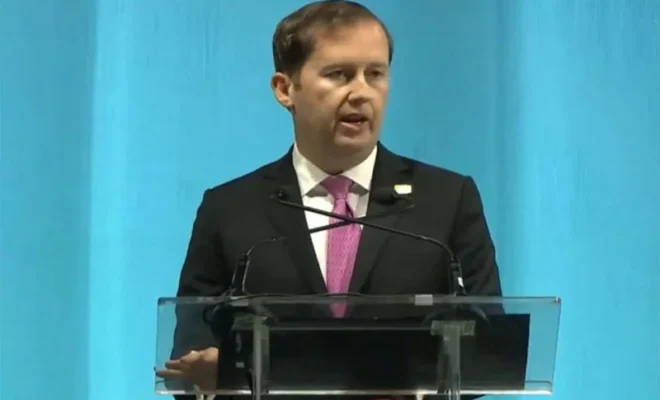
India and the US have taken their space cooperation to the next level, now that NASA has offered India’s ISRO the opportunity to be part of NASA’s ambitious Moon Base program. This development was announced on August 11, 2026, at the 9th India-US Civil Space Joint Working Group meeting held in Bengaluru.
The development is important because it represents a move from individual satellite and scientific missions to cooperation in terms of lunar exploration, human space flight, scientific research, and space infrastructure.
Journalist Sidhant Sibal, on his end, has featured the development on his X platform. According to him, India and the US are strengthening their space collaboration after meeting in Bengaluru. The official announcement from the US Mission in India confirms that NASA has extended an invitation to ISRO to be part of the Moon Base program while both countries have decided to continue talks regarding scientific data sharing through the Artemis Accords.
What Happened During the India-US Space Talks?
The ninth meeting of the India-US Civil Space Joint Working Group took place at ISRO headquarters in Bengaluru on August 5 and 6, 2026. This meeting brought together senior officials from both nations for discussions on the future course of cooperation in civil and commercial space endeavors.
Opening remarks were made by the ISRO Chairman/Department of Space Secretary Dr V. Narayanan and US Ambassador to India Sergio Gor. The discussions revolved around deepening cooperation in space science, human spaceflight technologies, and commercial space activities.
In addition to this, the meeting takes into account the broader context of the strategic relationship between India and the US, which includes cooperation in the Artemis Accords, and the NISAR mission.
What Is NASA’s Moon Base Programme?
The Moon Base project of NASA is associated with the general American program of building an enduring human presence in orbit around the Moon as well as on the Moon. It implies not viewing the Moon missions as one-off expeditions but developing an infrastructure and skills that will allow astronauts to operate close to the South Pole of the Moon.
For NASA, such lunar outpost means humanity’s first settlement on the Moon where astronauts will be able to live and carry out their research.
India’s involvement in the program will allow the country to contribute its own space technology, science and experience in human space flight to the much more extensive program of international lunar exploration.
Nonetheless, the present-day announcement does not mean that India has decided to participate in this particular Moon Base mission by providing some hardware or astronauts.
Why Is ISRO’s Participation Important?
India’s capacity in lunar exploration has seen tremendous progress. The Chandrayaan series of missions has positioned ISRO among the top players in lunar science, and the country’s successful landing on the lunar South Pole further enhanced its reputation in international space exploration efforts.
A possible partnership in Moon Base would be particularly timely for India as the organization is simultaneously developing its human space flight program, with plans for future lunar expeditions and the construction of the Bharatiya Antariksh Station.
Increased cooperation with NASA would offer India the opportunity to utilize international expertise, scientific networks, and technology related to long-term human space flights and lunar explorations.
It would further provide Indian scientists and engineers with greater involvement in international lunar explorations in the future.
How the Artemis Accords Fit Into the Partnership
The Moon Base mission has also been connected to the Artemis Accords program by India’s involvement in this framework, which serves as an international approach to peaceful lunar exploration and deep space exploration.
India became a member of the Artemis Accords program in 2023, thereby reinforcing the basis for further cooperation between India and the USA in future missions.
The most recent negotiations show that the cooperation between the two nations is heading towards concrete spheres of cooperation rather than focusing exclusively on the diplomatic aspect. Moreover, the two states agreed to develop discussions of open scientific data sharing within the Artemis program.
This would be especially beneficial for lunar science, as sharing data may help multiple countries learn more about the lunar surface.
NISAR Already Shows What India and the US Can Achieve Together
The newest development also follows the success of the previous collaboration between NASA and ISRO on the NISAR satellite.
NISAR is a joint Earth observation project which illustrates how two agencies can collaborate using their technological capabilities on complex projects. The satellite uses radar to observe changes in Earth’s surface. It was launched in 2025.
These Moon Base talks may be regarded as the next step in the process, moving from Earth observation to human space flight and the exploration of the Moon.
What Might India Be Able To Offer In Such Collaboration?
This particular contribution has not been identified yet. Therefore, it is too early to state that ISRO will offer a certain spacecraft, rover, habitat module or even an astronaut.
However, India has some developing capabilities when it comes to launchers, lunar exploration, robots, spacecraft systems and even human space flights. This might be relevant as the talks continue.
Experience gained by India within Chandrayaan projects and Gaganyaan program might serve as a technological basis for future cooperation.
Why This Matters for India’s Space Ambitions
This move occurs amid India’s ever-growing plans in space. In addition to the Gaganyaan program, India is preparing for its future missions on the moon and the construction of its own Bharatiya Antariksh Station.
Increased collaboration with NASA may assist India in connecting these national space aspirations to international exploration programs.
At the moment when the exploration of the Moon becomes more competitive and collaborative, it may increase the position of India as one of the leading space nations.
What Will Be the Next Step?
The first thing that needs to happen now is the further discussion between NASA and ISRO about how India could contribute to the Moon Base program.
With this new development, India has been officially invited to join the program, but there is no exact mission timeline, Indian hardware and astronauts participation.
It is important to note the difference because the development is huge, but the operational details should be worked out later.
Stay updated with the latest discoveries, missions, and global space collaborations shaping the future of exploration.
What Caused Falcon 9 Crash?
Uncover the latest findings from the lunar crash site and what they reveal about the Moon’s surface.
Can Amit Kshatriya Lead Successfully?
Check out how the Indian-origin NASA executive could shape the future of the Moon to Mars program.
Why Did Pollution Drop Sharply?
Find out how NASA linked the lockdown period to North India’s lowest pollution levels in two decades.
Will Artemis I Finally Launch?
Dive into NASA’s renewed attempt to relaunch the Moon rocket after two earlier failures.
How Will ISRO NASA Collaborate?
Look into the joint mission plans for launching India’s first space station with NASA’s support.
Conclusion
In inviting ISRO to collaborate on its Moon Base project, NASA may have paved the way for a major development in the Indian-US space partnership. Through the Bengaluru meet of August 5-6, the discussions have moved away from the traditional focus on collaboration in satellites and moved into the domain of lunar missions, human space flights and sharing of scientific data.
While for India, it means that ISRO is developing human space flight capabilities and planning for more challenging missions in the future.
The invitation does not imply that India is involved in a completed Moon Base project. It indicates rather that US sees ISRO as a key partner for humanity’s return to the Moon in the next phase of the mission.
India’s journey in space is not only about getting to the Moon – but the next question is whether ISRO would help to build up something post-landing.