ISRO Outlines Roadmap for Bharatiya Antariksha Station With 2035 Space Station Target
India’s efforts in space have been moving away from missions to projects aimed at creating a permanent human space station. The Bharatiya Antariksha Station will be the next big step towards India’s future human space station ambitions, with 2035 having been announced as the year that will see the station established.
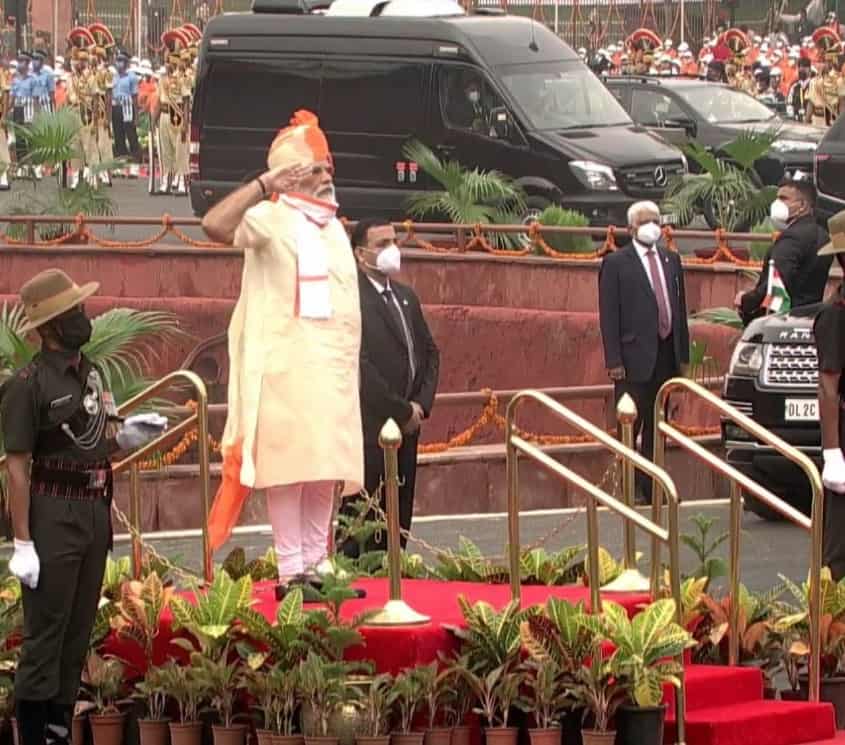
The project is part of India’s human space flight programme and marks a major step forward in its space programme as compared to Gaganyaan missions. Prime Minister Narendra Modi had announced 2035 as the year that India would create its own space station and the year 2040 for an Indian astronaut landing on the Moon.
What Is the Bharatiya Antariksha Station?
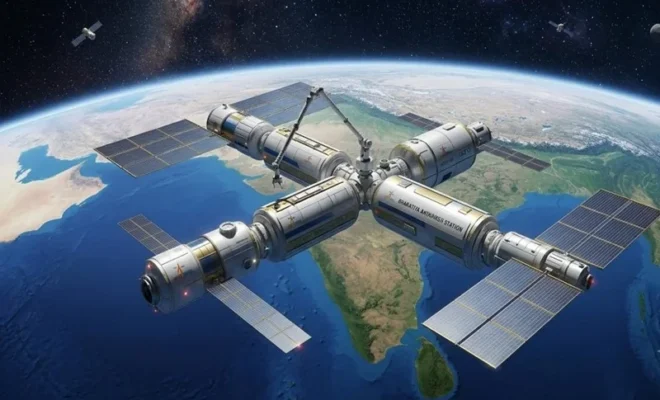
The Bharatiya Antariksha Station, referred to as BAS for short, will be India’s independently operated space station in the Earth’s lower orbit.
While a satellite has a simple design with very little functionality, a space station needs many components to make sure that it can host astronauts for extended periods. It should have life-support systems, habitation modules, power generation capacity, communication devices, and docking systems to enable astronauts to carry out various scientific experiments.
As such, unlike a simple satellite, a space station is way more than just a mission. It’s the creation of an ecosystem that would allow regular human missions to orbit.
Why 2035 Is an Important Year for the Programme
The 2035 deadline for the establishment of the station will mark an important step in India’s human space programme, seeing that it marks the beginning of India’s ability to have its own permanently operating space station.
The 2035 deadline was announced together with plans for an Indian astronaut mission to the Moon in 2040. The sequence is also vital since Gaganyaan will prove the ability of India to safely send and bring astronauts to and from Earth while the space station will enable the astronauts to live and conduct experiments in a much more complex environment.
The Space Station Will Be Assembled in Orbit
India won’t construct and launch its own Bharatiya Antariksha Station as one big structure.
Instead, the station is going to be constructed incrementally using multiple launches into orbit. Starting with a basic module, other modules will be added to the station incrementally to enhance its capacity to perform various functions.
A model of India’s planned base module was demonstrated publicly on National Space Day in 2025.
How Gaganyaan Fits Into the Plan
Gaganyaan mission is considered to be among the most crucial steps in the process of creating the Bharatiya Antariksha Station.
All those capabilities required for delivering humans to orbit will be applicable for creating the space station as well. They include crew modules, life support systems, astronaut training, emergency systems, as well as launch vehicles and re-entry into Earth’s atmosphere.
Only after acquiring all these capabilities it will be possible to go further to even more advanced missions.
Thus, the space station cannot be regarded as an isolated project which will appear out of nowhere in 2035. Rather, it is a step in the continuous development of India’s human spaceflight program.
What Will Astronauts Do There?
One of the key purposes of the Bharatiya Antariksha Station will be conducting various scientific experiments.
Microgravity makes it possible for scientists to conduct research in such spheres as material science, biology, physics and others. The space station will provide Indian researchers with their own place for conducting experiments.
The Indian orbital station will make it possible for Indian scientists to carry out experiments according to their needs rather than rely on access to foreign space stations.
Why India Needs Its Own Space Station
India already participates in international space cooperation, but an independently operated station would provide a different level of strategic and scientific capability.
A national station would give Indian astronauts regular access to orbit and allow researchers to establish longer-term programmes in microgravity.
It could also strengthen India’s position in the international human-spaceflight community.
For a country that has rapidly expanded its satellite, lunar and solar exploration capabilities, developing a human orbital platform represents the next major technological step.
The Bigger Goal: From Low Earth Orbit to the Moon
Station-building efforts are also closely related to India’s plans for exploring the Moon in a more comprehensive way.
In addition, India has plans to put an Indian astronaut on the Moon by 2040.
Operating a space station is the perfect intermediate stage between the Earth-orbit missions and the exploration of deep space. It gives many opportunities to practice in operating a station, which is crucial for the successful completion of long-range human missions.
What Makes the Project Challenging?
Space stations are much more complicated projects than satellites because everything that is installed on board of the station needs to work flawlessly.
All systems such as power, oxygen and temperature regulation, waste management, communication and emergency procedures need to be able to work constantly. In addition, the station requires successful launches and orbital docking.
Another challenge in the construction of space stations is regular resupplies, which means that India will need reliable launch facilities and spacecrafts.
Why This Could Change India’s Space Programme
Construction of Bharatiya Antariksha Station implies a new approach to space missions of India – moving from conducting missions to sustaining a permanent human presence.
All previous achievements of India in exploring the space were the successful robotic missions to the Moon and observation of the Sun. Construction of a space station will make India maintain human presence and infrastructure in the space.
That is why the 2035 target is one of the most challenging targets in the history of India’s space programme.
Conclusion
The Bharatiya Antariksha Station 2035 does not just involve sending an Indian space station into space. It is the next phase of the ambition that India has to take humans to space.
It involves a pathway for India, starting with Gaganyaan, and going on to habitation, science and exploration of humans beyond. The station is said to evolve itself in stages through different modules and missions.
Reaching the target of 2035 means the transformation of history for India – from sending Indians to space to having an Indian platform in space that will be used to live and perform research.
Gaganyaan is the first big step that India will take towards space travel; Bharatiya Antariksha Station is the second step towards staying there.
More Space Updates You Shouldn’t Miss
How Is ISRO Using Satellites For Farming?
Check out how new Earth observation data could strengthen agriculture monitoring and planning.
Could India Join NASA’s Moon Base?
Uncover what the proposed NASA-ISRO partnership could mean for India’s future lunar ambitions.
What Happened During Vikram-1 Integration?
Dive into ISRO’s Vikram-1 rocket integration and what it signals for India’s private space race.
Why Did Over 100 Scientists Quit?
Find out why more than 100 Indian space scientists chose voluntary retirement amid tightened ISRO exit rules.
What Did Gaganyaan’s Safety Tests Prove?
Reveal how three critical crew module tests strengthen preparations for India’s human spaceflight mission.