
India Eyes First Arctic Freight Voyage via Northern Sea Route to Diversify Supply Lines
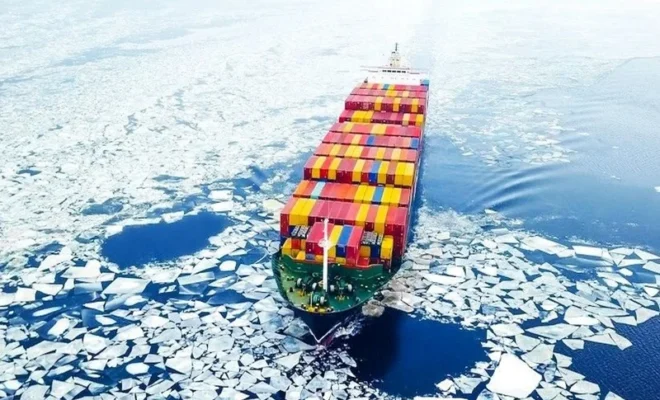
India is now considering the north as an alternative means of shipping. In 2027, the nation will be sending its first-ever cargo vessel through the Russian Northern Sea Route (NSR). This could signal an important development regarding the diversification of India’s maritime logistics network as well as enhancing connectivity with Russia. It was the outcome of deliberations that took place between Indian officials and the Arkhangelsk region of Russia regarding the economic potential of the Arctic route.
This new venture takes place against the backdrop of an increasingly uncertain global shipping environment where disruptions within traditional maritime corridors and geopolitical challenges have made countries consider alternative shipping routes. India itself may end up with the Northern Sea Route as an additional choice apart from other corridors like the Suez route, the International North-South Transport Corridor, and the Eastern Maritime Corridor.
What Is the Northern Sea Route?
The Northern Sea Route is a sea route along the Russian Arctic coast which connects Russia’s Atlantic and Pacific coasts using Arctic waterways. The geographical value of the Northern Sea Route is simple enough since the route can significantly shorten the distance for some Asia-Europe voyages compared to those passing through the Suez Canal or around the Cape of Good Hope.
Shipping-related innovations have drawn more attention to the route. China has started its commercial operation through the NSR, as the Arctic route will drastically reduce shipping time between China and Europe compared to the conventional route.
For India, however, the matter stands somewhat differently. The immediate goal is not to replace any of the existing global shipping lines but to create an additional logistic line connecting India with Russia and potentially the whole Eurasian continent.
Why India Is Looking at the Arctic Route
The key rationale lies in diversifying the supply chain. In today’s world of global trade, there is increased vulnerability to disruptions along vital maritime chokepoints. Take, for instance, the Red Sea situation where shipping firms had to divert ships through southern Africa.
A new path enables India to enjoy more leeway during times when the traditional paths become too expensive, overcrowded, and vulnerable to political instability.
Moreover, the Arctic route is part of India’s overall strategy of developing alternative trade corridors, which means not just sticking to the maritime route but finding several routes. India and Russia have already been developing an Eastern Maritime Corridor via Chennai and Vladivostok, while both countries have shown interest in the Northern Sea Route.
India’s 2027 First Voyage
According to the recent reports, India will try to complete its first cargo movement in 2027 through the Northern Sea Route. The negotiations between the Russian region of Arkhangelsk are focusing on the commercial benefits of the route and the economic opportunities which can be offered.
The voyage itself is not supposed to be considered as the indicator that India is going to change the major routes for trading with the Arctic regions.
Successful voyage will give India the possibility to evaluate the time of transit, cargo handling, insurance, ice conditions, port facilities and other important factors of Arctic shipping.
How Much Faster Could It Be?
Another factor in favor of the Northern Sea Route is the shorter geographical distance between certain trade routes between Europe and Asia. It is believed that the Arctic route is capable of reducing time spent on the journey considerably in comparison with traditional routes, however, the extent to which time will be saved varies significantly depending on the point of departure, the point of arrival, the ship used, and the season.
India currently possesses another successful example – the Chennai-Vladivostok Eastern Maritime Corridor. According to the Indian Government, the said route is capable of shortening the duration of a journey from the eastern coast of India to the Far East of Russia from more than 40 days to 24 days.
The Arctic route could become a valuable addition to this transport network in the future.
The Arctic Route Is Not a Simple Shortcut
However, despite its potential, there are a number of difficulties associated with the Northern Sea Route.
The Arctic continues to be a harsh environment for maritime trade. It is subject to difficult ice conditions, which sometimes may require the usage of ice-breaking vessels. Furthermore, the Northern Sea Route is seasonal; hence, it cannot be considered as a regular maritime passage.
Another problem of using the Northern Sea Route is cost. Despite the shorter distance, the costs may rise due to ice-breaker services, special ice-class vessels, and increased insurance costs.
Recently, it has been argued that the NSR is still not an important maritime commercial route when compared to other established routes around the world. Most of the maritime traffic through this route is associated with export of Russian energy resources.
Why Russia Wants India on the Route
There is both a commercial and strategic importance for Russia in encouraging the participation of India in the Northern Sea Route.
It plays a vital part in Russia’s strategy for developing its Arctic infrastructure, building ports and transporting more cargo between Europe and Asia. Participation from countries like India will enable Russia to transform the NSR from being just an export route for its resources into an international trading route.
The involvement of India in the NSR will add to the logistics aspect of the India-Russia partnership which covers energy, defence, commerce and transport.
For India, this will be a chance to gain experience of working in the Arctic region and secure yet another trade route in the future.
How the Route Fits India’s Larger Connectivity Strategy
The Northern Sea Route is certainly not being viewed in isolation. India has been making plans for an alternative connectivity corridor system as well.
Chennai-Vladivostok Eastern Maritime Corridor seeks to enhance connectivity between the ports of eastern India and the Far East of Russia, while the International North-South Transport Corridor offers multi-modal connectivity between India, Iran and Russia and beyond.
It is evident that India and Russia have specifically pinpointed these corridors as well as the Northern Sea Route as avenues of cooperation between them.
These are indications of an emerging trend in which India’s trading map would involve diverse corridors, where trade would not be confined only to traditional westbound sea routes.
Climate Change Is Making the Route More Accessible — But Also More Controversial
Increased economic interest in the Arctic region is inextricably linked to changing ice conditions. With warming in the region, the duration of navigability of certain sections of the Northern Sea Route has grown.
This presents economic opportunities, yet at the same time poses environmental threats.
Increased activity of ships involves certain dangers including oil spills, problems with marine life, emissions, and emergency responses in one of the most vulnerable regions of the world. According to recent studies, it has become evident that responding to accidents in the remote Arctic is rather complicated and carries certain environmental dangers for increased activity of shipping.
Thus, from the perspective of India, participating in this project involves striking a balance between economic benefits and safety.
What This Means for Indian Trade
The direct effects on Indian consumers and businesses will probably not be very significant. One voyage or expedition will not lead to any immediate transformation of India’s import-export channels.
However, its significance resides in what might come next.
In case the voyage proves that Arctic shipping can be done successfully and economically, India may start testing further transportation of cargoes via the route. It may help them have an alternative choice in cases of disruptions of their usual routes.
This might help India establish itself as a player in the developing Arctic economy, and enhance ties with Russia and northern Eurasia.
Stay Updated on Key Energy and Maritime Developments
How Is India Protecting Energy Imports?
Check out how India is safeguarding vital energy supplies amid Red Sea shipping threats.
Why Are Hormuz Tensions Driving Oil Prices?
Find out why Strait of Hormuz disruptions are pushing crude oil prices higher worldwide.
How Could U.S.–Iran Strikes Impact Shipping?
Uncover how escalating strikes around Hormuz are affecting global shipping and oil markets.
What Happened in the Hormuz Attack?
See how Indian casualties from the attack could affect global maritime trade and shipping.
What Makes ‘Shruti’ Patrol Vessel Significant?
Explore the Indian Navy’s next-generation vessel, its key features, role and strategic importance.
Conclusion
India’s first-ever shipment along the Northern Sea Route is something more than an interesting Arctic test run. This project fits into a much bigger strategy of creating diverse and flexible routes.
The path has its obvious benefits in the form of the reduced distance along some Asia-Europe shipments. At the same time, there are serious challenges in the form of ice, seasonality, lack of infrastructure, insurance, environmental risks, and costs.
At the moment, India seems to be exploring new possibilities instead of replacing existing shipping networks. Should this trip prove to be successful in 2027, however, it can serve as a first step in establishing a new route for Indian trade through the Arctic region.
It is not about leaving the Suez Canal behind but about having other options in case of need.