
Tata Power & IIT Bombay Partner for Renewable Energy Research & Launch Digital Command Centre
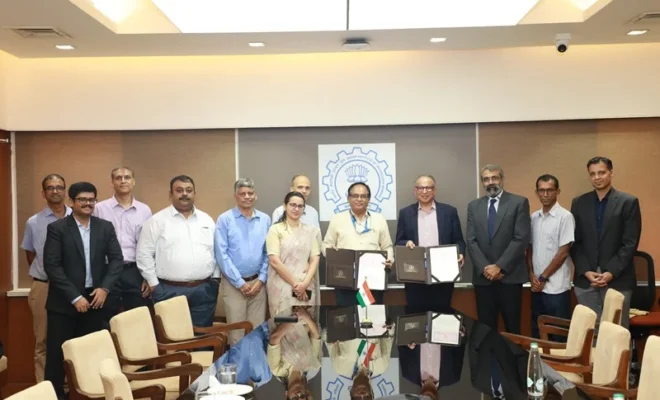
The association between Tata Power and IIT Bombay in relation to renewable energy, digital technology, and better power-system management has been further enhanced. This partnership involves one of the top integrated power firms in India and an elite research institute working together to develop solutions that may help India transform its electricity system to be more efficient and renewable-dominated.
A critical aspect of the association includes building a Digital Command Center where data, digital technology, and analytics will help make decisions in relation to energy activities. It indicates the increased relevance of technology as India builds renewable capacity and develops a more complicated electricity system.
What Is the Tata Power-IIT Bombay Partnership?
The collaboration aims at bridging academic research with practical demands in the energy sector. IIT Bombay will contribute through research capacity, technical knowledge, and innovative ecosystem, whereas Tata Power will contribute through industry experience and testing environments for new technologies.
The collaboration will concentrate on areas related to renewables, digitization, and future of power systems. Such collaborations become even more necessary as electricity grids need to handle more solar and wind power, distributed generation, energy storage, and altered consumption patterns of electricity.
Why Renewable Energy Research Matters
India is making quick progress towards its clean energy goals in terms of the renewable energy capacities it is building. However, integrating renewable energy into the power supply system faces difficulties that go beyond merely adding solar panels and wind energy sources to the grid.
Solar and wind power sources are weather-dependent and this requires better forecasting, monitoring, and management of the demand and supply in order to ensure the reliability of the power supply.
Collaborations in research like the partnership between Tata Power and IIT Bombay can be helpful in this respect, because they allow the combination of research with practice in the energy sector.
What Is the Digital Command Centre?
Digital Command Centre is among the key technology-based components of this collaboration. In essence, the command centre could consolidate data from different parts of the energy grid and present them in such a manner that allows operators and other relevant decision-makers to see what is going on in almost real time.
For a power company, it means that this digital infrastructure will facilitate monitoring of assets and analysis of operational information as well as detection of potential problems and rapid decision-making regarding them.
Ultimately, the purpose here is to establish a new approach to managing energy, which will involve not only analysis of information collected from different systems but also its consolidation.
How AI and Data Could Change Energy Management
The trend towards the use of artificial intelligence and analytics is transforming the manner in which energy firms conduct business.
Data can aid firms in predicting electricity demand, renewable generation capacity, odd machinery performance, and maintenance scheduling. The combination of all the above into a digital command center could help decision makers to be faster and more informed.
In the case of renewable energy specifically, forecasting will prove useful because the generation of renewable energy depends on the environment.
IIT Bombay’s Role in the Collaboration
IIT Bombay contributes the academic and research angle to the collaboration. IIT Bombay is one of the premier institutes of engineering and research and thus has proficiency in fields ranging from energy systems, artificial intelligence, data science, and electrical engineering, among others.
It serves as an avenue to utilize research expertise in order to tackle any issues that arise in the power sector.
There is scope to bridge the gap between research and commercialization through this industry-academia collaboration. It serves as an avenue to test the applicability of research in the real world, and vice-versa.
Tata Power’s Renewable Energy Focus
The company is increasingly moving into other areas within the power value chain, ranging from renewable generation through to transmission and distribution, along with rooftop solar power and clean energy solutions.
Tata Power’s increased push for digitalisation is part of a broader transition happening across the power sector. As the systems grow more decentralized and there is more renewable generation, traditional ways of managing and monitoring the infrastructure will no longer work.
Digital platforms can enable the kind of visibility needed to manage that system.
Explore the latest Tata Motors, EV, and energy developments shaping India’s future.
What’s Behind Tata Power’s Downgrade?
Check out the renewable energy deal and the factors behind Tata Power’s share downgrade.
Can India Reach 100 GW Nuclear?
Find out how five next-generation reactors could transform India’s nuclear power ambitions.
When Will Tata Curvv EV Launch?
Uncover the expected price, range, battery specifications, and upcoming feature upgrades.
What Does Harrier EV Offer?
Browse the complete details on Tata Harrier EV’s launch, features, and expected specifications.
Why Did Tata Motors Profit Fall?
See how Tata Motors’ Q4 profit declined despite achieving a record annual PBT
Why the Partnership Matters for India
Energy transition in India cannot happen just by increasing its renewable energy capacity but also requires grid strengthening, better forecasting, energy storage, digitalization and talent with appropriate skills.
Tata Power-IIT Bombay partnership combines both elements of the energy transition that are industry and academia.
The Digital Command Center is an example of technological side of this transition whereas the work on renewable energy is relevant in solving long-term problems of efficiency and integration.
What This Could Mean for the Future
The relevance of this collaboration goes beyond one research project or the establishment of the digital centre. In fact, this represents a wider trend in the evolution of the energy sector towards intelligent and interconnected technological systems.
The increasing share of renewables in India’s energy balance creates an urgent need to be able to control and forecast energy flows.
Thus, digital command centres, AI-based analysis, and advanced research can potentially have a much more significant impact on the operations of electric companies – from generation and storage of renewable energy sources to its distribution and consumers’ demand.
Conclusion
The collaboration between Tata Power and IIT Bombay is particularly relevant for the current situation in India’s energy sector, as the country is developing renewable energy while trying to ensure its own energy security.
This collaboration brings together the experience of Tata Power in the energy sector with the research capacity of IIT Bombay with the goal to investigate new technologies that would make renewable energy sources smart.
One more step in this direction was the opening of the Digital Command Centre. India’s renewable-energy transition will not be powered by solar panels and wind turbines alone. Research, data, AI and digital command systems could become equally important in determining how efficiently that clean-energy future operates.