
CAG Audit Flags Drinking Water Quality Issues at Major Indian Railway Stations: Ministry Orders Action
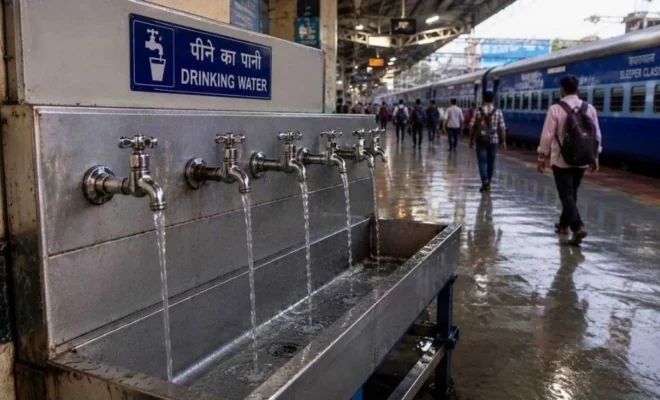
An audit carried out recently by the Comptroller and Auditor General of India (CAG) has revealed issues regarding drinking water quality as well as basic passenger facilities at the country’s railway stations. This issue is of grave importance as thousands of people use the country’s railway stations for daily travel and rely on the facilities for drinking water.
According to the news regarding the latest findings of the CAG audit, 512 railway stations were checked and deficiencies noted in basic passenger facilities. Even more disturbing was the finding that water samples collected from the coolers at eight stations tested positive for E. coli and coliform bacteria.
This has led to the railway ministry taking up action regarding this problem with plans for reforming the drinking water system using the “Tank to Tap” filtration and monitoring system.
What Did the CAG Audit Find?
This report has revealed a bigger issue than just the polluted water. 458 out of 512 railway stations do not have proper passenger facilities as per the reports on CAG’s findings. This includes insufficient toilets, urinals, and drinking-water taps.
Nevertheless, what is alarming about the findings regarding the drinking water is that passengers tend to believe the water provided by railways through coolers and taps is clean.
Detection of E. coli is significant because the bacterium is related to faecal contamination. However, this should not mean that every passenger who uses water from railways is likely to get ill; it just means there should be more control over water quality.
Why Is E. Coli in Drinking Water a Concern?
E. coli is frequently employed as an indicator bacterium while evaluating microbial quality of water. Some strains have the capacity of causing digestive tract infections like diarrhea, abdominal pain and vomiting.
For railway passengers, the issue is compounded further by the large number of people who use these facilities daily. Children, elderly individuals and people who have low immunity can become susceptible to infections that may occur from the consumption of contaminated water.
The results by the CAG hence pose the larger question of whether water treatment, storage and cleansing is being done regularly in railway premises.
The Problem Goes Beyond the Water Cooler
The latest findings also highlight weaknesses in basic station infrastructure. The CAG’s broader observations indicate that water availability and passenger amenities remain inconsistent across the stations examined.
This is not an entirely new concern. Earlier CAG audits of railway stations had also identified gaps in drinking-water infrastructure and testing. A previous CAG report, for example, noted deficiencies in the availability of drinking-water taps and water coolers at selected stations and raised concerns about compliance with prescribed water-quality testing procedures.
The latest audit therefore brings an old infrastructure and maintenance issue back into focus at a time when Indian Railways is simultaneously undertaking large-scale station modernization.
What Has the Railway Ministry Ordered Now?
Based on the recommendations made by the CAG, there has been an effort made by the Ministry of Railways to conduct a major revamp of drinking water facilities.
There have been reports that the Indian Railways is considering introducing a “Tank to Tap” water purification technology at about 20,000 places. This new system is anticipated to include better water coolers, filters and enhanced monitoring mechanisms.
This “Tank to Tap” system is designed to make the whole process of water supply chain more transparent and not just concentrate on the last stage where passengers obtain drinking water.
Why Tank-to-Tap Monitoring Matters
The water can get affected by the contaminants during any of the various stages after leaving the source and before being used. The problem can be caused due to the poor condition of the storage tanks, contaminated distribution networks, or uncleaned coolers even if the incoming water is of good quality.
So, a more comprehensive monitoring system will provide an idea about the place where the contamination is happening instead of just testing the water once it has reached the passenger.
Indian Railways has already mentioned that the water at stations is treated as per the requirement and its quality is regularly tested.
This latest audit report clearly highlights the need for proper implementation and documentation of the process.
What Should Passengers Do?
The results obtained by CAG do not imply that all water in the railway stations should necessarily be considered unsafe for drinking. Contamination was detected in samples taken from certain sites but not in water samples from all the railway stations in the country.
Nevertheless, passengers may still make sure that necessary measures are undertaken on their part, especially while traveling with young children and seniors. In case the state of drinking water system in a railway station raises concerns, bottled drinking water purchased from authorized supplier could be used.
Passengers should also avoid using water from unsanitary or dirty coolers and taps.
Why the Findings Matter During Railway Modernisation
The audit is taking place during a crucial phase for Indian Railways, as several stations across the country are undergoing modernization through investments in passenger facilities, crowd control, toilets, water, and technological infrastructure.
As revealed by the Ministry of Railways in March 2026, 76 stations have been fitted with modern facilities like RO drinking water facilities at the New Delhi Railway Station waiting room.
The findings of CAG clearly prove that modernization must include not only the station’s aesthetics and major infrastructure developments but also basic facilities like drinking water and functioning toilets.
What Happens Next?
The short-term task for Indian Railways would be implementation. While installation of filters is an aspect of the process, it is the maintenance and monitoring that will decide if the enhanced process is providing safe water or not.
The idea of extending Tank to Tap system to thousands of places may therefore be a revolutionary step in drinking water management in railways, provided it is monitored consistently.
CAG audit has basically brought into limelight one of the most basic expectations of a rail passenger. If the railway station is supplying drinking water, it must be safe for consumption.
Conclusion
With the latest CAG report coming out with facts that there have been several stations where contamination with E. coli and coliform was found in the tested samples from eight locations and hundreds of audited stations that were found deficient of basic amenities.
As a solution to such issues, the proposal for the “Tank to Tap” system by the Railway Ministry has been put forward but the effectiveness of the project would depend on regular testing, sanitation and maintenance.
For the passengers, the recommendation is to not panic but stay aware. On the other hand, for the Indian Railways, the recommendation of the audit report is far more specific.
Stay informed with these essential stories and discover the key updates shaping India and beyond.
Which Countries Have Safest Water?
Check out the top 10 countries known for safe drinking water and reliable water quality.
What Did CAG Find In Kejriwal Case?
Uncover the CAG audit findings surrounding house repair irregularities and the concerns involving Kejriwal.
How Are Tata Power And IITB Innovating?
Find out how Tata Power and IIT Bombay are advancing renewable energy research and digital technology.
Why Was Jharkhand’s JSSC-CGL Exam Cancelled?
See why the government scrapped the recruitment examination and what candidates need to know.
What Happened In Air India Incident?
Dive into the Air India aircraft incident and understand what happened beyond the reported turbulence.