Jharkhand Cancels JSSC-CGL Exam: Why the Government Scrapped the Recruitment Test
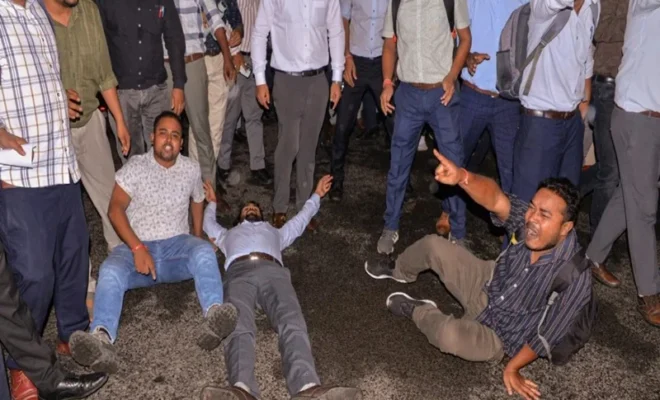
The government of Jharkhand has scrapped the examination of JSSC Combined Graduate Level (JSSC-CGL), giving an abrupt ending to the recruitment fiasco of the state. This announcement was made on August 17 after protests staged by job aspirants who had leveled accusations of irregularities in the recruitment examination system of the state.
The government has further decided to scrap examinations, results, and selection of candidates that were done through TSR Data Processing Pvt Ltd (TDPL), the outsourcing agency that has conducted recruitment exams. The move comes as part of a 24-day student agitation in Ranchi and amid plans of conducting an inquiry into the recruitment examinations held through JPSC and JSSC since 2014.
Why Did Jharkhand Cancel the JSSC-CGL Exam?
The first and foremost reason for the cancellation is the increasing controversy surrounding irregularities in the process of recruitment. Students and job seekers had been on a protest for several weeks on account of issues related to the credibility and transparency of the competitive exams organized in the state.
Cancellation of the examination comes after the prolonged protests demanding cancellation of the same examination. The decision was taken by Chief Minister Hemant Soren after a lengthy cabinet meeting, where he announced that his government will also cancel examinations conducted by TDPL and the results released by the agency.
It can be concluded that this cancellation is not limited to the one exam only; instead, it forms a part of the wider government action taken due to controversies.
What Is the JSSC-CGL Examination?
The JSSC (Jharkhand Staff Selection Commission) combined graduate level test is one of the important State-level recruitment tests for graduates looking to enter into government service in the State of Jharkhand.
It is, in fact, for thousands of students a means to government service, and hence, any cancellation of the test would be of importance as these students spend months, sometimes even years, to prepare for the test.
The recent decision, thus, has resulted in very opposite reactions from two sets of students. The first set, comprising those protesting against irregularities in the exam, has been in favor of the cancellation.
What Was the 24-Day Student Protest About?
This decision came as a result of long agitation by the aspirants of JPSC and JSSC recruitment exams in Ranchi. The agitation was about the perceived malpractices in the recruitment examinations and the need for more transparency in the process.
The agitation became so strong that the government had to deal with it. Devendra Nath Mahto, a student leader who undertook a hunger strike for 16 days, termed the scrapping of the JSSC-CGL exam and TDPL recruitment exam a victory for the protesters.
But, the demands of the students do not end there.
Why Are Students Still Demanding a CBI Probe?
However, the demand for a Central Bureau of Investigation (CBI) probe into the irregularities of the JSSC-CGL examinations remains a key point of contention among the protesting students.
As per the government’s decision, the protest demanding CBI probe into the matter may still continue since the government has not taken any such step.
This implies that the decision to cancel the examination may have addressed a portion of the protests, but has not necessarily stopped the agitation altogether.
What Next for Other TDPL-Related Recruitment Examinations?
However, the decision made by the government has wider implications beyond the cancellation of the examination in question.
This is because all the recruitment examinations organized by TDPL after 2014 and their results and selections will fall within the ambit of the decision of the government.
This is significant because a lot more candidates and recruitment examinations may get affected by the decision than just the JSSC-CGL examinations.
The government has also asked for a review of recruitment examinations conducted by JPSC and JSSC from 2014 onwards.
What Did Chief Minister Hemant Soren Announce?
In his statement, Chief Minister Hemant Soren mentioned that the state will look into any irregularity in all recruitment examinations from 2014 until now.
In addition to that, the government will also constitute an examination reforms committee headed by a senior IAS officer Amitabh Kaushal to recommend measures to improve the recruitment examination system so that such a controversy doesn’t happen again in the future.
Therefore, the stance taken by the government regarding the cancellation of examination takes into consideration both cancellation, investigation and institutional reform instead of looking at it as an individual controversy.
Why Are Some Selected Candidates Angry?
The cancellation decision has created another level of controversy due to the fact that not everyone was in agreement with the government that the examination should be cancelled.
Those selected candidates who cleared the recruitment process and who got appointments in government organizations feel that they should not be penalized due to the irregularities that took place. They also fear that those who were appointed may lose their jobs due to cancellation of the recruitment examination process.
What Happens Next for JSSC-CGL Aspirants?
For the candidates who were preparing or taking part in the JSSC-CGL recruitment exam, the direct impact is that the current process of examination has been cancelled.
The next question would be whether the government conducts a fresh recruitment examination with a revised and clear policy. The decision of the government to set up an examination reforms committee indicates that a change in the current recruitment process is being considered, but no new schedule for JSSC-CGL has been announced so far.
Thus, candidates need to depend on the official announcements from the JSSC regarding any fresh recruitment examination process and schedule rather than social media posts and rumors.
Why Is It Bigger Than a Single Examination?
The controversy of JSSC-CGL recruitment examination reveals a wider concern – government recruitment examinations.
Competitive examination depends on the premise that all candidates should follow the same rules, have the same level of security, and get the same evaluation process. Hence, allegations of paper leak, manipulations or any other irregularity could create distrust beyond just the affected candidates.
Setting up a committee by the government of Jharkhand to recheck examinations from 2014 reflects the seriousness of the case.
Stay updated with the latest exam, aviation and geopolitical developments.
Why Are Jharkhand Students Protesting Today?
Check out why thousands are marching over the JPSC-JSSC exam row.
When Does SSC CGL Registration Close?
Find the deadline, application process, syllabus, eligibility and vacancies.
What Really Happened During Air India?
Uncover the key details behind the aircraft incident beyond turbulence.
Why Are China-Russia Naval Drills Significant?
Explore the strategic response and Indo-Pacific implications of the joint exercises.
How Can You Apply For SSC CGL?
Browse the 12,256 vacancies, eligibility, salary and application details.
Conclusion
It was not just any administrative mistake that led to the cancellation of the JSSC-CGL examination. It was done amid the continuing student protests regarding recruitment irregularities and doubts about the credibility of the examination system.
Further action has been taken as the Jharkhand government is cancelling the examinations as well as results related to TDPL and reviewing the examinations for recruitment from the year 2014 as well as forming an examination reforms committee.
However, it seems like the matter is far from over as students still seek for a CBI probe and the candidates selected through the recruitment process are doubting whether cancelling the process was a justified measure.
In this regard, the cancellation of JSSC-CGL by the Jharkhand government can be seen as a measure aimed at restoring credibility in public recruitment. However, the key challenge today is making sure that the future examination process is transparent enough.