Mumbai-Ahmedabad Bullet Train Clears Major Hurdle: All 14 Portal Beams Installed Over Railway Line
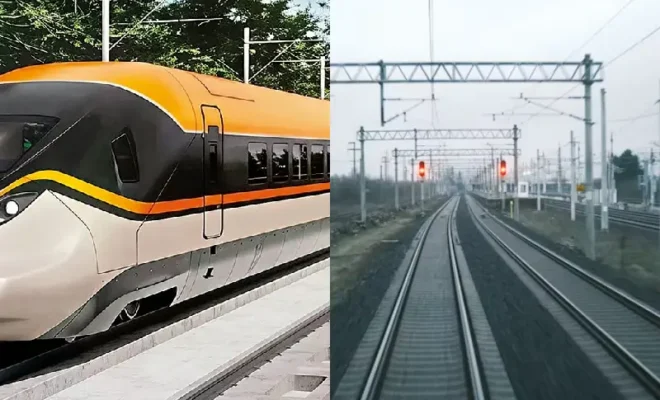
The construction of all 14 portal beams over the Delhi Mumbai Rajdhani railway track has reached another major milestone in the Mumbai Ahmedabad Bullet Train Project in Vadodara, Gujarat. This marks another successful completion of an important structural step and will pave the way for the next phase of elevated viaducts over the high speed rail corridor.
These 14 portal beams have been completed along the eight-point-three kilometres section in Vadodara, where the alignment of the bullet train runs over a well-developed railway zone. The alignment has to cross five existing railway lines, including the important Delhi Mumbai Rajdhani mainline railway track, which makes the construction task difficult.
As per the news reported on October 13, 2026, the successful completion of portal beams will enable the construction teams to go ahead with launching 40 meters long composite girders over the railway corridor.
Why Are Portal Beams Important for the Bullet Train Project?
Portal beams are massive structures that are created in order to cross over the already existing railway tracks and bear the high-speed railway viaduct. The installation of these beams is mandatory when the construction of the corridor of bullet trains crosses railways that have to be operational during the construction.
The Vadodara area had complicated requirements for engineering work as the high-speed alignment had to cross numerous railways, including the Rajdhani railway track. It was vital to ensure safety and comply with all the structural clearances for the already existing trains.
The portal beams are built through the cast-in-situ construction process. According to some reports, each of the portal beams is estimated to weigh about 1,500 tonnes.
What Happens Next?
Since all the 14 portal beams have been completed, the next important activity is the construction of 40-metre composite girders. The construction process will assist in facilitating the progress of the elevated viaduct in the difficult Vadodara rail section.
The accomplishment marks an important part of the greater Mumbai-Ahmedabad High-Speed Rail project, which is a 508-km rail corridor being constructed by the National High Speed Rail Corporation Limited (NHSRCL). The rail corridor will serve trains up to 320 kmph and will connect Mumbai and Ahmedabad via 12 stations located in Maharashtra, Gujarat and the Union Territory of Dadra & Nagar Haveli.
Mumbai-Ahmedabad Bullet Train Project: What It Means for Connectivity
It is estimated that the high-speed rail corridor once in operation will significantly cut down the travel time from Mumbai to Ahmedabad to about two hours and enhance connectivity between major commercial and industrial centers.
The erection of the portal beams in Vadodara marks the achievement in one of the most technically complex aspects of the project. Further construction, track laying and integration of the safety systems are still required before the rail services can start.
With the completion of the works, efforts will have to be put into the erection of the elevated structures for the corridor to function as intended. This latest development marks the progress in the technical challenge faced by the project and brings India’s first bullet train closer to reality.
Education Shake-Ups, Weather Risks & Political Flashpoints
What Does CBSE’s Three-Language Rule Mean for Class 9?
Discover how the proposed 2026 language requirements could affect Class 9 students.
Could El Niño Bring Droughts and Flood Risks to India?
Explore the potential weather impacts on drought-prone states and Chennai’s flood risk.
Why Is Anurag Kashyap Turning to South Indian Cinema?
Find out why the filmmaker criticised Bollywood and reportedly decided to move to Bengaluru.
Will India’s Next Budget Put Infrastructure First?
Explore how a stronger focus on infrastructure could shape government spending priorities.
Could Pegasus Spyware Dominate the Budget Session Debate?
Uncover why the surveillance controversy could become a key issue for the opposition during Parliament’s budget session.