India Weather Alert: El Niño Impact on Drought-Prone States and Chennai Flood Risk
Last updated on July 10th, 2026 at 11:16 am
India is entering the 2026 monsoon season with mounting climate concerns as weather agencies and scientists monitor how a potentially strong El Niño is developing in the tropical Pacific.
As outlined in reports that lean on the Indian Meteorological Department’s long-range forecast, monsoon rains this year are expected to stay below normal, which could put drought anxieties in the foreground for several states across the north, the west, and the center. At the same time, flood concerns may rise in parts of southern coastal India, including Chennai.
This is especially troubling because El Niño years tend to bring irregular precipitation across India, so some locations can end up with harsh dryness, while other areas see heavy downpours, and in certain places, that can turn into flooding too.
What Is El Niño and Why Does It Matter for India?
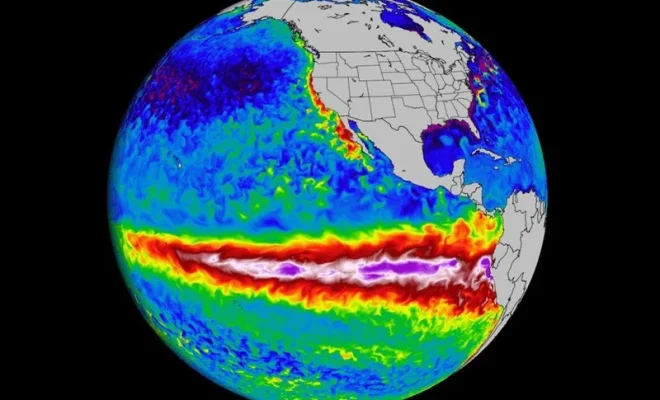
El Niño is a climate pattern that happens when surface waters in the central and eastern Pacific Ocean warm up unusually.
Even though it forms quite far from India, this phenomenon still ends up shaping weather systems worldwide. In particular, it has a strong pull on the Indian monsoon, which is why people keep watching it.
In years when El Niño shows up, the monsoon winds that normally move moisture toward the Indian subcontinent can start to weaken. As a result, rainfall often drops across big stretches of northern, western, and central India, sometimes quite noticeably.
At the same time, some southern coastal zones may see unusually heavy rainfall events. This can happen because the atmosphere becomes more unstable, and it tends to feel uneven, not smooth like usual.
That push-and-pull is basically why climate experts are warning about drought risk and flood risk together, as if both are arriving at once.
What the IMD Forecast Says About 2026
It is estimated that the monsoon rains in India for 2026 would be around 92% of the Long Period Average, categorizing it as a “below normal” monsoon.
As per experts cited in various reports, the waters in the Pacific Ocean are heating up quickly, thereby increasing the likelihood of a “super” El Niño phenomenon during the latter part of the year.
It is also said that the effect might worsen during the months of August and September, which are crucial for agriculture in India.
Which States Face the Biggest Drought Risk?
The immediate threat lies with those states that face drought conditions in northern, western, and central India.
As per forecasts based on climate predictions, there is a possibility that areas like Punjab, Haryana, Rajasthan, Madhya Pradesh, Maharashtra, Karnataka, and some portions of Gujarat will suffer from extended dry periods and deficient rainfall conditions in case the intensity of El Niño increases.
A weak monsoon in these states could trigger:
- Water shortages
- Crop stress
- Heatwave intensification
- Reduced reservoir levels
- Rising food inflation
India’s agricultural system remains highly monsoon-dependent, with a large percentage of cultivated land relying directly on seasonal rainfall.
Why Chennai Faces Flood Risk Despite Weak Monsoon Concerns
Among the unique aspects of the El Niño effect in India in 2026 is the threat of floods in Chennai despite the likelihood of droughts in many other northern states. This anomaly exists since El Niño affects different regions differently.
While it may lead to weak southwest monsoon activities in certain areas in India, it may also cause heavy rains during the northeast monsoons in Tamil Nadu and Andhra Pradesh.
According to experts on climate change, Chennai city will continue to be vulnerable to flooding due to rapid urban development, inadequate drainage systems, encroachments in wetlands, and extreme rains in short weather conditions.
The 2015 floods in Chennai have been often referred to recently as a reminder of the dangers posed by urban floods.
Why Climate Change Is Making the Situation Worse
It is being seen that scientists have found evidence that climate change is increasing the unpredictable nature of the monsoons.
The weather system has started to create very unusual situations, where after prolonged dry spells, there are instances of torrential rains. Thus, while there is a drought in India, at the same time, there can be floods and heat waves.
Experts say the combination of climate change and El Niño increases the chances of:
- Extreme heatwaves
- Sudden cloudbursts
- Flash floods
- Prolonged dry spells
- Crop damage
- Water stress
What This Means for Farmers and Cities
There is a direct relationship between monsoon and India’s economy, agriculture, food prices, and water systems.
A poor monsoon can affect the growth of kharif crops, levels of groundwater, hydroelectricity, and rural livelihoods.
However, on the other hand, cities that are susceptible to heavy rainfall will suffer from drainage problems, traffic jams, floods, and destruction of infrastructure during periods of heavy but short rains.
That explains why the state government, disaster management organizations, and agriculture policymakers are waiting for the new forecast reports.
Top Headlines You Must Explore
Explore Fake MBBS Letters Warning Details?
Discover how NMC is alerting students about fraudulent medical allotments.
Check What India-Iran Port Deal Means?
Explore the implications of the new port agreement and rising US concerns.
Explore Why Beer Prices May Rise?
Discover how global tensions could impact beer and bottled water costs worldwide.
Check What Happened In Erbil Strike?
Explore details of the drone attack on Castrol amid rising Iran tensions.
Discover Why US Warned Iran Recently?
Check how this warning affects the ongoing Israel-Hamas conflict dynamics.
Could Conditions Still Improve?
A few climatologists believe that there is an element of uncertainty about the extent of impact that El Niño may have on India.
According to some forecasts, the positive phase of the Indian Ocean Dipole towards the latter part of the season can counter some of the weak monsoon aspects. But the possibility of imbalanced and extreme weather patterns seems to be higher than usual.
Conclusion
A developing El Niño situation is causing significant worry due to its potential to force India into an unstable monsoon season that sees both drought and flooding at extremes.
While states in the north and west may have to contend with a deficit of rainfall, states such as Chennai and some others along the coast of South India could experience floods from heavy rains at the same time.
India’s monsoon season of 2026 might not be limited only to “more rain or less rain”; it might be about enduring both extremes.