Scrapping Social Media Safe-Harbour: Balancing Platform Accountability Against Free Expression
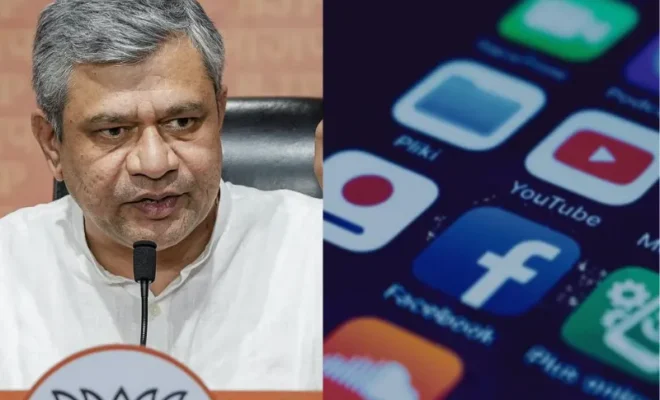
Under section 79 of the IT Act, there is conditional immunity granted to intermediaries concerning information generated by third parties using their services. The provision enables social media firms to function without being directly held liable for every piece of information, comments, photograph or videos uploaded by users.
But this immunity does not apply universally. Social media firms are supposed to adhere to due-diligence requirements and legal directions in place. A failure to do so will amount to losing safe harbor immunity.
The latest discussions by the government show a trend of worrying that social media firms are no longer just hosting content on their sites. Their algorithmic recommendations affect what the user sees, which information becomes visible and how fast the information gets disseminated.
Algorithms Have Changed the Nature of Platform Responsibility
The earlier internet intermediaries mainly transmitted information from one user to another. In contrast, contemporary social media companies function in a different manner; they utilise artificial intelligence, behavioural analysis and recommendation engines in order to personalise feeds and content recommendations.
Thus, there is a difference between merely hosting dangerous content and actively amplifying it.
For example, a dangerous video uploaded by an individual might be seen only by a few people at the start. But algorithms might recommend it to thousands or millions of users depending on their behaviour patterns. Similar considerations apply to deepfakes, financial scams, community lies and dangerous content involving children.
As noted by the Supreme Court of India in Just Rights for Children Alliance v. S. Harish on October 15, 2026, the issue of the distribution of child sexual exploitation and abuse material and its facilitation via algorithms on the platforms raises great concerns.
The Supreme Court focused on more effective accountability measures, such as proportionate financial sanctions for continuous violations of the rules instead of the blanket denial of safe harbour status.
The Risk of Giving Platforms Excessive Legal Responsibility
Removing safe-harbour protection entirely could create unintended consequences.
There is huge amount of user-generated content being shared daily on social media websites. Putting the liability burden on these sites to be responsible for all the user-generated content can result in excessive censorship of content.
The corporations may start censoring any posts which may have a questionable legality, even when the content relates to any form of criticism, journalism, political discussion or discussion of issues of public interest.
This may act as a deterrent for people to express their viewpoints on any controversial issues.
Small websites and startups in the technology industry of India will be adversely affected due to such liability requirements because while big corporations can afford the cost of litigation, small corporations cannot survive with such liability on them.
Hence, liability should not hinder innovation or online activity.
Free Expression Needs Strong Procedural Safeguards
Article 19(1)(a) of the Constitution of India ensures that citizens have the freedom of speech and expression. But Article 19(2) of the constitution allows for restrictions on such freedoms under certain justifiable grounds, like public order, security of the state, decency, defamation, and inciting an offense.
The intermediary liability reform needs to be done keeping this constitutional balance in mind.
One of the primary issues is that there may be ambiguous or overly broad content restriction orders. The user must know the reason behind their post being restricted and the entity issuing the order along with the provisions that apply to it.
The observations made by the Punjab and Haryana High Court in Haryana 24 News Network Private Limited v. Union of India in October 2026 too stress on this point.
What Could a Balanced Regulatory Framework Look Like?
Rather than completely abandoning safe harbour protections, India may consider a graduated approach to imposing accountability on such platforms.
Firstly, sanctions ought to be proportionate to the nature, number and impact of the violation committed by the platform. The imposition of the same sanction for an individual violation as compared to multiple violations with severe impact is counterintuitive.
Secondly, platforms must be mandated to conduct independent audits of their recommendation systems especially if algorithms promote any material that is either illegal or dangerous.
Thirdly, users who fall prey to deep fakes, impersonations, non-consensual intimate images and financial scams must have the right to initiate quick redressal process.
Finally, takedown notices issued by the government must follow legal due process.
India’s Digital Future Requires Accountability and Freedom
It is legitimate for India to protect its citizens against online abuse, misinformation, cyber crime, and offensive digital content.
But taking away liability shield in the absence of any criteria to establish liability would result in a new threat: control over digital speech.
The discussions that the government has entered into at present are purely exploratory in nature. Any amendment of Section 79 would have to go through a legislative process and parliamentary scrutiny, and no decision has yet been taken regarding the removal of safe harbor.
The task therefore, is to strengthen the intermediary regime and not undermine the very foundations of an open internet.
A vibrant digital ecosystem requires platforms which act to remove actual instances of harm, governments which regulate responsibly, and citizens who can speak out without fear of undue censorship.
What will really test India’s social media policy is not how many posts it can delete, but whether it can prevent harm without choking free speech.
Public Policy, Tech Industry, Education & Travel Updates
How Can India Balance Firecracker Traditions and Public Health?
Explore the OPED debate on religious customs, air pollution, noise levels, and the public health challenges associated with firecracker use in urban areas.
Why Is Google Offering Voluntary Employee Buyouts?
Discover how Google’s voluntary exit offers connect to rising AI infrastructure spending and the company’s changing workforce priorities.
How Can Students Apply for JEE Main 2027 Session 1?
Check the registration process, important application steps, required documents, and key details for candidates applying through NTA.
What Should Passengers Know About Visakhapatnam Flight Disruptions?
Find out why IndiGo and Air India Express have issued travel advisories and what affected passengers should check before travelling.
What Are Goa’s New Beach Shack Allotment Guidelines?
Explore the updated allotment rules and understand how Goa is preparing its beaches and tourism infrastructure for the peak winter season.