Delhi Police Denotify Jantar Mantar as Permanent Protest Site, Propose 3 Alternative Locations
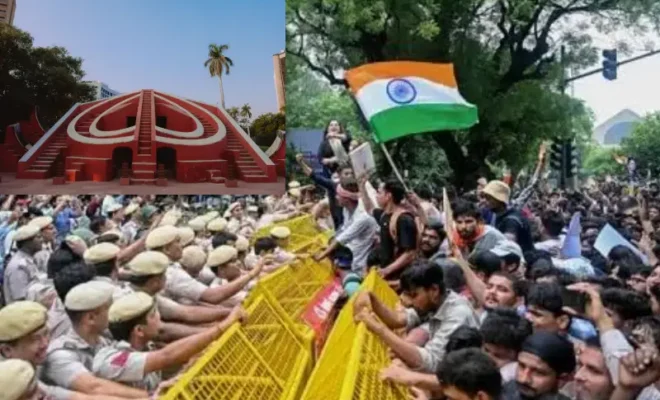
It is worth mentioning that Jantar Mantar has been taken off the list of venues for protests and demonstrations by the Delhi Police in a recent major development that will have great implications regarding the conduct of public dissent in the national capital. According to an order made on October 11, 2026, the commissioner of Delhi Police, Anurag Kumar, has identified three venues for public demonstration.
Why Has Delhi Police Removed Jantar Mantar as a Protest Site?
As per the police order, the decision is based on suggestions that were made by a committee appointed by the Ministry of Home Affairs, Union Government, to consider other sites where the citizens could hold protests and demonstrations. This order has modified in part the Standing Order No. L&O/48/2022, dated April 28, 2022, which was related to the designated areas for protests.
Jantar Mantar has been one of the most well-known protest sites in Delhi for many years. Its location in the heart of the city has contributed to it being a place of major importance when it came to holding protests and demonstrations.
This decision has come at a time when there has been increased security in the city of Delhi after some recent demonstrations, which included protests against the irregularities in the revisions of the electoral roll.
What Are the Three New Protest Locations?
As per the new scheme, three grounds in Delhi – Ramlila Maidan in Central Delhi, Burari Ground in North Delhi, and CBD Ground in East Delhi have been declared protest demonstration grounds.
According to the police authorities, specific standard operation procedures (SOPs) for conducting protest demonstrations at these newly declared sites will be issued separately. Protesters will have to comply with the relevant permission and other terms after these SOPs are released.
This new scheme also alters the landscape of protest demonstrations in the capital city. Burari Ground and CBD Ground lie away from the core government area, and this might impact how protesters can access these sites.
What Does the Decision Mean for the Right to Protest?
The de-notification of Jantar Mantar as a site for protest is being seen as an issue relating to the accessibility of public space and the actual practice of the right to peaceful assembly. Article 19(1)(b) of the Constitution of India guarantees the right to assemble peaceably and without arms.
Although this new development does not, in itself, mean that the constitutional right to protest has been done away with, the accessibility of the sites chosen for protests and the process of permission and restrictions placed on the gatherings will certainly affect the way in which protests will be conducted.
With Jantar Mantar no longer on the list of sites, the focus will now be on the police guidelines as well as the functioning of the new sites. The relationship between maintaining public order and allowing citizens to exercise their right to dissent will continue to be the heart of the matter regarding Delhi’s protest policy.
Critical Minerals, Major Policy Shifts & Sporting Ambitions
Why Are Argentina, Australia and Chile Crucial to India’s Lithium Race?
Discover how partnerships with these lithium-rich nations could strengthen India’s critical mineral security.
Why Were Protesters Detained Near Bharat Mandapam?
Find out what happened during the Tibetan protest near Pragati Maidan and why demonstrators were detained.
What Does India’s Wheat Export Ban Lift Mean?
Explore the government’s decision to lift the four-year wheat export restriction amid strong global demand.
Can CISF’s New Pact Strengthen India’s Counter-Drone Defences?
Uncover how the agreement aims to protect aviation, nuclear and space infrastructure from drone threats.
Is India Ready to Host the 2026 BWF World Championships?
Discover the preparations and ambitions behind India’s bid to deliver a world-class badminton championship.