India Removes Ban on Wheat Exports: Ministry Lifts Four-Year Restriction Amid Strong Global Demand
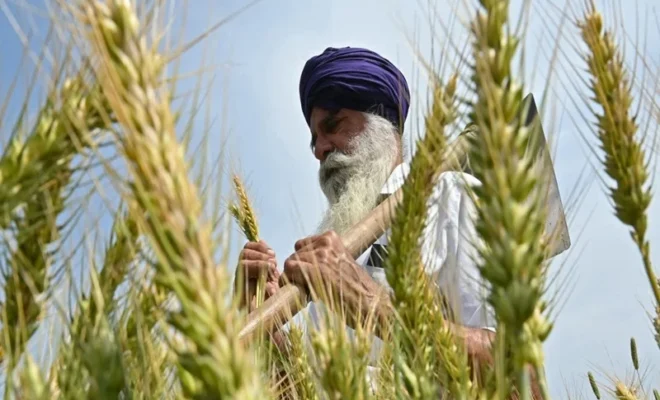
A major step forward in India’s agricultural trade policy has occurred by opening up the possibility for Indian wheat to be exported internationally as the country removed the prohibition on wheat exports. The Directorate General of Foreign Trade has moved some wheat and durum wheat categories from the “Prohibited” export category to “Free” effective immediately.
The change signals a reversal of the export restrictions established in 2022 in order to help the country to preserve supplies and contain food inflation. The decision opens up a great opportunity for Indian farmers, traders and exporters to get access to foreign markets.
Why India Restricted Wheat Exports?
India banned exports of wheat in May 2022 after the concerns about the adequacy of domestic supplies and the inflationary pressures increased. The restrictions were meant to secure domestic supplies and protect consumers from further price increases.
Despite remaining among the major wheat producing countries of the world, India prioritized its domestic food security over unrestricted foreign sales. Export policies were subsequently adjusted with the establishment of quotas and government-to-government exports rather than returning to the normal free trade.
The latest change reflects a significant alteration in the approach of the Indian government to this issue.
What Has the Government Changed?
Under the latest notification, wheat and specific durum wheat varieties categorized by ITC HS codes 10019910 and 10011900 are moved from “Prohibited” to “Free.” The change becomes effective immediately and means that the exporters are now allowed to engage in overseas wheat trade according to the current regulations.
In comparison to the previous policy change in February 2026 which permitted exports of 25 lakh metric tonnes while the classification of exports under the policy remained “Prohibited,” the latest change is much more liberal.
Why Is Global Demand Important Right Now?
It is vital for the decision to be taken now due to the fact that the international wheat market is facing uncertainties associated with the risk of weather and geopolitics and export availability from major wheat-producing regions.
There are some recent interruptions to Black Sea grain trade and thus there are increasing concerns among international wheat buyers. Russia, which is one of the major grain exporters, has been facing certain logistical issues connected with regional conflicts and disrupted shipping routes.
In such circumstances, India’s entry into the international wheat market is expected to help international wheat buyers have another source of wheat supply. High demand, especially from neighboring countries, creates chances for India to sell its wheat abroad.
How Does It Influence Indian Farmers?
If the export restrictions are canceled, farmers will be able to use the bigger export market for their agricultural products. The bigger demand of wheat from the international side can lead to better conditions for local wheat producers.
At the same time, it should be noted that the influence of the decision will depend on a number of different factors including international wheat prices, transportation costs, quality requirements, exchange rates, and domestic supply.
Having more customers does not necessarily mean that farmers will get better prices for their products.
Could Wheat Prices Rise in India?
This question remains one of the biggest concerns for consumers.
Allowing exports can put the upward pressure on domestic wheat prices, because some of the available supply can be exported. But its exact magnitude would depend on Indian production, government stock and domestic demand.
The government would have to find the balance between opportunities for exports and food security needs. As we already mentioned, wheat is one of the staples in India, so increased domestic prices can have a negative impact on inflation management by the government.
That is why the decision about export does not mean that the prices on domestic market are going to rise sharply. It depends on the magnitude of actual export volumes.
Why It Is Such an Important Opportunity for Indian Exporters
This policy change can give Indian grain and food exporters much better certainty.
When the restrictions were introduced, the exporters had to work within quotas, exemptions and government approval procedures. When moving the relevant categories to the “Free” export category, the government makes the situation more clear and easier to predict.
It may also stimulate investments into storage, processing, transportation and export of wheat products if the business expects high international demand.
And What about Wheat Flour and Other Products?
Recently, India decided to relax restrictions on exports of wheat flour and other wheat-based products, including such products as maida, semolina and whole-wheat atta. These changes were announced by the government on August 24, 2026.
These changes, along with changes in the policy towards the pure wheat, show that the government is ready to open wheat and wheat-products export channels, which were closed for many years before.
These changes can help not only farmers, but also flour mills, food processing industry, transportation and export logistics companies.
What May Happen Next?
The next big step will be the reaction of the exporters to the new policy.
The international buyers will take into account the prices, quality, availability and economics of shipment. And if Indian wheat will be competitive enough, then exports will increase quite fast.
But on the other side, the government will need to continue controlling the domestic inventories and prices of food products. If domestic inventories will become insufficient or inflation will become a problem, policymakers will be able to reconsider their policies regarding exports.
Conclusion
India’s decision to remove the wheat export prohibition represents a major change after more than four years of tight restrictions. By shifting specified wheat and durum wheat categories from “Prohibited” to “Free,” the government has effectively reopened international trade in the commodity.
The move comes amid strong international demand and uncertainty in global grain markets, creating new opportunities for Indian exporters and farmers. At the same time, the government will need to carefully balance export growth with domestic food security and price stability.
India is putting its wheat back on the global map. The real test now will be whether exporters can capitalize on international demand while the government keeps domestic wheat supplies and prices under control.
Explore more stories shaping India’s wheat trade, exports, prices, and economic resilience.
Why Did India Ban Wheat Exports?
Check out why India suddenly restricted wheat exports and what triggered the move.
How Much Wheat Does India Export?
Find out how India supplies wheat to countries worldwide and the scale of its exports.
Will India Restrict Sugar Exports Next?
Uncover why India may curb sugar exports and what the move could mean for markets.
How Did Wheat Ban Affect Prices?
Browse how India’s wheat ban lowered domestic prices while raising global prices.
Can India Withstand Geopolitical Economic Pressures?
See how India is showing resilience while navigating geopolitical tensions and economic challenges.