India Launches Campaign for UNSC Non-Permanent Seat (2028–29): Core Focus Areas Explained
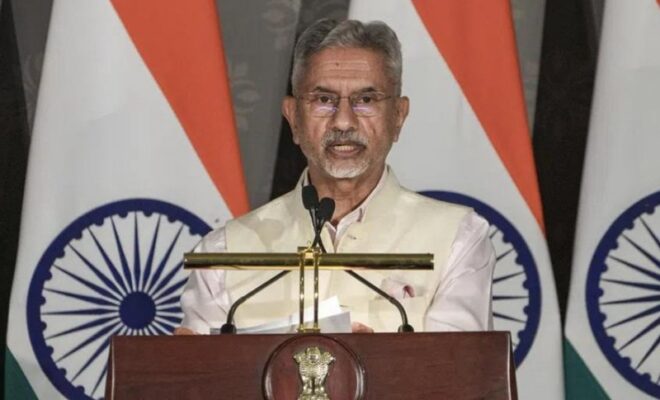
India has formally begun its race to become a member of the UN Security Council (UNSC), where it is seeking an opportunity to serve for the 2028-29 period, through a new diplomatic paradigm named SHANTI. Launched by the External Affairs Minister of India S. Jaishankar at the UN headquarters in New York, the Indian race for becoming a member of UNSC highlights the country’s perspective on world peace and security.
The initiative is being taken against the backdrop of changing global scenario owing to conflict, geopolitics, climatic issues, and evolving technologies like artificial intelligence. Through this UNSC race, India wants to represent the interests of the developing countries, as well as reforms within the UN.
What Is the SHANTI Framework?
The centerpiece of India’s campaign is the SHANTI doctrine, which means ‘Securing Holistic Advancement through Norms, Trust and Integrity.’ As per the Indian government, the SHANTI doctrine would serve as the basis of India’s relationship with the UN and will be India’s approach to contemporary global challenges.
As opposed to being preoccupied with conventional security concerns, SHANTI places importance on cooperation, dialogue, trust building, and responsible global governance. India believes that there is a need for the evolution of the Security Council in order to deal with current challenges.
Strengthening the Voice of the Global South
Ensuring stronger representation of the Global South in international decision-making process is a key objective of India’s campaign.
India has been stressing that the developing nations should play a more important role in determining global policies relating to security issues, development issues, climate change, and economic governance. In this context, India asserts that it will continue to speak for the concerns of emerging nations and developing countries that are not adequately represented in global forums.
Push for Reformed Multilateralism
The Indian bid also highlights its continued call for reforms in the United Nations system.
New Delhi feels that the present configuration of the Security Council is that of the geopolitics of 1945 and not of today’s times. India has always contended that a restructured and open Security Council would enhance the legitimacy and efficiency of the United Nations.
Even though this is presently a bid for a non-permanent seat, it also underscores the country’s continued effort for UN reforms.
Modernising UN Peacekeeping
The contribution of India to UN peacekeeping missions has been pointed out by India as one of the major strengths that it has.
India has provided almost 300,000 peacekeepers to more than 50 UN missions, which makes India one of the largest contributors of peacekeeping operations. Speaking at the launch of the campaign, Jaishankar said that India will back efforts to make peacekeeping missions more efficient and future-ready.
Responsible AI and Emerging Technologies
Artificial Intelligence has finally gained prominence as one of the important pillars of India’s UNSC agenda.
AI is seen by India as an area offering great promise but with new security challenges such as cyber attacks, disinformation campaigns, autonomous weapons, and ethics issues.
The campaign aims for human-centered governance of technology innovation while stressing the importance of international cooperation in ensuring responsible development of AI.
Maritime Security and Counter-Terrorism
It is also clear that India has highlighted maritime security as one of its priorities.
In addition to highlighting the significance of maintaining a rules-based order in the maritime domain, freedom of navigation, and safety of shipping lanes, India has underlined its resolve to bolstering counter-terror measures at the global level.
Why the 2028–29 Seat Matters
In case of victory, India will be serving a two-year term on the Security Council starting from January 2028.
This will be India’s ninth stint as a non-permanent member of the UN Security Council, after its latest stint between 2021-22. India’s election as the Asian-Pacific representative is expected to be held in June 2027, when India will seek support from the UN member states.
Although a non-permanent seat lacks the veto power, yet it allows being a part of the decision-making process regarding global peace and security.
What This Means for India’s Global Role
The launch of this campaign highlights India’s diplomatic ambitions as well as its attempt to take a bigger role in the development of international governance.
Through the integration of concepts like peacekeeping, Global South representation, AI governance, maritime security, and UN reforms into the concept of SHANTI, India is positioning itself as a nation searching for solutions to current problems in the international system rather than being preoccupied with geopolitics.
Stay Updated on Global Developments
Why Did India Issue Iran Advisory?
Find out why Indian citizens have been urged to leave Iran immediately.
Why Must Indians Stay Indoors?
Learn why the MEA advised Indians in Iran to remain indoors.
Is UAE Safety Affected By Tensions?
Check out how regional tensions could impact Indians living in the UAE.
How Did The Oman Attack Unfold?
Uncover the confirmed details surrounding the Indian sailor’s tragic death.
What Happened To Frozen Assets?
Explore the latest updates on the release of frozen Iranian assets.
Conclusion
The Indian bid for the non-permanent UNSC seat in 2028-29 relies on the SHANTI vision that aims at fostering inclusive multilateralism, better representation for the Global South, modernized peacekeeping operations, responsible management of artificial intelligence, and increased cooperation for global security.
As the bid approaches in 2027, this campaign will also be a chance for India to make alliances and assert its SHANTI vision for the United Nations.
India’s campaign for a seat in the UNSC for 2028-29 goes beyond the goal of securing a seat and aims to define the future of global governance.