
Global Fintech Fest 2026 Insights: India Focuses on the Next Phase of Responsible AI Scaling
India’s fintech story is entering a new phase. After transforming payments through UPI, expanding digital identity through Aadhaar and building large-scale digital public infrastructure, the focus is now shifting toward how technologies such as AI, agentic AI, tokenisation and quantum computing can be scaled responsibly.
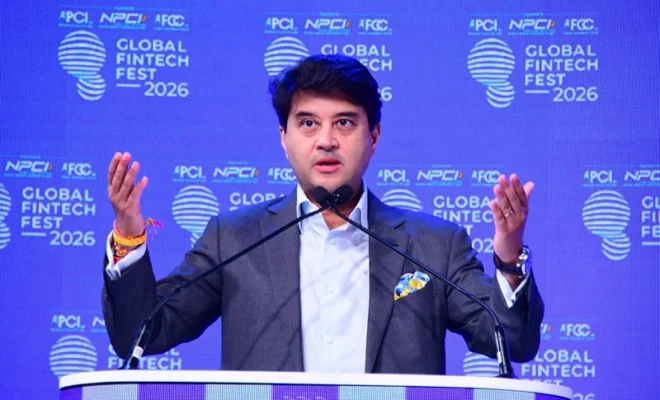
The 7th Global Fintech Fest 2026, held from September 8 to 11 at Mumbai’s Jio World Centre and Trident BKC, brought together policymakers, regulators, banks, fintech companies, technology firms, startups and investors to examine this next stage of financial innovation. The official theme was “Potential to Impact: Trusted, Connected, Global Systems for Inclusive Finance.”
The central message emerging from the event was clear: India is no longer asking whether AI can transform financial services. The bigger question is how quickly it can scale AI while maintaining trust, accountability, cybersecurity and consumer protection.
From Digital Payments to Responsible AI
The first wave of the fintech revolution in India involved the quick acceptance of digital payment systems. Digital payment system (UPI), digital ID and consent mechanism like Aadhaar have provided examples of how digital infrastructure can provide financial services to hundreds of millions of people.
The second stage is much more complicated than the first one. AI can automate financial decisions, provide personalized services, help in fraud detection, improve creditworthiness assessments and speed up financial operations. Nevertheless, the same technology can generate new types of fraud, misuse of data and even systemic risks.
That is why Global Fintech Fest attached great importance to making the transition from experimenting with technology to responsible, measured and governed use of AI. Responsible AI in practice, innovative business models and positioning of India as a fintech nation on a global scale were identified by the GFF official research agenda as important topics for the next stage of development of the sector.
Why Responsible AI Is Becoming a Financial Priority
AI is a “double-edged sword,” said Finance Minister Nirmala Sitharaman in her address at the event, referring to the huge potential and risks associated with this technology. She cautioned that speed that AI offers may become a factor that can make software problems, fraud, and financial shocks spread even faster if systems are launched without appropriate protections in place.
This risk is especially relevant in financial services, where AI systems can impact decisions on credit, insurance, fraud detection, investment, and interactions with customers.
A recommendation of an algorithm within seconds may influence tens or hundreds of thousands of people. It is the scale that makes AI so appealing to financial companies that also makes governance necessary.
India’s new approach can be characterized as striving for efficiency without fragility.
RBI’s Warning: Data Must Be Treated as a Responsibility
Sanjay Malhotra, the Governor of the Reserve Bank of India, has brought yet another crucial aspect into this debate through his emphasis on responsible data usage.
Speaking at the Global Fintech Fest, he made the point that consumer data should be considered a fiduciary responsibility and not just an asset which companies can exploit for monetary gain. He has further stressed on the necessity of purposeful and consent-based data usage.
This is especially relevant since AI algorithms need huge amounts of data to learn, personalize, and take decisions.
It would be up to the fintech firms to prove that the more data that is used, the less privacy there is.
Agentic AI Takes Centre Stage
One of the technologies which featured prominently at GFF 2026 was agentic AI.
In contrast to standard AI technologies, which tend to react to prompts, agentic AI solutions can manage a number of steps in a process with minimal human involvement. This means that AI technologies would be able to handle customer communication, transaction management, credit processing, or other functions in banking and finance.
However, there are plenty of questions of governance involved here.
According to the official programme of GFF, agentic AI helps to orchestrate complex financial processes autonomously, provides personalised services on a large scale, and enables ongoing risk management.
This puts banks and fintech businesses under a new obligation: they should not only understand what has been delivered by an AI system, but why, what data affected this decision-making process, and who takes responsibility for the decision.
The Accountability Question Is Getting Bigger
Indeed, there was a presentation of a report at GFF 2026 that raised this issue with regard to financial data in India. Artificial intelligence algorithms have become very adept at analyzing large amounts of data very fast.
However, speed raises the issue of who is responsible for decisions made by these machines. This is especially true for lending and other significant financial decisions. AI may allow for faster and cheaper analysis in underwriting, yet banks still have to have tools for control and explainability.
The next generation of fintech, therefore, cannot merely consist of replacing humans with machines. It should figure out how humans still have to be involved in the process.
India’s Advantage Could Be Affordable AI
Yet another important takeaway from GFF 2026 is that perhaps India does not have to struggle for success in competing with others in making the biggest AI models.
According to Pratyush Kumar, who is the CEO of Sarvam AI, India’s strengths might lie in implementing AI in a cost-efficient manner on a large scale.
This is especially important in relation to financial inclusion.
If AI-based financial services can be provided in an efficient manner using multiple languages available in India as well as across all income levels, then technology can help provide customers with advanced financial features which were unavailable to them earlier.
Banks and Fintechs Are Entering a New Partnership Phase
The other important thing to note from this incident is that the journey of India’s fintech industry is far from over.
Sachin Bansal, Founder of Navi Group, believes that banks cannot satisfy every need arising on the customers’ side independently due to the limitations of time, resource and knowledge. Fintech firms can bridge this gap by developing specific products and creating an easier customer experience.
Therefore, rather than a stage at which fintech firms take away the space of banks, we might expect both to play to their strengths.
Cybersecurity Cannot Be an Afterthought
AI integration in the field of finance implies that cybersecurity becomes even more relevant.
The GFF programme particularly dealt with the challenges that included deepfakes, synthetic fraud, automation of social engineering and data leakage.
It is quite distinct from conventional cyberthreats since AI allows perpetrators to conduct attacks at a much quicker pace and creates extremely realistic fraud attempts.
An artificial voice, an AI identity or a personalized phishing attempt may be enough to overcome standard security measures.
Thus, the responsible expansion of AI should go hand in hand with identity authentication, fraud detection, cybersecurity and ongoing risk assessment.
India Wants to Take Its Fintech Model Global
The conversation at GFF 2026 was not confined to the domestic financial system of India.
Sitharaman suggested that there be a special forum to facilitate the interactions between Indian tech firms and their counterparts from other nations as they continue to grow outside their domestic frontiers. The forum would assist them in navigating licensing issues and partnerships.
This idea has more to do with the bigger picture. Namely, India wants its fintech knowledge and digital public infrastructure to become even more relevant beyond its own boundaries.
UPID and the digital infrastructure of India have already attracted international attention. Perhaps the next big thing will involve exporting not only payment technologies but the entire philosophy of open and digitally-enabled banking and finance.
What Global Fintech Fest 2026 Really Signals
GFF 2026’s key lesson for India’s fintech community is that it has evolved from merely appreciating the notion of scale.
The first era involved creating an enabling digital infrastructure that could enable hundreds of millions of individuals to be part of digital finance.
The next era is about making this infrastructure smart without compromising on security.
This will involve creating AI that is understandable enough to rely on, a consented data system, a cybersecurity system that can tackle the risk of synthetic frauds, and banks that maintain accountability even when decisions are made by machines.
It is important for India to prove the concept of growth of technology and governance simultaneously.
Conclusion
GF2026 has cemented India’s status as one of the world’s most critical fintech centres, but it has also emphasised the obligations that come with such a status.
It is moving into a period when artificial intelligence can change lending, payments, insurance, regulation, customer support, and financial inclusion. However, the success of this new period will not only depend on how fast AI will be implemented.
It will also depend on how much people can trust the system implementing AI.
Thus, the strategy of India’s future fintech innovations is more and more based on the simple idea of scaling innovation and responsibility together.
India’s next fintech revolution might not lie in implementing AI everywhere. It lies in implementing trustworthy and accountable AI where it can provide the biggest effect on finances.
India’s Next Chapter: Payments, Finance, BRICS & Global Trade
- Can UPI Sustain India’s Digital Future?
Check out the challenges and opportunities shaping India’s next decade of digital payments. - Is Linking Your Bank Account Safe?
Find out how to connect your bank account to ChatGPT and understand the key safety concerns. - What Will BRICS Summit Deliver?
Explore the 18th BRICS Summit, where PM Modi hosts global leaders in New Delhi. - Why Is Global Order Changing?
Uncover Jaishankar’s views on economic resilience amid shifting global geopolitical dynamics. - Why Is India Rethinking Global Trade?
See how India’s pragmatic approach is responding to changes in the global trade landscape.