
Saharanpur PNB Fake Currency Case: NIA Probes Asset Trail of Bank Staff
The Saharanpur PNB fake currency case has assumed a new direction following the investigation of the financial dealings and connections of the bank employees linked with the suspected counterfeited currency case by the National Investigation Agency.
The main issue under this case has been the discovery of counterfeited Indian currency worth about ₹17.29 crore in a Punjab National Bank currency chest in Saharanpur. From what began as a monetary anomaly has now turned out to be an inquiry into how the counterfeited currency entered the system, who had access to the currency chest and whether there was a larger network behind the funds.
It is important to note that the recent attention to the financial dealings of the individuals involved in this case marks yet another aspect of the investigation since the agencies are investigating whether the financial dealings of the individuals involved in the case are consistent with their income sources.
What Happened at the Saharanpur PNB Currency Chest?
The matter came into notice when discrepancies arose in the cash which was handled through the currency chest of PNB at Saharanpur. As per reports, the first round of audit revealed counterfeit currency of approximately ₹7.40 crore, but as the verification process went on, the figure of counterfeit currency went up to ₹17.29 crore.
The currency chest, which is housed in the bank’s Sofia Market branch, is under scanner. How the actual currency could be replaced by counterfeit currency and how much counterfeit currency could remain within a controlled banking space is being probed.
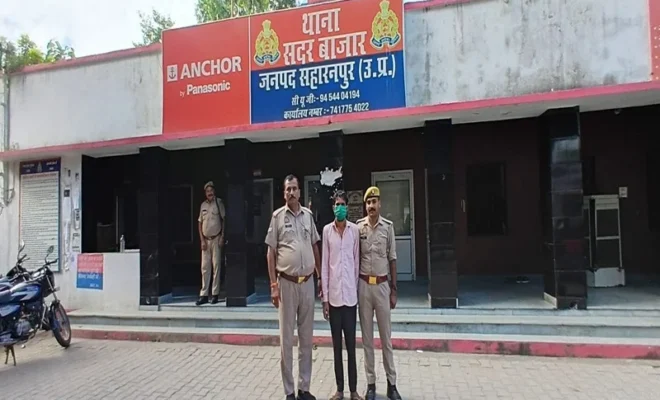
Initially, the case was lodged at Sadar Bazaar police station in Saharanpur on August 29, 2026. Later, the NIA took charge and the case was re-registered on September 3.
Why Is the NIA Investigating the Bank Staff?
The participation of the staff members from the bank became one of the crucial issues during the preliminary investigation when three employees of PNB came into the spotlight after which they were suspended from their job.
In particular, according to the data provided, NIA has detained Amit Kumar, an employee of PNB who used to be the manager of the currency chest. Now, the investigations aim to examine the involvement of the employee in the work with the counterfeit money and find out how it was introduced into the cash system of the bank.
It should be noted that detention does not necessarily mean the guilt of the person because the investigation is still underway.
What Is the Asset Trail Investigation?
The investigation related to asset trail is aimed at tracing the money trail, property trail, and financial transactions involving individuals who might have had access to the currency chest or might be associated with the alleged network.
Recently, a news report caught everyone’s eye about a contracted banking employee who earned approximately ₹11,000 per month but has many properties and cars in his name. NIA is investigating the property, bank account, vehicle, and payment trails to trace out the timing of acquisition of such assets, the persons in whose name these assets have been held and how these assets were acquired.
Moreover, it has also been reported that investigators are checking the closeness of the individual to the suspended manager of the currency chest. As per the report, despite the fact that the employee was assigned the task of driving and loading only, his access to the currency chest is being checked by investigators.
These are the aspects under investigation and are not intended to be used as evidence of money laundering.
Why the ₹11,000 Salary and Property Trail Matters
The reported mismatch between the official income and the claimed assets is one of the factors making the financial investigation important in the case.
In any investigations into alleged organized financial crime, the investigators usually try to prove whether the unexplained funds are related to the crime in question. This involves checking the acquisition of property, banking transactions, car ownership, cash flow and dealings with associates.
In the Saharanpur case, it seems that the NIA is doing just that along with the investigation of the counterfeit currency. The goal is to check if there are any unexplained financial ties between the people involved with the currency chest and the counterfeit currency network.
Where Did the ₹17.29 Crore in Fake Currency Come From?
It continues to be one of the biggest unresolved questions.
NIA is investigating the origin of the counterfeit notes and how they made their way into the PNB currency chest. The investigation is also considering if the counterfeit notes traveled via the banking system and any other locations/individuals involved in the transaction.
There have been reports that investigators are tracing a much larger cash trail involving a ₹111-crore currency shipment from Saharanpur. The objective of the exercise is to see if the counterfeit notes were confined only to the currency chest or were associated with a larger cash movement via the banking channel.
Investigators have also looked into the possibility of a Nepal link, but it still is a matter of investigation.
How Was the Irregularity Detected?
According to reports, the whole case started with an amount that was relatively small compared to what was found later.
When the currency from the PNB currency chest of Saharanpur was transferred to the Reserve Bank of India somewhere between August 10th and 11th, there was a shortage of currency that was valued at about ₹4.36 lakh through reconciliation. Counterfeit currency that amounted to several crores was found during the subsequent examination.
This is the reason why investigations are being conducted on both the counterfeit currency and the whole money handling procedure.
Could the Fake Notes Have Entered Circulation?
This particular issue is being investigated by the authorities.
The bank has stated that the suspected counterfeit money discovered in the currency chest was never circulated or issued to its various branches, as per reports from earlier on.
However, the NIA is investigating if counterfeit money did indeed flow through the financial system and if the said activity took place anywhere else apart from the currency chest.
It is thus important to ascertain the flow of currency during the course of the investigation.
What Happens Next in the Investigation?
The NIA is likely to follow up on the transactions, study property documents, analyze communications and question individuals associated with the currency chest.
According to the NIA, the probe is intended to discover the larger conspiracy, ascertain the role of other suspects involved, trace the origin of the fake currency and arrest other accused individuals.
It is not just about recovery of the fake currency notes. The larger issue is whether the Saharanpur currency chest was being operated as part of a larger counterfeit-currency network.
Why This Case Is Significant
This matter is of utmost concern as the suspected counterfeit money was found in an actual bank rather than just seizing them from an individual or even an informal market.
Currency chests are important parts of the money-disbursement system in India. The presence of any kind of alleged manipulation in such a process calls into question the internal control processes, access management, cash validation and possibilities of financial crimes through banks.
This is the reason why the NIA’s investigation on both the money flow and personal financial trails of people associated with the case is getting so much attention.
Conclusion
However, what began as a simple suspicion of currency misappropriation in the Saharanpur PNB case has become a lot more complex with allegations of counterfeiting currency, banking officials, money trails, and asset tracing thrown into the picture.
Now, the NIA is working towards linking all of the dots: How did ₹17.29 crore worth of counterfeit currency reach the PNB currency chest? Who had access to that money? Is there any link between this money and any other networks? Can the money trail and unexplained financial assets help trace the flow of funds?
At present, many questions have yet to be answered, and the investigation is ongoing. The role of the money trail may be extremely significant if the investigators manage to successfully connect unexplained assets to the persons under investigation and the counterfeit currency operation in particular.
In the Saharanpur PNB case, the question of where the fake currency was discovered has become secondary. The NIA is trying to discover how it got there, and whether anyone helped facilitate its presence in the bank currency chest.
India’s Big Shifts: AI, Politics, Energy & Finance
- Can India Scale Responsible AI Faster?
Check out the key insights on India’s next phase of responsible AI adoption. - Why Does Punjab Need This Yatra?
Find out why the 4,000-km anti-drugs campaign matters ahead of the 2027 Punjab polls. - Can Quick Commerce Change Society?
Uncover why India’s rapid quick-commerce growth may require a new social contract. - Can Rosatom Help India Reach 100GW?
Explore Russia’s proposal to supply nuclear power plant units for India’s ambitious energy target. - Why Did IRDAI Penalize Canara HSBC?
Reveal the policy sales violations behind IRDAI’s ₹1 crore penalty on the insurer.