CBI Brings Fugitive Harnek Singh Back to Delhi After 13 Years: What Is the Singapore Phone-Spoofing Fraud Case?
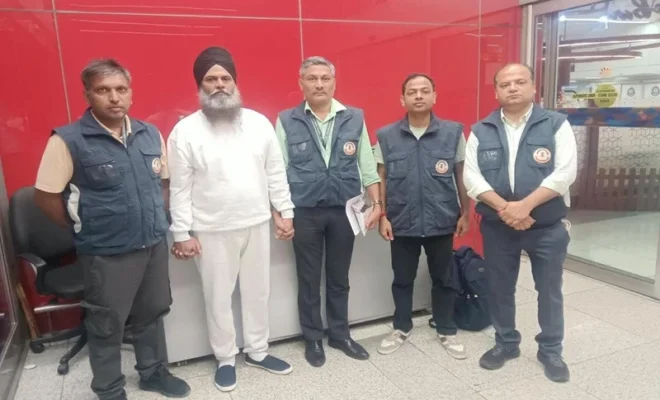
Harnek Singh, an absconding accused who has been sought by the CBI for 13 years in an international fraud case, has been brought back to India by the CBI from the United States. Harnek Singh was picked up by the CBI from New Delhi’s Indira Gandhi International Airport after his deportation from the US on September 9, 2026. He will be brought before the Special Judicial Magistrate for CBI cases in Panchkula, Haryana.
The incident took place in 2013, where Indian nationals based out of Singapore or working there were being victimized with telephone calls wherein the callers would pose as officials of Singapore Immigration and threaten with legal action against them and deportation to demand money from them.
Who Is Harnek Singh?
Accused Harnek Singh is charged in a case of CBI regarding conspiracy, cheating, forgery, and the usage of forged documents in place of genuine documents, along with the offenses under the Information Technology Act. The CBI had filed the case in Delhi in 2016 after investigating the alleged fraud ring.
As per the reports of the investigators, Singh was allegedly running a money transfer outlet, which became a part of the process whereby money was collected from the victims. Singh had been reportedly working in tandem with co-accused Aditya Bhardwaj and Deepak Jain.
Singh had absconded since 2013. As per the officials, Singh left the country in May of that year and later reached the United States, making himself unavailable to the Indian investigators for more than a decade. There was an Interpol Red Notice and Look Out Circular against him.
How the Singapore Phone-Spoofing Scam Allegedly Worked
Fraudsters used a popular form of impersonation in an international scam. People from Singapore received phone calls from individuals who pretended to represent officials from Singapore Immigration.
According to reports, the callers informed the victims about incorrect information written in their airport disembarkation cards. The victims faced either criminal charges or deportation and then pressured them to pay money through Western Union transfers to specific individuals in India under the name of settlement or fine payments.
The use of fake phone numbers made the scam more convincing since the callers could pretend to be government officials.
Where Did the Money Go?
According to the CBI investigation, the money from the alleged fraud was tracked down to a money transfer facility owned by Harnek Singh and his co-accused. Further investigations helped investigators trace back the flow of money to determine the manner in which the money sent by victims in foreign countries was received and withdrawn in India.
Previous cases against other accused have revealed more information on the alleged scam. In 2025, a Special CBI court in Panchkula sentenced Aditya Bhardwaj and Deepak Jain to imprisonment for two-and-a-half years on account of the same case. According to the prosecution, the accused used to trick Indians residing or working in Singapore, among others, by impersonating themselves as immigration officials.
What Happened to the Other Accused?
However, Harnek Singh was not the only one mentioned in the case. Proceedings against co-accused Aditya Bhardwaj and Deepak Jain were going on simultaneously with Harnek Singh being out of the reach of Indian authorities.
Eventually, both of them were found guilty by the Special CBI Court in Panchkula in 2025. It is reported by the court that the crime was committed through fraudulent Western Union payments and fake identities and documents which helped them collect money from the victims.
Now that Harnek Singh has returned to India, it will be easy for CBI to prosecute him legally.
Why Did It Take 13 Years to Bring Him Back?
The length of time between the alleged crimes and Singh’s extradition underscores the challenges faced by investigators when an accused individual leaves the country.
Based on the information provided in the CBI-related reports, Singh was not reachable after leaving India in 2013 and subsequently moving to the United States. Interpol Red Notice and Look Out Circular were issued while searching for him.
Singh’s deportation from the United States now gives Indian investigators the opportunity to apprehend him. He was arrested by CBI on arriving in Delhi airport on September 9.
Significance of This Case in Today’s World
This case reveals how telephone scams have the ability to go beyond national borders and use the victim’s fear of any action taken by the authorities against them. The alleged scammers did not just ask their victims for money, but according to the news, they first made up an emergency and threatened the victims with being prosecuted or deported.
This method of telephone fraud is still significant in today’s world because it uses the same methods that include threats and impersonations through emails and calls. The fraudsters pretend to be officials from immigration department, law enforcement agency, banking institutions, and courts.
What Happens Next for Harnek Singh?
Singh is expected to be produced before the Special Judicial Magistrate (CBI Cases), Panchkula, upon his arrival in India. The legal process in the court will decide the way forward in this case.
It is necessary to understand the difference between allegations and facts in this case – Singh is an accused in this case and the charges against him have to be heard in a judicial process.
However, his extradition represents an important step for the investigators after years of his absence from India.
Conclusion
The extradition of Harnek Singh from the US by the CBI marks a milestone in the 13-year-old international fraud case. The case involves allegations of deception of victims in Singapore by calling parties who impersonated immigration officers in order to convince the victims to transfer money to people in India.
With Singh now in the custody of the CBI in New Delhi and set to appear before the court in Panchkula, the investigators finally have an opportunity to pursue the accused who had been absent from India since 2013.
The case of Harnek Singh proves that telephone fraud and impersonation of government officials are not novel fraud methods – yet their international scale can
CBI Under Focus: Major Cases, Raids & Safety Alerts
- What Did CBI Find In NEET?
Check out the key details of the chargesheet filed against 13 accused in the NEET-UG paper leak case. - When Will Babri Trial Finally End?
Find the Supreme Court’s deadline for completing the trial involving LK Advani and others. - How Did Digital Arrest Raids Unfold?
Uncover what happened during CBI raids across 80 locations and learn essential safety tips. - Can ABHAY Help Stop Digital Arrests?
Browse how CBI’s ABHAY chatbot can verify police notices and help avoid digital arrest scams. - What Did CBI Find In Kolkata?
Reveal the investigation irregularities highlighted by the CBI and the Supreme Court’s questions to Kolkata Police.