BJP’s 4,000-Km Anti-Drugs Yatra in Punjab: Why the ‘Nasha Mukt Punjab’ Push Matters Ahead of 2027 Polls
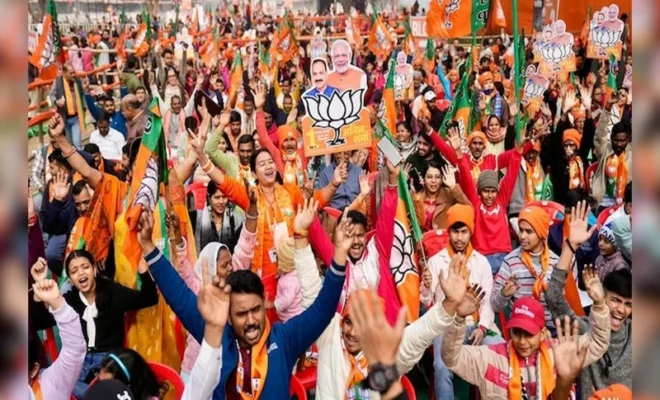
The Bharatiya Janata Party is gearing up for a massive state-level outreach program in Punjab. Four ‘Nasha Mukt Punjab Yatras’ are due to start from September 18, 2026. The Yatra will cover all 117 Assembly constituencies of Punjab and will run a distance of nearly 4,000 kilometres, culminating in Jalandhar on September 30.
While the program has been described by the BJP as an anti-drugs and awareness program, its timing cannot be overlooked, for Punjab has Assembly elections in 2027 and the BJP is now emphasizing drugs, law and order, and governance as key elements in its electoral pitch.
Therefore, the campaign is a combination of the public health angle and the ground mobilization exercise of the party.
When Will the BJP’s Anti-Drugs Yatra Begin?
The first of the four yatras will be commenced on September 18. According to sources, BJP national president Nitin Nabin will launch the first journey from Ekta Sthal in Madhopur area of Pathankot district. The four yatras will start on successive days but will finally reach Jalandhar on September 30. It is said that Union Home Minister Amit Shah will be present during the last yatra; however, his participation has been made conditional upon the final schedule of the programme.
The magnitude of the program cannot be ignored. Instead of focusing on some big cities, the BJP is aiming to organize the campaign in all 117 Assembly constituencies in Punjab.
Why Has the BJP Chosen Drugs as Its Main Issue?
Drug addiction and the associated issue of supply and trafficking have been one of the most politically contentious topics in the state of Punjab over the past few years.
BJP has tried to politicise the issue and has tried to make it a major point for the upcoming election of 2027. As per the report by Hindustan Times, BJP has determined from internal surveys that the drugs remain one of the most important issues amongst voters despite the efforts of the Punjab state government to fight against drug use in Punjab.
In terms of BJP’s political messaging on this topic, it argues that the problem should be seen not only as a law and order problem but as a larger problem of governance and society.
However, in response to this, the government of AAP in Punjab has pointed out its enforcement and rehabilitation program against the use of drugs.
Recently, Punjab has witnessed several arrests in connection with drugs, indicating that the government has been able to take many arrests in the enforcement campaign against drugs.
What Are the Four Routes?
The above mentioned four paths have been planned for coverage of varied geographical and political territories of Punjab prior to their meeting point in Jalandhar.
First path starts from Madhopur in Pathankot and proceeds through various places including Pathankot, Gurdaspur, Amritsar, Tarn Taran, Ferozepur and some parts of Kapurthala to reach Jalandhar. This gives the BJP wide access to Punjab’s northern and border districts.
Second path begins from Fatehgarh Sahib and proceeds through places including Ludhiana, Mohali, Kharar, Ropar, Anandpur Sahib, Hoshiarpur, Nawanshahr and Phagwara. Hence, this path covers quite some territory in central and north-eastern Punjab.
Third path starts from Veer Bhoomi Memorial in Fazilka and passes through many constituencies in Malwa belt including Abohar, Muktsar, Malout, Faridkot, Moga, Malerkotla and Ludhiana.
Fourth path starts from Takht Damdama Sahib in Talwandi Sabo and proceeds through Bathinda, Mansa, Barnala, Sangrur and Patiala to reach Jalandhar.
Together, the routes are intended to cover the entire state rather than function as isolated political events.
Why Were These Starting Points Chosen?
These starting points seem to hold some political, historical and cultural relevance apart from their geographical location.
The first path starts from the Shyama Prasad Mukherjee memorial at Madhopur. This makes a connection between the campaign and the history of ideology of the BJP.
Another starting point is the Fatehgarh Sahib, which holds immense significance for Sikh history because of the martyrdom of the younger Sahibzadas of Guru Gobind Singh.
The path that originates from Fazilka begins from a war memorial related to the conflict between India and Pakistan in 1971, while the fourth one starts from Takht Damdama Sahib, which is an important Sikh religious site in Punjab.
This combination of paths helps the BJP to relate its anti-narcotics campaign with the larger issues of Punjab’s culture and history.
Is This Really an Anti-Drug Campaign or an Election Strategy?
While the BJP may claim that this exercise is an awareness program, political analysts believe that there is a definite element of politics involved.
This is happening just short of five months prior to the time when the next Assembly election cycle will be of paramount importance for politics. Through a tour covering all the 117 constituencies, the BJP would be able to achieve a dual purpose of communicating on the issues and mobilizing its supporters.
According to The Indian Express, the strategy adopted is one which the BJP has used in other states as well in conducting mass yatras, including Parivartan Yatra in West Bengal.
Thus, the purpose of this exercise in Punjab is twofold: to keep the issue of drugs in public consciousness and to strengthen the organizational base of the BJP in Punjab.
Why This Could Put Pressure on AAP
The BJP has launched a direct challenge to the government of AAP on a subject that the state government itself considers a significant priority.
The AAP can cite its law enforcement activities like arrests, FIRs, seizures, and rehabilitation programs.
The BJP, on the other hand, can argue that the presence of drugs in the state of Punjab is a proof of the fact that the measures taken have failed to solve the problem.
In this way, there emerges a clear political battle between the government and opposition on who has delivered and whose policies are effective.
What Happens Next?
These yatras will be organized between September 18 and September 30, after which all four yatras will meet in Jalandhar and will organize a grand event.
While it is still not clear whether this campaign will have any effect on voters’ choices, what is evident is that the BJP wants to ensure that the drugs become an important topic of discussion in Punjab politics.
Also, through this campaign, the party wants to gain momentum before 2027 elections.
Conclusion
BJP’s four-pronged Nasha Mukt Punjab Yatra has a much wider scope than a standard awareness campaign. Spanning a distance of close to 4,000 kilometres and involving 117 Assembly seats, the Yatra provides the BJP with ample scope for discussing the issues of drug use, good governance and law and order among others with voters.
As the 2027 Punjab Assembly polls approach, the campaign also serves as a serious examination of the ability of the BJP to turn voter concerns on drugs into political capital.
In Punjab, however, the more critical issue would be whether the political discourse leads to any real action against the problems of addiction and trafficking of drugs.
India’s Latest Moves: Defence, Security, Justice & Technology
- What Is RAKSHA’s Defence Vision?
Check out the key priorities of India’s new 10-year defence diplomacy framework. - How Is Bengal Fighting Drug Abuse?
Find out how West Bengal’s crackdown is tackling confiscated illegal syrup bottles. - What Does India-Kuwait Defence Pact Mean?
Uncover how the new framework could strengthen India-Kuwait strategic and security ties. - Why Does BRICS Justice Meet Matter?
Explore why the 2026 Chief Justices’ Forum in New Delhi is significant. - Can EVMs Really Be Hacked Wirelessly?
See why the Election Commission maintains that EVMs cannot be hacked through Wi-Fi or Bluetooth.