
Why Bihar Wants the Farakka Treaty Scrapped: What It Means for Ganga Water and Siltation
As the expiry date of the Ganga Water Sharing Treaty between India and Bangladesh approaches in December 2026, Bihar is demanding its concerns be given top priority for any future decisions about renewal of the treaty. In fact, the situation has become extremely urgent for Bihar, owing to its concerns of flooding by the Ganga, siltation and seasonal water shortages.
The political leaders of Bihar say that since the present scenario of the river has changed completely from what it used to be at the time of negotiation of the treaty, the future needs of the state have to be taken into account before signing the treaty.
What Is the Farakka Treaty?
Otherwise known as the Ganga Water Sharing Treaty, this agreement between India and Bangladesh was signed in December 12, 1996. The agreement is concerned with the water sharing from the Ganga at Farakka from January 1 to May 31, according to water availability. The treaty is to expire in December 2026.
This agreement was meant to set up an orderly framework for both countries, with the water-sharing formula calculated based on water availability from 1949 to 1988. According to India’s parliamentary information, however, the treaty is near its expiration date in 2026 and there will be discussions involving many stakeholders regarding the matter, including Bihar and West Bengal.
Why Is Bihar Against the Renewal?
As per Bihar, the main problem is the inability of the treaty to consider the present water needs of the state and the issue related to the Farakka Barrage.
Sanjay Kumar Jha, a leader of JD(U) and MP in the Rajya Sabha, is of the opinion that the treaty has led to the problematic combination of floods, high siltation and lack of water in dry seasons in Bihar. Therefore, he has demanded consideration of water needs until 2050 while renewing the treaty.
Bihar Deputy Chief Minister Vijay Kumar Choudhary has also said that the state has raised its concerns with the Centre and that those concerns would be taken into account during discussions over the treaty.
How Does Farakka Affect the Ganga?
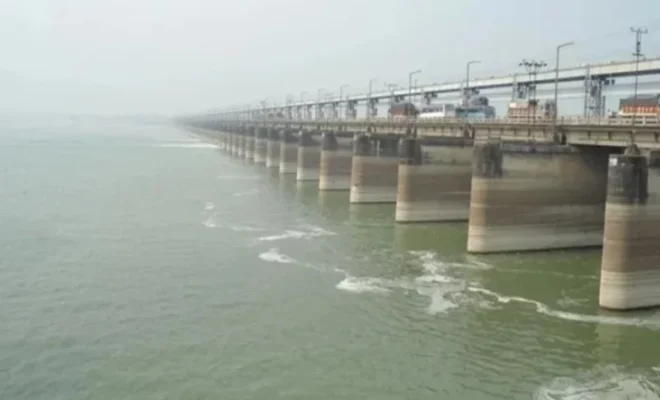
Construction of the Farakka Barrage took place in the state of West Bengal and went operational in 1975. The original intent of the Farakka Barrage was to facilitate diversion of waters into the Bhagirathi-Hooghly system.
The issue of dispute stems from the fact that manipulation of the rivers may have implications for the entire river system. Bihar is an upstream state to the Farakka and claims that Farakka Barrage and its dynamics have played a part in altering sedimentation and flooding patterns.
Bihar needs an overall analysis of the impact of Farakka Barrage on the Ganga before making any further decisions regarding the future water sharing mechanism.
Why Is Siltation Such a Big Issue for Bihar?
Siltation is the crux of the argument made by Bihar. The Ganga River is laden with a huge amount of sediment, and deposition is an inherent property of an alluvial river. Even the Union Government has recognized the process of erosion and siltation as natural processes that depend upon parameters like discharge, slope of the river, morphology, and sediment properties.
However, the political debate is regarding the contribution of the Farakka Barrage system to the problem in the manner that the processes get enhanced due to which Bihar becomes more prone to floods.
According to Bihar, excess siltation may lead to the increase in the bed level of the river which would make the river less effective for carrying water and eventually result in flooding. In this regard, the state has demanded the conduct of a scientifically based time-bound research focused on the problem of siltation in Bihar.
It should be kept in mind that it does not mean that any flood and siltation in Bihar can be attributed to Farakka. The government had previously conducted studies focusing on the link between the barrages, flooding, and siltation.
The “Flood and Water Shortage” Paradox
The most powerful political argument put forth by Bihar is that the state suffers from excess water during the monsoons but suffers from a lack of water during the dry season.
This contradiction is at the heart of the ongoing discussion. Excess water flows lead to floods during the monsoons, particularly in the Ganga River and its tributaries. On the other hand, increasing demands during other times of the year require more water.
Under the terms of the Farakka treaty, the issue of sharing during the dry season pertains to the barrage, thus making Bihar’s worries about the validity of an existing allocation scheme in today’s context very relevant.
Why 2026 Makes the Issue More Urgent
It is important due to the fact that 30 years old Treaty will expire in December 2026. The Indian Council of World Affairs claims that climate changes and shifts in hydrology conditions allow taking this moment for considering the issue in a new light.
For Bihar, it means that it is a chance to ensure that the issue of water security and flood management is considered.
The state already tried to get more attention paid to it while discussing the Ganga River.
The Flood Situation Has Added Fresh Pressure
The issue has acquired additional immediacy since Bihar currently faces the problem of rising water levels in the Ganga. On August 24, 2026, the government of Bihar asked the state of West Bengal to open all gates of the Farakka Barrage as water levels were exceeding the danger levels in some major ghats of Patna.
This example shows the political sensitivity of the issue in question as the very infrastructure that became the subject of the water-sharing dispute is being discussed now in relation to flood management.
What Does Bihar Actually Want?
The claim from Bihar goes much further than simply requesting more water from the Ganga. Bihar has requested a general review of the Farakka system, scientific study of siltation problems, consideration of future needs for water, and greater participation in decisions concerning the Ganga basin.
Previous demands from the Bihar government have also included a complete study of the issues involved, participation of Bihar officials in the management of Farakka, and review of the possibility of alterations to the barrages through modern hydraulic and scientific study.
This implies that the state’s demand is essentially about management of the river rather than merely its water-sharing formula.
What Could Happen to India-Bangladesh Relations?
This is where things start becoming diplomatically tricky.
The treaty applies to a transboundary river which flows through both India and Bangladesh. Thus, any modification in the existing arrangement would have implications on both the sides. There are concerns on the part of Bangladesh about assured flow of water during the dry season, while India needs to take into account the interests of Bihar, West Bengal and other parts of the Ganga basin.
Thus, the central government is faced with a balancing act – how to protect Bihar’s interests on one hand while also ensuring that the cooperative framework with Bangladesh holds.
Conclusion
The Bihar government’s request to review and even revoke the Farakka Treaty is part of a wider debate on how India should regulate the flow of the Ganga after 2026.
As per the state, the current regime does not take into account the altered water needs of Bihar, its flood-prone areas, and its fears of siltation. However, in the official analyses conducted by the Government of India, the natural processes of silt movement and river floods are identified which cannot be directly linked to the operation of the barrage.
Given the fact that the Farakka treaty is due for expiry by the end of 2026, the Bihar government desires to initiate a new dialogue.
More Stories You Shouldn’t Miss
What Really Happened at Devkund Waterfall?
Check out the flash flood incident and why tourists were left stranded.
Are Railway Stations’ Water Safe Enough?
Find out what the CAG audit revealed and how authorities are responding.
What Caused the Chamoli Tunnel Disaster?
Uncover how landslides and sudden water inflow led to seven deaths.
What Will Kashi Ganga Corridor Change?
Browse the route, project details, and its impact on Varanasi’s future.
Could El Niño Trigger Chennai Floods?
Track down the weather risks facing drought-prone states and Chennai.