
India–US Critical Technology Partnership: A New Chapter in Semiconductor and AI Cooperation
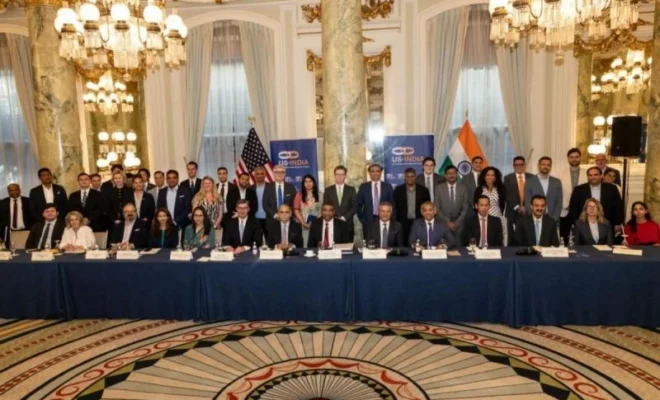
In the early parts of the 20th century, influence in geopolitics was decided by military capabilities, industrial might, and availability of natural resources. But in the 21st century, the importance of technological superiority has come into focus and has emerged as the definitive factor of national power. Semiconductors, artificial intelligence (AI), quantum computing, secure telecommunications, biotechnology, and advanced manufacturing are technologies which have taken geopolitical importance in the modern era.
In this regard, iCET is not just another agreement between the two democracies. It is part of a larger and well-planned strategy that aims to position India and the US at the leading edge of technological innovation and minimize vulnerabilities in the global supply chains.
Given the current environment of geopolitical contestation and as countries seek to lessen their reliance on centralized centers of manufacturing, there has been a clear shift in India and the US toward technological cooperation and ambitions. Semiconductors and AI represent the centerpieces of this new era of technological partnership between the two countries.
Why Critical Technologies Have Become Strategic Priorities
Technology can no longer be looked upon merely as a source of economic development; it is a crucial aspect of national resilience.
Semiconductors underlie the functioning of all modern technology – whether they are smartphones, automobiles, fighter jets, hospital equipment, satellites or AI devices. Any disruptions in the supply chain of semiconductors has repercussions for both the economy and national security, as was seen in the chip shortage caused by the COVID-19 pandemic.
Artificial intelligence holds similar significance for countries. AI is revolutionizing healthcare, education, defence, finance, manufacturing, farming, and even government. Those nations who innovate on AI are likely to have an edge in terms of productivity, research, and military strength.
It is these developments that have made India and the US move past their conventional alliance in defence and trade into a more advanced relationship involving critical technologies.
The Evolution of the India–US Technology Partnership
There has been significant development in the technological relationship between India and the United States in the last two decades.
Beginning with the exchange of information technology services and software products, collaboration has broadened to include research and development, innovation in digital technologies, aerospace, defence manufacturing, cybersecurity, and electronics.
One significant milestone was reached with the initiation of the Initiative on Critical and Emerging Technology (iCET). The initiative marked a coordinated effort in semiconductors, artificial intelligence, quantum technologies, telecommunications, biotech, green energy, and advanced defence systems.
Whereas previous agreements were geared towards facilitating commercial transactions, iCET is based on a more holistic perspective. It is clear that technological dominance can only be achieved through collaboration at various levels.
Semiconductors: Building Trusted Supply Chains
Semiconductors are one of the most precious resources of the global economy.
For many years, production was dominated by just a few areas, leaving a lot of vulnerabilities to those countries that were highly dependent on chip imports. The geopolitical situation and the pandemic highlighted the problems with such highly concentrated supply chains.
India and the USA have found common ground in their shared goals of creating diverse and resilient semiconductor supply chains.
On the one hand, the United States is represented by a good chip design and research capacities, semiconductor equipment and innovation systems. On the other hand, India provides good engineering talents, expansion of the manufacturing capability of electronics, good policy reforms and one of the fastest-growing digital market in the world.
Growing investments into Indian market by semiconductor firms prove the increasing confidence in its manufacturing potential. Government incentives, improved infrastructure and production linked incentives helped to attract India more to semiconductor sector.
Artificial Intelligence: From Innovation to Responsible Governance
While semiconductors form the hardware underpinning, artificial intelligence forms the software intelligence that will power future economies.
The US still leads in AI frontier research, AI language models, cloud infrastructure, and AI entrepreneurship.
India’s strengths complement those of the US by providing a talent pool for tech experts, digital public infrastructure, multilingual data sets, and widespread adoption of AI applications in government and the private sector.
However, the collaboration between the two countries is becoming increasingly about creating AI technologies that are reliable, secure, transparent, and consistent with democratic principles.
Such collaborations will involve AI governance regimes, responsible innovation, research collaborations, workforce training, etc.
The two countries see the importance of international cooperation in AI applications not just as a means of outdoing each other in AI applications.
Talent: The Partnership’s Greatest Strategic Asset
One of the biggest strengths that they share together may be that of human capital.
India happens to have one of the highest numbers of engineers, software experts, and graduates of science and technology in the world. The Indian professionals have been in key positions in Silicon Valley, international technology companies, universities, and research laboratories.
On the other hand, the US has some of the finest research universities, venture capitals, state-of-the-art laboratories, and entrepreneurial environments.
The two nations can benefit greatly from developing education links, research programs, collaborations between universities, startups, and labor mobility.
Instead of competing for talent, they could increasingly benefit from building innovation ecosystems.
Economic Opportunities Beyond Technology
The implications of such an arrangement go far beyond tech firms.
Semiconductor production involves job creation in design, production, testing, packaging, logistics, construction, chemicals, equipment manufacturing, and specialized services.
Similarly, artificial intelligence applications provide for job creation in healthcare, precision farming, financial inclusion, smart manufacturing, edtech, urban planning, and climate resilience.
In India’s case, these trends help in its aspiration to become a global manufacturing and innovation center.
As for the United States, partnership with India adds to economic security and diversification of critical technology supply chains.
Challenges That Must Be Addressed
Nevertheless, a number of major challenges lie ahead.
The production of semiconductors entails large investments, advanced infrastructure, access to energy, water, and qualified personnel.
Cooperation in artificial intelligence also poses some difficult issues, such as data regulation, intellectual property rights, cyber security, privacy protection, export control, and regulatory conformity.
Closing these gaps will take continued cooperation in policy-making, predictability of regulations, industrial involvement, and financial support over time.
Building confidence among governments, businesses, research organizations, and academia will be necessary.
Strategic Significance in an Uncertain World
There is importance attached to this relationship that goes beyond economic considerations.
In today’s world, technology plays an increasing role in preparing for defense, securing supply chains, digital sovereignty, and geopolitical power.
Through fostering collaboration in the areas of semiconductors and AI, both India and the US hope to minimize vulnerabilities, foster resilient ecosystems of innovation, and support the rules-based order in technology.
Unlike transactional partnerships, this is one of the relationships that is now increasingly values-based in its approach.
Openness, innovation, democratic governance, and trusted technology development are some of the key aspects of such a values-based partnership approach.
Looking Ahead
While the partnership is in its initial phase, its future promise is significant.
Apart from government cooperation, the success of the initiative would also depend upon continued cooperation between universities, startups, multinational corporations, investors, and research centers.
If the strategy works out well, the partnership has the potential to change the future of global semiconductor manufacturing and responsible AI innovation, besides generating high-paying jobs and digital resilience.
Keep Reading: Stories That Matter Most to You
1. NATO’s Ankara Summit: Warning Signals India Cannot Afford to Ignore
Explore how the NATO Ankara Summit could reshape India’s strategic and security priorities
2. EPFO VISHWAS 2026 Scheme Explained: One-Time Settlement for Pending PF Dues
Discover who qualifies for the EPFO VISHWAS 2026 Scheme and how pending PF dues can be settle
3. Kashmir Valley Tourism Rebounds: Gulmarg and Pahalgam Witness Record Summer Footfall
Check why Gulmarg and Pahalgam are attracting record numbers of summer visitors this year.
4. Beyond Dharmendra Pradhan’s Resignation: India’s Deeper Youth Unemployment Crisis
Explore the deeper causes behind India’s growing youth unemployment beyond the latest political developments.
5. Income Tax Return (ITR) Filing Deadline 2026: Key Changes in the New Tax Regime You Must Know
Discover the latest ITR filing deadline and important tax regime changes every taxpayer should know.
Conclusion
The India-US collaboration in semiconductors and AI is not just about technical collaboration; it is also about designing the structure of the future global digital economy.
With the increasing importance of technology in geopolitics, both countries have realised that there is greater strategic gain to be had through collaboration than by isolation. By pairing the innovation strength of the US with the talent, scale, and growing manufacturing capabilities of India, the partnership could help create more resilient supply chains, develop AI responsibly, and enhance both economic and national security.
In coming years, the success of the partnership may not be judged just on the basis of investments made or policies developed, but also on the creation of a secure and inclusive innovation ecosystem that can address some of the toughest technological problems facing the world today.