
Civilisational Diplomacy Without Chauvinism: Navigating India’s Soft Power in the SCO
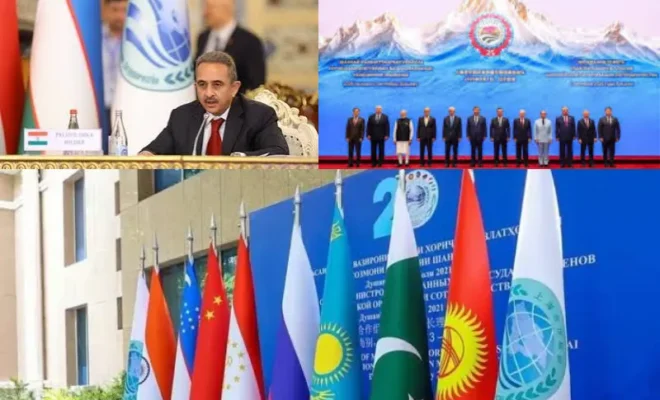
India’s increasing interaction with the Shanghai Cooperation Organisation (SCO) indicates an essential development in its regional foreign policy. Apart from economic collaboration, connectivity and security cooperation, New Delhi is now increasingly engaging with the international community in terms of civilisational heritage and cultural dialogue. The launch of the first SCO Civilisational Dialogue Forum in New Delhi on November 20, 2026, is a good example of such an initiative.
This three-day forum was initiated by the Prime Minister Narendra Modi at the 2025 SCO Summit in Tianjin, China. This forum will involve scholars, academics, cultural diplomats and decision makers from the SCO member states. This initiative, which takes place at the historic Purana Qila in New Delhi, aims to foster the people-to-people connection through common history and culture.
Nonetheless, India’s civilisational diplomacy is supposed to follow an essential difference: cultural confidence should be the tool for establishing links, but not the basis for creating hierarchies. India should aim at promoting its heritage without portraying it as the supreme one in comparison to other civilizations.
Why Civilisational Diplomacy Matters for India’s SCO Strategy
The SCO provides a distinct diplomatic forum for India. It is composed of China, Russia, Kazakhstan, Kyrgyzstan, Tajikistan, Uzbekistan, Pakistan, Iran, Belarus and India. They are from varied political systems, religions and backgrounds, but have had a connection that dates back many centuries because of trade, migrations, scholarship and cultural interactions.
Ancient Silk Routes allowed Indian traders, Buddhist scholars and travelers to interact with civilizations in Central Asia and East Asia. The philosophy of Buddhism spread throughout the region, and languages, art, science and trade emerged from these prolonged interactions.
Historic relations of India with Central Asia can be used to build on the current diplomatic relations between the two regions beyond traditional diplomacy. India’s Buddhist tradition, its Sanskrit literature, yoga, Ayurveda, performing arts and philosophy can all serve as tools for cultural diplomacy.
In 2022-23 when India became the SCO president, Varanasi became the first SCO Cultural and Tourism Capital. This laid a foundation for cultural diplomacy in the future.
The most recent Civilizational Dialogue Forum follows the same approach by giving cultural diplomacy a multilateral platform.
India’s Soft Power Must Avoid Civilisational Chauvinism
Civilizational diplomacy works when it promotes recognition instead of rivalry regarding their historical greatness. The cultural influence of India stems from its diversity, adaptability and capacity to include different philosophical and religious traditions.
Promoting Indian civilization as an evolving civilization is more effective than making historical superiority the core of Indian international cultural diplomacy. The SCO comprises nations that made equal contributions to philosophy, literature, architecture, mathematics, medicine, and science development. Persian, Turkic, Chinese, Buddhist, Islamic, and Hindu traditions were all influential in shaping the intellectual and cultural landscape of the region.
Hence, India’s diplomatic discourse needs to emphasize mutual contributions and historical dependence. The philosophy of Vasudhaiva Kutumbakam (the world is one family) may be a good philosophical premise in this regard. However, its effectiveness relies on India’s openness and respect for other cultures.
Indian cultural diplomacy should not become a tool of Indian politics at home. Instead, it needs to provide platforms for international audiences to learn about India’s heritage through academic research, cultural institutions, artists, and people-to-people contact.
From Cultural Symbolism to Institutional Cooperation
For India, it is essential to demonstrate that the civilisational approach towards diplomatic policy results in creating durable institutional relationships based on cultural exchange. Even festivals, exhibition and ceremonials are able to attract attention; however, cooperation demands academic networking, collaboration in research, and accessibility of cultural products.
Prime Minister Narendra Modi at the first forum mentioned possible ways to use the SCO member countries’ potential by means of digitalising ancient manuscripts, translating historical literature, holding joint museum exhibitions and facilitating collaboration between universities and research centers. Moreover, he noted the importance of using artificial intelligence to make the literature and history available in different languages.
These suggestions give the clear path for further implementation of India’s soft power strategy. Joint archeological expeditions, Buddhist circuit, academic fellowships, translation programs and cultural tourism projects could be used as ways to create closer ties among nations.
However, it is important to include participation of local communities, independent historians, researchers and youth in these initiatives. It is impossible to limit civilisational diplomacy with officially sponsored activities. The power of this diplomacy is revealed when common people become involved in cultural dialogue.
Managing Geopolitical Differences Within the SCO
There are also geopolitical challenges that impact the cultural engagement of India. The ties with China are still affected by the ongoing strategic rivalry and unresolved border issues. Similarly, India’s relationship with Pakistan is hindered by the tensions existing between these two countries.
Such divergences make the SCO a complex yet important diplomatic arena. Cultural cooperation alone will not be able to solve all the security issues, terrorism concerns and regional rivalries.
In this situation, India should ensure that it does not consider the civilisational ties as alternatives to political responsibility. At the same time, India should be able to pursue consistent stance on terrorism, national sovereignty and security issues despite cultural diplomacy.
Overall, India’s involvement in the SCO is part of its wider strategy aimed at accessing the diplomatic networks of Eurasia while preserving its independence in the foreign affairs. In this context, civilisational ties are helpful because they keep the lines of communication open.
Can India’s Civilisational Diplomacy Strengthen Its Global Influence?
The ultimate test of India’s soft power will be how credible its cultural diplomacy is. India’s culture, democracy, linguistics, movies, literature, cuisine, Yoga, indigenous medicine, and technology provide plenty of potential for exerting influence abroad.
The SCO Civilizational Dialogue Forum gives India a chance to combine these resources into something that could complement the common history of Eurasia.
However, the success of the initiative has to be measured in terms of results rather than in terms of attendance rates or showiness.
It is crucial that India proves that cultural diplomacy can contribute to the intellectual dialogue, protection of common heritage, and cooperation despite ideological and political differences.
Civilisational pride without chauvinism might become one of India’s most powerful diplomatic tools.
The bigger picture here is the potential of having the SCO be a place where civilizations interact on an equal footing. For India, it will be a bigger diplomatic win than merely showcasing its culture because the former will help build the latter as a basis for cooperation.
Politics, Labour Reforms, Gaming, Culture & Science
Why Was India Absent From the Shenzhen Tripolar Summit?
Explore the Opposition’s questions over India’s absence, understand the MEA’s response, and discover the Quad outcomes highlighted by the government.
What Has Changed One Year After India’s Labour Codes Rollout?
Understand the gaps in state-level implementation, explore workers’ key demands, and discover why labour reforms could become an important issue ahead of the FY28 Budget.
How Did GTA VI Reach a $3.79 Billion Launch Milestone?
Discover the scale behind gaming’s biggest release, explore why GTA VI is attracting attention in India, and understand what makes the launch significant for the global gaming industry.
Why Are Kartik Purnima and Dev Deepawali Celebrated Together?
Explore the religious significance of both festivals, discover their traditional rituals, and learn about the grand riverfront celebrations planned for 2026.
What Is Drawing Crowds to Chennai’s NAUKA 0+ Science Festival?
Discover the festival’s science-focused activities, explore its key attractions, and understand how it connects with wider discussions on state governance.