
Home Minister Amit Shah Sets Three-Year Target to Make India Drug-Free by December 2029
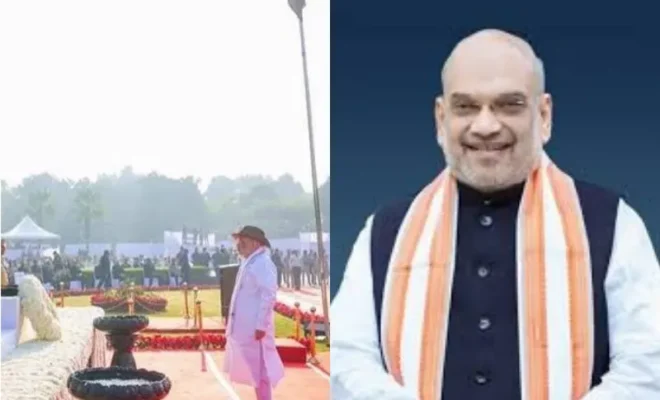
Home Minister of Union Government Amit Shah has put forth an aggressive objective to create a drug-free India by December 2029 by emphasizing the importance of better coordination among central government bodies, state governments, and law enforcement officials in dealing with the problem of drugs and narcotics trafficking.
This aggressive time frame reflects an added focus on undermining the drug supply chain, stopping the importation of narcotics through national boundaries, and protecting the youth from the dangers of drug abuse.
Strengthening the Fight Against Drug Trafficking
The geographical location of India, which has borders with many regions and maritime routes, brings about a number of problems for law enforcement in terms of combating the spread of narcotics. The routes are used by drug smugglers, and organised networks use modern communication technologies and financial channels for coordination of their operations.
To deal with the problem of drugs, the Indian government has an approach based on intelligence sharing, border monitoring, and cracking down on the financial networks of drug trafficking. Coordination among NCB, state police, customs service and other law enforcement agencies plays a crucial role in such an approach.
More emphasis on investigation and cooperation of law enforcement agencies will allow tracing major suppliers and preventing the transportation of illegal drugs.
cFocus on Youth and Addiction Prevention
This objective, which is to be drug free, also highlights the importance of prevention, awareness, and rehabilitation.
Substance abuse may impact a person’s physical and psychological well-being, studies, career and personal life in many ways, thus making treatment and community support essential in tackling such issues.
Schools and colleges, community organizations and health care agencies may play a role in raising awareness regarding the dangers associated with drug use and motivating individuals to seek help.
The availability of treatment facilities and rehabilitation centers for those who suffer from addiction is also very essential.
It has been emphasized by many experts in the field that simply enforcing laws will not resolve the problem of substance abuse.
Challenges Ahead
The drug-free India mission by December 2029 will entail consistent implementation, making progress and coordination among various government levels. There will be a need for addressing disparities in enforcement capabilities, provision of treatment and dealing with the new means used for trafficking.
The success of the program will be contingent upon reduced availability of drugs, disrupted trafficking and timely assistance to individuals struggling with addiction.
The set deadline of December 2029 will indicate an enhanced commitment to drug control on the national level. The achievement of the intended results will entail a balanced combination of efforts.
Student Protests, Green Innovation & India’s Strategic Partnerships
Why Are JPSC-JSSC Aspirants Protesting in Jharkhand?
Explore the students’ demands, the reported breakdown in talks and the reasons behind their march towards the Assembly.
How Is Chhattisgarh Inspiring Young Wildlife Conservationists?
Discover how the state’s wildlife awareness initiative aims to engage young people in protecting nature and biodiversity.
Can Better Battery Cooling Transform Electric Vehicles?
Find out how advanced thermal management technology is improving EV battery safety, driving range and overall performance.
What Does MAHASAGAR Mean for India-Sri Lanka Cooperation?
Explore the initiative’s proposed framework for strengthening maritime security, energy cooperation and regional partnerships.
Why Are India-Armenia Relations Gaining Strategic Importance?
Uncover how expanding trade, strategic transport corridors and Eurasian connectivity are shaping ties between the two countries.