
India–Sri Lanka MAHASAGAR Initiative Explained: New Maritime Security and Energy Cooperation Framework
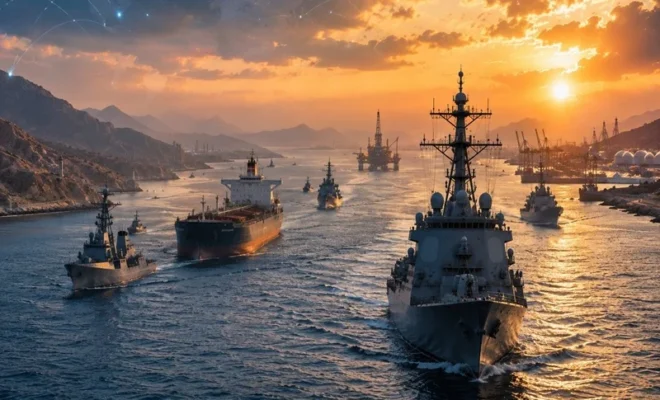
There is now a growing strategic partnership between India and Sri Lanka in the Indian Ocean region, with maritime security, energy security, and regional stability taking shape as key spheres of collaboration under India’s wider MAHASAGAR policy.
The acronym MAHASAGAR means Mutual and Holistic Advancement for Security and Growth Across Regions. This policy takes into account India’s previous SAGAR policy, and aims to expand India’s cooperation with its Indian Ocean partners on security, connectivity, economic resilience, and other regional concerns.
New developments indicate that India-Sri Lanka relations have evolved to move beyond mere diplomacy and economics. There has been an increasing intertwining of the two countries’ maritime exercises, navies, safe sea lanes, and energy collaboration.
What Is the MAHASAGAR Initiative?
MAHASAGAR is the larger vision of cooperation in the Indian Ocean and wider Indo-Pacific region by India. It places greater focus on security and development through alliances rather than solely depending on one’s own resources and capabilities.
This concept has become more relevant in recent times with increased importance of maritime routes in international trade, energy supply, and security. This is especially the case for India, wherein a large chunk of its trade and energy supply passes through maritime routes.
Thus, the emphasis under the MAHASAGAR concept is on improving relations with neighbouring as well as regional countries in order to collectively deal with maritime issues.
Recent actions taken by India show that the MAHASAGAR concept is gradually developing from merely a maritime security concept into a comprehensive concept.
Why Sri Lanka Is Central to the Strategy
The location of Sri Lanka is strategic in the Indian Ocean, being proximate to the international shipping routes linking the Middle East, Africa, and Asia with East and Southeast Asia.
Such a geographic position makes Sri Lanka a key partner of India in terms of securing the maritime routes and guaranteeing continuous supply of commodities and energy.
This partnership, thus, has gained a significant maritime component. The navies of India and Sri Lanka conduct joint exercises and cooperation programs with a view to enhancing operational cooperation.
The fourth edition of IN-SLN DIVEX 2026, conducted in Colombo in April, was one such exercise involving the participation of both Indian and Sri Lankan naval divers.
Maritime Security Gets a Bigger Role
It is one of the most concrete practical elements of the India-Sri Lanka MAHASAGAR partnership.
The two countries have increased their naval cooperation through joint military exercises and training, information sharing and professional contacts. This increases the capacity for both parties to address emergencies and security threats in the maritime environment.
The other example of such an exercise was India’s deployment of its Indian Ocean Squadron (IOS Sagar) in 2026. The deployment involved members from 16 nations in the Indian Ocean region, including Sri Lanka, that participated in navigation, maritime safety, firefighting, damage control, and Visit, Board, Search and Seizure operations training.
The deployment also included a port visit to Colombo where the Indian navy officers participated in activities with their Sri Lankan counterparts. The visit was considered by the Indian government to be an exercise in maritime cooperation and secure sea lanes in the Indian Ocean.
Why Energy Security Is Now Part of the Framework
Energy security has emerged as a key area of concern in India-Sri Lanka cooperation, as disruptions to maritime routes can have implications well beyond naval security issues.
Indians rely on maritime routes for their imports of crude oil and other forms of energy. With its geographical proximity to the shipping lanes, Sri Lanka can be considered significant for the security of such shipping lanes.
In this regard, the importance of this linkage was highlighted in March 2026, when Prime Minister Narendra Modi and Sri Lankan President Anura Kumara Dissanayake focused on disruptions that can affect global energy security and the need to keep the maritime lanes safe and open.
Both the heads of government also evaluated various steps taken for India-Sri Lanka cooperation in energy security and regional security, connecting them with India’s Neighbourhood First policy and MAHASAGAR vision.
Keeping Shipping Routes Open and Secure
In terms of both nations, security in the seas is essentially tied up with economic security.
Disruptions in vital shipping channels result in higher transport costs, fuel shortages, and increased price pressures. Protection of commercial shipping lanes becomes a common strategic concern due to this.
In the framework of MAHASAGAR, cooperation with Sri Lanka may thus contribute to better preparedness for maritime contingencies, better cooperation between naval forces and safer operating conditions for commercial shipping operations.
What matters here is not only military actions but also keeping the Indian Ocean open, predictable and safe for commercial operations.
More Maritime Security Stories
What happened during naval exercise?
Dive into the key maneuvers and strategic goals of the India-US naval drill in the Indian Ocean.
How serious is Red Sea?
Check out how India is protecting energy supplies as maritime threats continue to disrupt global shipping routes.
Could Hormuz disrupt global oil?
Find out how supply disruptions in the Strait of Hormuz could affect oil prices and worldwide energy demand.
Why does Bab el-Mandeb matter?
Uncover how the Houthi blockade threat could reshape global trade routes and maritime security calculations.
What are Navy commanders discussing?
See the major agenda items, strategic priorities, and security focus areas from the Indian Navy Commanders’ Conference 2026.
India’s “One Ocean, One Mission” Approach
IOS Sagar is an instance of the application of the MAHASAGAR vision by India in practice.
This involved the participation of naval officers from different Indian Ocean countries who were trained together and then conducted operations.
The programme signifies the concept that maritime security cannot be dealt with by one state alone. Cooperation and development of professional relationships can prove helpful in handling maritime crises.
The involvement of Sri Lanka holds particular significance due to its geographical location and maritime cooperation with India.
What Does This Mean for Sri Lanka?
Sri Lanka can use increased cooperation with India to further benefit from maritime security capabilities and training and support for the maintenance of safe sea lanes.
It is consistent with Sri Lanka’s strategy to continue building stable relations with major regional players while securing its own strategic interests.
India can benefit from enhanced cooperation with a neighboring country that is strategically positioned near major shipping lanes in the Indian Ocean.
Cooperation between the two countries can thus be mutually beneficial despite their own strategic interests and decision-making independence.
Beyond Defence: Economic and Infrastructure Cooperation
The India-Sri Lanka alliance is not just limited to security.
Discussions between the two countries now also cover topics like infrastructure projects, trade, economic collaboration and also the upgrading of the present Free Trade Agreement. A Social Security Agreement and rupee-based credit-line facility aimed at fostering economic and financial collaboration are among the other areas where the two countries are moving forward.
The reason why this economic collaboration is significant is the increasing perception of MAHASAGAR as a mechanism linking security and growth.
Security allows for trade, whereas strong economic ties provide an extra reason for keeping things stable.
Why the Indian Ocean is Becoming Crucial Now
The Indian Ocean has gained greater significance in terms of global trade and energy transport. This region sees the passage of major shipping lanes, linking big economies with the energy producing regions.
It is clear that any disruption will affect many other countries around the world.
Both India and Sri Lanka share a common interest in maintaining maritime stability, having an emergency response mechanism and safeguarding their commercial interests.
MAHASAGAR provides India with a new strategic vocabulary to do so in the Indian Ocean Region.
What Could Come Next?
There is little doubt that India and Sri Lanka would further cooperate in joint naval maneuvers, maritime domain awareness, energy security and infrastructure connectivity.
Recent events show that cooperation is becoming more and more multi-dimensional. There is no separation of maritime security, energy security, trade and economic resilience anymore.
This cooperation should be maintained in the way that it would remain inclusive and transparent and be in line with the strategic interests of both states.
Conclusion
The India–Sri Lanka MAHASAGAR Initiative should not be regarded as some specific agreement but rather as an element of broader strategy for improving security and growth in the Indian Ocean.
India perceives Sri Lanka as an important maritime neighbor and strategic partner. For Sri Lanka, cooperation with India means the possibilities of maritime cooperation, economic connectivity and energy security.
The increasing focus on the issues of maritime security and economic security can be seen in the conduct of joint naval maneuvers, multinational deployments and securing shipping routes as well as energy cooperation.
Given the evolving regional geopolitical and energy challenges, the MAHASAGAR Initiative allows India to build strategic relationships and maintain Indian Ocean as secure, open and economically resilient.