
EV Battery Technology Explained: How Advanced Thermal Management Is Improving Range, Safety and Performance
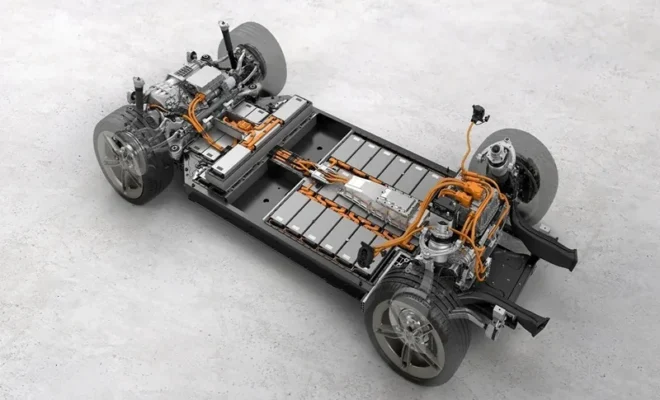
An EV battery is more than just a storage device because it forms the center of any electric car. Its temperature affects its efficiency in charging, its range, the amount of power that the electric motor gets, and the safety of the system as well.
This is where EV battery thermal management comes into play. Contemporary electric cars feature advanced cooling and heating mechanisms to ensure that the battery cells are maintained at their optimal working temperature range. This prevents the battery from overheating while the car is being charged quickly and driven aggressively, and from being too cold during the winter months.
As more electric cars appear on the market and the charging becomes faster, the battery packs increase in size, and the electric motors improve in performance, thermal management becomes one of the key technologies that define the performance of an electric vehicle.
What Is EV Battery Thermal Management?
The EV battery thermal management system is the one which is used to control the temperature of the battery pack inside the car.
The lithium-ion batteries are prone to heat during their charge/discharge cycles. The acceleration, fast driving, high charging rate and high temperatures can result in overheating of the battery. In such situations, the battery starts degrading quickly and its efficiency drops significantly.
On the other hand, in very cold temperatures, the battery will not be able to discharge properly and it will have poor charging performance.
The thermal management system is aimed at keeping the battery at certain operating temperatures. It may include liquid cooling, refrigerant cooling, heating, heat pump and others.
Why Battery Temperature Matters So Much
It is important to note that battery chemistry is very temperature-sensitive. When the battery is operating outside its comfortable temperature zone, its efficiency and charge/discharge capabilities will be affected.
In cases where the battery gets overheated, it can be possible that the car will limit the amount of energy going into and out of it, to protect it from any potential damage. This explains why EVs that have performed well at the start of a long drive may later show low efficiency during driving or charging.
On the other hand, cold batteries can be hard to charge effectively, especially when they require high charging currents. That is why some EVs use the battery pre-conditioning function prior to the fast charging process.
How Liquid Cooling Keeps EV Batteries Stable
With recent advancements in EV technology, the need to use a liquid cooling method in many EVs has grown because of the need for an adequate cooling system when using high energy density batteries and fast charging systems.
In this case, there is the flow of the liquid cooling agent in and out of the battery. This liquid draws in the heat from the battery and flows out of it to the cooling element in order for the heat to be dissipated.
It occurs continuously and is controlled by sensors. The benefit of such a cooling system is that it allows for more precise temperature regulation of a large battery pack.
Battery Preconditioning and Faster Charging
Before reaching a fast-charging station, the EV can take advantage of its navigation capabilities and software to prepare the battery for the process of charging. The EV system will warm up the battery if it is cold. In addition, the system will cool down the battery if required.
The result is that the battery will reach the proper temperature before charging.
As a consequence, the performance of DC fast charging may be improved, especially in cold weather or after intensive usage.
Such technology may be valuable for EV owners since the charging time depends not only on the maximum power of the charger but also on the battery temperature and its level of charge.
How Thermal Management Improves Driving Range
The range is influenced by many factors such as driving style, car’s weight, aerodynamics, terrain, weather, and the efficiency of the battery.
Another significant factor is temperature control.
In case the battery runs efficiently, there is less loss of energy due to extra heating. As a result, there is an increased ability of the vehicle to utilize the existing energy efficiently.
Temperature control also allows limiting any performance limits caused by excess heat. In contrast to the situation where the battery overheats and the vehicle has to lower the power, the heating is controlled and more stable operating conditions are maintained.
It does not mean that the temperature control will increase the battery’s capacity magically. It allows the vehicle to make a better use of the battery’s capacity.
The Safety Advantage
Ensuring safety is probably the topmost reason why companies spend a lot of money on battery thermal management systems.
Lithium-ion batteries produce heat while operating, and if this heat is not managed properly, it may pose risks. Modern electric vehicles come equipped with sensors that monitor battery temperatures, software for managing batteries, cooling, and other mechanisms to manage battery temperature.
When the system notices that the battery produces too much heat, it may decrease the level of its charging and activate cooling mechanisms.
Moreover, battery packs have many layers of protection, which means that thermal management is only one of the safety components.
The aim of this process is to avoid overheating of any cells or parts of the battery.
Preventing Battery Degradation
The issue of battery longevity is yet another field where temperature management plays an important part.
Repetitive heating can speed up the rate of chemical breakdown in the lithium-ion batteries. In the long run, it may lead to decreased battery capacity.
Thus, proper temperature regulation can help preserve the battery throughout its operational lifetime.
In turn, it is very relevant for large EV batteries that are meant to work for many years. Adequate thermal management can enable manufacturers to balance performance at the moment with the longevity of the battery in the future.
Thermal Management and Its Importance in India
India can be considered a special case for EV batteries due to its varied climate.
Increased summer temperatures can put extra strain on the battery especially when a car is left out in the open or driven in heavy traffic or fast-charged.
On the other hand, different parts of the country have very low temperatures in winter.
Thus, thermal management is not only an advanced feature but something that can affect the daily operation of the battery in India.
It is especially relevant when fast-charging stations become widespread.
The Role of Software in Battery Cooling
Thermal management in today’s automobiles is not governed only by cooling parts. The software component holds equal importance.
The battery management system constantly tracks factors like temperature of the cell, charging status, current, and state of the battery. Based on this information, it modifies the cooling, heating, charging level, and vehicle performance accordingly.
Thus, it becomes a dynamic system and not an off-and-on cooling system.
Use of artificial intelligence and software prediction could make this process more efficient in the future.
More Stories Worth Your Click
Why are Indian cities choking?
Find the hidden causes behind worsening air pollution and the solutions experts say could improve urban air quality.
Could an app stop rides?
Uncover why a Chinese-linked app raised security concerns and why authorities moved to remove it from e-rickshaws.
Is Tata Curvv EV worth waiting?
Check out the expected price, driving range, battery details, and new feature upgrades ahead of the official launch.
Which electric scooter should you buy?
Browse the TVS Orbiter and Hero Vida VX2 Plus comparison to see which offers better value, features, and performance.
Should you pre-book Kia Syros EV?
Look into the price, range, battery options, features, and buyback offer before deciding whether to reserve Kia’s upcoming electric SUV.
Thermal Management Is Becoming an EV Differentiator
As EVs mature, battery specifications and range figures no longer paint a complete picture.
Similarly-sized batteries could create vastly different user experiences depending on their thermal management.
One car could be better at keeping its charging rate steady, while another may see a significant drop in performance after multiple instances of heavy loads.
This way, the ability to manage temperature becomes an increasingly critical metric for evaluating an EV, especially when one often drives long distances or uses fast chargers.
Conclusion
Modern electric vehicle battery thermal management is a technology that is becoming more central to electric vehicle engineering.
By regulating battery temperature in case of charging, driving and in the case of adverse weather conditions, it increases charging efficiency, performance and ensures safety.
With the advancements being made in the field of charging speeds, power outputs and driving ranges, the role of thermal management will become even more significant in the future.
Instead of the amount of energy an EV battery can store, it will depend on its ability to control it intelligently.
While the larger battery would help achieve greater ranges, smart temperature management will allow the electric vehicle to utilize it more effectively.