
The Silent Health Crisis in Our Classrooms: Why the AIIMS Study on Adolescent Health Must Be a Wake-Up Call
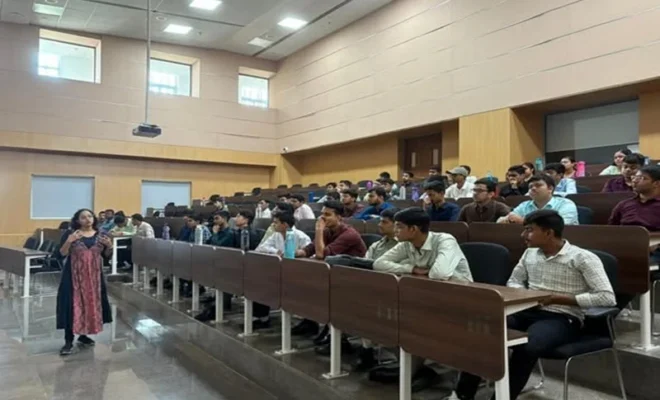
India’s classrooms can be described in terms of scores, examinations, attendance, and academic achievements. However, there is an even more important side of these classrooms that does not receive due attention – the health status of the adolescents studying there.
The latest studies including researchers from AIIMS emphasize that the importance of adolescent health can hardly be overestimated. The studies by researchers from AIIMS Bhubaneswar focused on the issues of obesity and mental problems in Bhubaneswar schools, whereas the current school-based project led by AIIMS researchers investigates cardiometabolic health and lipid disorders in adolescents.
However, these are not some minor challenges. The number of adolescents in India is estimated at about 243 million adolescents according to a study by researchers from ICMR and AIIMS Jodhpur in 2026. The main problems related to the health of adolescents include nutrition, mental problems, sexual and reproductive health, and non-communicable diseases.
In other words, it is impossible to speak of proper education when the health conditions of students remain ignored.
What the AIIMS Research Is Telling Us
The 2026 study conducted by AIIMS Bhubaneswar focused on determining the prevalence of obesity and mental health conditions among school-going adolescents, along with an understanding of how parents and teachers view these problems.
This combination is especially significant.
Health problems in adolescence do not happen in isolation but rather within the environment in which the youth spends most of his or her time. It is in school that children study, interact socially, compete and face pressures, which can continue into adulthood.
Given that there are already signs of obesity, mental health conditions and other health risks among school-going adolescents, the action plan needs to commence even before these children end up at a hospital.
The Classroom Is Also a Health Environment
Schools are considered institutions that have the responsibility for education, and hospitals are considered institutions that have the responsibility for health. This separation between institutions becomes increasingly hard to argue.
The concentration of students is affected by factors such as malnutrition, lack of sleep, emotional issues or illnesses. The same way, a sedentary lifestyle, poor eating habits and increased screen time affect health issues in the long run.
AIIMS’s own research shows us this holistic view. It engages in research on adolescent health, mental health, substance use, anemia, chronic disease and intervention programs at school.
This does not mean that schools turn into hospitals. On the contrary, schools could be an essential starting point to detect problems.
Mental Health Cannot Remain the Invisible Subject
One of the major issues is the mental health of students.
While physical issues are easier to diagnose. For instance, a child suffering from weak eyesight will have problems reading the blackboard. A physically injured child will instantly catch everyone’s attention. Mental issues might be much more difficult to see.
For instance, a student struggling with his anxiety, stress or any other problems, might be simply labeled as a distraction, difficult or not so bright individual.
This is where the education system needs to reconsider its attitude.
Our researchers at AIIMS have previously studied the issue of mental health promotion for school and college students. We have conducted researches on the feasibility and effectiveness of using lay health counselors and mid-level health care professionals.
This is why we believe that the question here should not be whether the schools should speak about mental health issues. This is about how.
Obesity Is Not Just About Weight
There needs to be more nuance in the discourse on obesity among adolescents.
A child’s weight should never be a justification for shaming, bullying, or stereotyping of their way of living. Obesity is a product of many factors such as diet, exercise, family background, environment and health behavior patterns.
The importance of the study conducted by the AIIMS Bhubaneswar lies in the fact that obesity and mental health problems were studied together, and not separately.
This is important.
Health programs in schools should focus on nutrition and exercise, and not cause embarrassment because of the weight of the children. It is about making children healthier and not necessarily thinner.
The Hidden Risk of Non-Communicable Diseases
One of the most critical paradigm shifts relates to the onset of adult diseases which can manifest early.
For example, the 2026 AIIMS research program SHIELD-A aims to create and evaluate a school-based lifestyle intervention for prevention and management of dyslipidemia in school-going adolescents.
This is relevant since prevention cannot realistically be attempted once the individual has developed hypertension, diabetes, or cardiovascular disease as an adult.
Good lifestyle habits formed during adolescent years will affect an individual’s health course for several decades.
This is what makes the classroom setting critical from the perspective of preventive medicine.
Knowledge Alone Is Not Enough
The country already has youth health programs and health care models.
A 2026 study that included researchers from ICMR and AIIMS Jodhpur studied the discrepancy between the health policies designed for adolescents and their actual implementation in India’s primary public health centers. The researchers found a number of problems associated with translating health policies into effective action.
That is the key learning here.
India does not necessarily require a new health message to its adolescents to ‘eat right, do some exercises and be happy’. What young people need are systems that will enable them to choose healthy lifestyles and receive quality health care.
A student cannot receive any benefits from the early screening when no screening actually takes place. There is little use in referring a young person to the psychologist, if he or she is unable to access the professional help.
What Schools Can Actually Do
This solution would be to place an additional huge burden on the teacher.
Rather than this, schools could engage in collaboration with the available public health initiatives and medical practitioners. Age-appropriate screening, mental health awareness, healthy eating, physical activity, and referral processes could become part of the strategy.
Teachers should be able to identify possible warning signs without making diagnosis of medical conditions part of their responsibility.
Parental involvement is equally crucial. Discussions regarding the health of adolescents should cover not only grades and career paths, but also the aspects of sleep, proper eating, physical activity, emotional well-being, and responsible use of technology.
The Real Wake-Up Call
The key takeaway from this emerging AIIMS study is not that adolescents in India have become unhealthy overnight but that their health is as serious a topic as their academics.
If India wants to develop a healthy workforce for tomorrow, then she has no choice but to pay attention to the health needs of adolescents in today’s world.
India has made many efforts through programs for adolescent health, school health programs, and public health infrastructure, but the task ahead is to make sure that all this effort becomes effective for adolescents.
This can happen by bringing prevention to classrooms, making mental health visible, recognizing physical health problems early on and following up after screening.
Conclusion
But the classroom isn’t just four walls and some desks. It’s the place where millions of Indian children pass some of the most critical years of their lives.
This particular piece of AIIMS-backed research, therefore, has to be seen not as yet another piece of research finding, but as an occasion to rethink what we understand by ‘student success’.
A child who does well in studies but who suffers from health issues is incomplete in his happiness. A teenager suffering from some health issue, unknown to anyone around him or her, cannot be expected to excel forever.
Since education aims to prepare a child for life, then taking care of the health of that child becomes an integral part of the education process.
And the AIIMS research helps us begin the discussion. The real shocker would be if we didn’t.
AIIMS Updates You Should Know Today
How Is AIIMS Making OPD Booking Easier?
Check out how WhatsApp and ABHA simplify instant OPD bookings.
When Was AIIMS Nursing Result Released?
Find the latest details on the AIIMS BSc Nursing result.
Why Is Malappuram AIIMS Land Proposal Debated?
Uncover why the proposed temple land allocation has sparked debate.
What Makes AIIMS Bilaspur A Green Hospital?
Browse the features behind AIIMS Bilaspur’s green hospital initiative.
What Did AIIMS Chief Warn About?
See what the AIIMS chief said about preparing for future events.