
“Wed in India” vs Domestic Spending Mandates: Should the Government Shape Where Indians Spend?
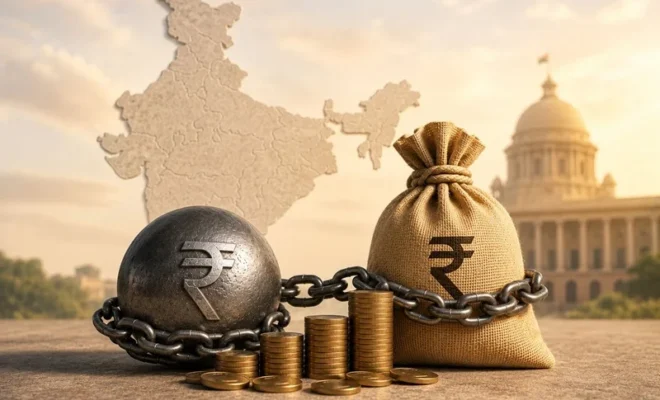
India’s attempt at making weddings more Indian is about to run head-on into an issue of much greater magnitude: How much influence should any government have on the private consumer choices of its citizens?
The economic rationale behind the “Wed in India” movement is very clear. India has an extensive wedding industry, millions of weddings happen each year, and a sizable part of the money being spent goes out of the country towards places and companies outside India. Even a small part of that money spent back within India could bring considerable economic advantage.
However, there is a limit beyond which the government officials should not go.
Policymakers have every right to encourage citizens to consume locally and patriotically. But they cannot force people to do so.
The reason is that economic patriotism becomes most effective when it develops preferences rather than imposes them.
“Wed in India” Has a Powerful Economic Case
India’s wedding economy is much larger than simply the ceremony. Hospitality, transport, jewelry, apparel, food, entertainment, photographers, event managers, tourism, and many other small businesses could be included in a wedding.
An internationally planned destination wedding, then, would result in quite a bit of economic potential being exported. While the hotel room is abroad, so can be the costs associated with the catering, transport, venues, entertainment, and tourism.
The concept of the “Wed in India” campaign seeks to bring this potential home.
India certainly has no lack of destinations that can host weddings in competition with international ones. Rajasthan, Goa, Kerala, Uttarakhand, Kashmir, Tamil Nadu, and many others have unique venues and scenery. An improved domestic wedding tourism industry will create opportunities not just for luxury hotel chains, but also for artisans, transport companies, florists, chefs, designers, and local hotel businesses.
This is the most compelling reason for the campaign.
By making Indian destinations more appealing, accessible, and competitive, policymakers can encourage consumers to make a choice of their own. This will create economic value without interfering with anyone’s freedom.
The Problem Begins When Encouragement Becomes a Mandate
The difficult argument comes into play when the domestic consumption is made an obligation through policy rather than an economic choice.
There is a fundamental distinction between “opt for India as India provides more value and experience” and “you must spend your money on India because the government thinks you must”.
The first is what the market competition would dictate. The second starts to infringe on consumer freedom of choice.
The consumers don’t make their choices purely out of patriotism. Price, quality, accessibility, experience, climate, connectivity, standards of services and individual preference – all matter. The families choosing Dubai, Bali, Thailand or Europe for a wedding may have motives other than a protest against Indian enterprises.
If the Indian destination wedding is pricier, less accessible or incapable of providing the required experience, the mere order to the consumers to opt for it will not help solve the issue.
It might only breed discontentment.
The Free Market Has an Important Message for Policymakers
This is how markets work: If the companies in India are able to give the customers what they need for a reasonable price, the customers would buy from them.
However, it is also true that markets are not always perfectly competitive; infrastructure issues, taxes, regulation problems, logistics difficulties and poor quality of services may hinder the competitiveness of Indian destinations.
Nevertheless, this is where policies can make a real difference.
Rather than dictating to consumers where they have to spend their money, the governments can investigate why the customers choose foreign destinations.
Why do the consumers prefer foreign destinations? Is it because of the better connectivity? Of the more reliable hospitality services? Of easier visa-free traveling? Of the better event infrastructure? Or of more competitive packages?
Make India the Obvious Choice, Not the Obligatory Choice
The best form of “Wed in India” will then have to rely on competitiveness.
Imagine a wedding destination in India that combines all the qualities of international standards in hotel facilities, airport access, roads, event facilities, and quality hospitality with the cultural strengths of India. Imagine simplified rules for large gatherings, fair taxation, dependable utilities, and effective destination management.
In such a market, the government would have no need to tell anyone where to get married.
They would get married in India because it pays off financially.
This is a much more effective form of economic nationalism.
The logic applies elsewhere too. India has recently been making efforts to promote Indian products, domestic tourism and Indian business firms. These are positive steps when they help to increase awareness of Indian business and provide a nudge to look at options that might be overlooked.
But there still needs to be a reason.
Consumer Choice Is Not the Enemy of National Interest
There is often an assumption that money being spent abroad means that there is no economic patriotism shown.
This is too simplistic a view.
Consumers from India buying products abroad are also taking part in the global economy system. They are making use of their economic power, traveling, and learning about new markets and sometimes taking ideas back home.
An open economy system needs its consumers to have the freedom to choose.
If every individual’s spending is judged based on the criteria of fulfilling a national economic interest or not, the difference between the market and directed economies starts to diminish.
The government does have its reasons to control some behavior by imposing taxation, incentives, and regulations. However, the private spending must be assumed to be free until proven otherwise.
The aim, in this case, should be to alter the economics behind the decision rather than the decision itself.
Incentives Can Work Better Than Restrictions
To promote weddings taking place in India, there are many options available to promote the industry without restricting the freedom of the consumers.
There can be specific promotion of destination-wedding related infrastructure. The heritage sites can be used in the tourist packages. There can be investments in the airports and roadways catering to destination-wedding destinations. The states can reduce permissions and streamline procedures for organizing big celebrations.
The Indian hotels can be motivated to offer competitive wedding packages. The local artisans and businesses can be integrated in the destination-wedding supply chain.
These actions will make a sound economic business case.
Instead of saying, “Do not spend outside India,” the policymakers can effectively communicate, “This is what India can offer to you.”
This is the distinction between persuasion and force.
The Bigger Opportunity Is Tourism, Not Just Weddings
However, there may be a risk in taking a myopic approach towards “Wed in India.”
A destination wedding is fundamentally just tourism, only that with a significantly higher expenditure base. A wedding can have many guests traveling to the city or state in question for several days. The spending of these guests will go towards their accommodation, feeding, travel costs, etc.
Thus, the real challenge is to establish India as a destination for celebrations.
If families start to come to India for weddings from abroad, the impact becomes even more significant. India can actually compete for the global destination wedding business instead of just stopping Indians from traveling abroad.
This changes the entire campaign from being economic nationalism to being an export initiative.
India Should Compete, Not Command
The central lesson is straightforward.
If policymakers believe billions of rupees can be retained within India by encouraging domestic weddings, the answer is not necessarily to restrict where Indians spend their money. The answer is to make Indian destinations so attractive that consumers voluntarily choose them.
India already possesses the cultural capital. It has heritage palaces, beaches, mountains, cuisine, craftsmanship, festivals and extraordinary diversity.
What it needs is an ecosystem that turns those advantages into a globally competitive product.
That requires investment, not mandates.
The Real Meaning of “Wed in India”
“Wed in India” can become a powerful economic idea if it is understood as an invitation rather than an instruction.
The government can create the infrastructure. Businesses can improve the experience. Tourism bodies can market destinations. Hotels can compete on price and quality. Local enterprises can participate in the value chain.
But the final decision should remain with the consumer.
A successful market does not need to force people to buy something. It makes them want to buy it.
That should be the ultimate test for “Wed in India.”
If India can make staying home more attractive than going abroad, it will not need to tell Indians where to spend their money. They will choose India themselves.
Stay Informed: Five Stories You Shouldn’t Miss
How Will EPFO 3.0 Change Withdrawals?
Check out the latest PF withdrawal updates, UPI ATM access, and auto-settlement changes.
Can Apple Pass Its Biggest Leadership Test?
Find out how Apple is navigating its biggest leadership challenge since Steve Jobs.
Why Did US Sanction Four Indian Firms?
Uncover the reasons behind the US sanctions and the new maritime compliance pressures.
How Could Hormuz Crisis Raise India’s Costs?
Track down how the Gulf conflict and Strait of Hormuz standoff could impact crude prices and India’s imports.
What Basmati Rules Could Japan Talks Bring?
Look into the proposed basmati rice export mandates ahead of India-Japan trade negotiations.