Apple Enters Its Biggest Leadership Test Since Steve Jobs
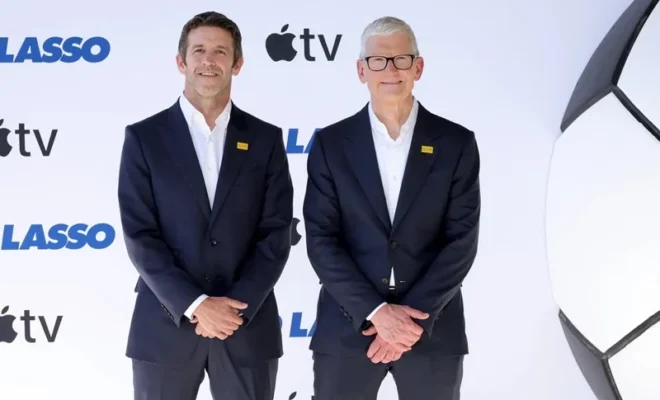
Tim Cook managed to achieve what most people believed was not achievable – he succeeded Jobs at Apple and made Apple an even greater and more lucrative global business for 15 years. Now, with Cook stepping down from his position as CEO on September 1, 2026, Apple is heading into yet another crucial time.
While Cook will stay on as executive chairman, John Ternus, Apple’s former senior vice president of Hardware Engineering, will become CEO of Apple. And this makes the current transition somewhat unique. Apple does not lose Cook, but the leader who is responsible for daily operations changes during a time when the company has issues that cannot be resolved through iPhone sales.
Thus, the Apple After Tim Cook story is no longer about whether Ternus will be able to maintain Cook’s legacy. It is about whether Ternus can take Apple to its next technological age without breaking the amazing machine created by Cook.
- Apple Has to Finally Prove It Can Win the AI Race
The toughest problem that John Ternus will have to solve is artificial intelligence.
Apple has come quite late and much more cautiously to the age of AI compared to its rivals like Google or Microsoft-sponsored AI companies. The company’s response has been Apple Intelligence, but the expectation from AI-powered Siri and other features that use AI are very high. There has been recent news suggesting that Apple is dependent on its third-party partners in order to boost its AI capacity.
It presents an even tougher situation for Ternus to balance.
Apple can neither copy any of the ChatGPT or Gemini. Its USP lies in the fact that Apple has always done well with the combination of hardware, software, silicon, and services. Apple therefore has to make sure that its AI is useful within the Apple ecosystem and not become another AI chatbot.
It becomes especially important when it comes to Siri. If Apple fails to make Siri smart, interactive, and better, there is a risk of people feeling that Apple is lagging technologically.
The pressure on Ternus from AI is thus beyond just rolling out new features.
- What Comes After the iPhone?
The second issue is even more significant: Apple needs the next big product story.
While the iPhone continues to be at the heart of the company and its ecosystem, relying on the one and only product for eternity becomes less and less feasible. Under Cook, Apple has succeeded in creating new product lines like the Apple Watch and AirPods, with Services becoming an important source of recurring revenue. Apple claims that its installed base of active devices has already exceeded 2.5 billion.
However, the company hasn’t developed any other product line to substitute the iPhone as the main driving force behind its growth.
Vision Pro exemplified the ambitious nature of Apple and at the same time highlighted the challenges faced when developing a new product category. The device attracted tremendous attention but failed to become the mass-market follow-up of the iPhone.
Now the attention comes back to the area of hardware innovation, with foldable devices and other product categories being discussed in relation to the future Apple roadmap. This could be an advantage of Ternus, who has worked with many important Apple products and is considered a product builder above all else.
But consumers will end up asking one simple question: What is the next thing that Apple can make us want?
- China Is Still Too Important to Ignore
One of the most complex issues that may arise for Apple in the post-Cook era can be its relationship with China.
China has importance for Apple from two totally different perspectives. On the one hand, it is a major consumer market; on the other hand, it is part of Apple’s international manufacturing and supply chain.
Apple is already trying to diversify manufacturing operations to India, however, decreasing reliance on China is not an easy process. Moreover, Chinese smartphone manufacturers are already competing actively in the domestic market.
According to the filing of Apple in 2025, sales in Greater China fell by 4% year over year to $64.4 billion.
Geopolitical situation complicates the matter further. US-China relations, trade policies, tariffs, export controls, and regulations can affect Apple’s cost and manufacturing processes.
Cook had to deal with these relationships for several years. Ternus will have to face the complexity of this matter now.
Ternus will have to diversify Apple’s supply chain without making its products more expensive and increasing costs.
- Can Apple Still Create “Surprise”?
This could be the toughest measurement to have, but possibly the most significant one culturally.
Cook transformed Apple into a company with extraordinary efficiency and financial power. Its market value has increased from about $350 billion at the time Cook took over as CEO to around $4 trillion. Revenue has also expanded significantly, while the Services business became worth more than $100 billion annually.
But success has its own challenges too.
The company can become too big for experimenting, every significant step would come with huge financial ramifications. Shareholders are always looking for growth and innovations, and Apple already makes billions of dollars annually from its existing offerings.
It can cause conservatism in innovation and experimentation.
That’s why Ternus will face a unique challenge: to maintain the discipline at Apple while re-establishing an element of unpredictability.
It is not the matter of whether Apple can create a faster iPhone, as it obviously can.
It is whether it can make people curious about the upcoming product.
- Apple Must Balance Growth With Regulation and Privacy
The fifth challenge is becoming increasingly inevitable: regulation.
Given the influence of Apple’s ecosystem, governments all over the world are looking into how the company manages its App Store, payment methods, platforms, and other digital services.
In turn, the key advantage of Apple is the company’s emphasis on privacy and control of its ecosystem, making the regulatory environment a difficult one to navigate.
As noted by the company in its regulatory disclosure, there are considerable risks relating to antitrust, competition, privacy, data security, and technology regulations in various markets.
Thus, Ternus will have to navigate the fine line between openness and tight integration of the ecosystem of Apple’s products that regulators require.
Moreover, AI will present new questions about data, privacy, intellectual property, and user consent.
The Real Test for John Ternus
John Ternus has taken the helm of Apple in an interesting period.
First of all, he is not going to inherit an inefficient company. On the contrary, Apple remains one of the largest and most valuable and profitable technology firms in the world with a large base of customers, a strong service business, and a tightly integrated ecosystem of hardware.
However, this strength may create additional difficulties on the way ahead.
The greatest success of Cook’s era was that of creating an extremely efficient global company. Now Ternus has to prove that Apple can remain efficient while becoming more adventurous.
AI will test the company’s ambitions in software. Products will test its innovations. China will test its geopolitical strategy. Regulation will test its ecosystem model. And the iPhone will continue testing the company’s greatest success for the opportunity to become a growth engine.
Conclusion
The Apple after Tim Cook era is unlikely to be defined simply by a change in CEO. It represents a transition from an era of operational excellence toward a period where technological reinvention may matter even more.
Tim Cook leaves behind an extraordinary financial and operational legacy, and Apple has confirmed that he will remain as executive chairman.
John Ternus now has to build on that foundation without becoming trapped by it.
The next Apple may need to be more aggressive in AI, more imaginative in hardware, more flexible in its supply chain and more comfortable taking risks.
That is the real test.
Cook proved Apple could become bigger. Ternus now has to prove it can become new again.
Stay ahead with the latest Apple launches, iPhones, and AI updates.
Could Apple Pay Transform India Payments?
Check out how Apple Pay’s India rollout could bring contactless payments and UPI support.
When Will iPhone 18 Pro Arrive?
Find the expected launch timeline, standout features, and major upgrades coming to the iPhone 18 Pro.
Is India Becoming Apple’s Next Hub?
Uncover Apple’s plans for iPhone 12 assembly in India as it moves away from China-based production.
What Will iOS 27 Bring?
Dive into expected Siri AI improvements, new iOS 27 features, and compatible iPhone models.
How Will Siri AI Change iPhones?
Reveal what Apple’s Siri AI overhaul could mean for the next generation of iPhone experiences.