
NASA’s Voyager 1 Probe Reaches Historic ‘Light-Day’ Distance Milestone from Earth
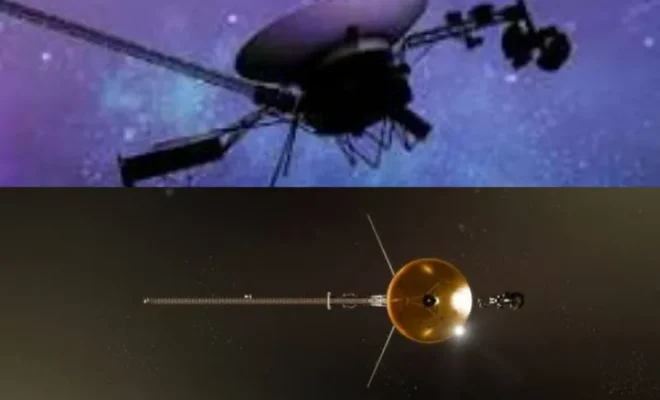
It is important to note that the historic Voyager 1 spacecraft has managed to reach a historic milestone of traveling one light-day away from Earth, becoming the first man-made item to travel such a long distance in space. The spacecraft was launched about half a century ago and managed to reach the new milestone on November 18, 2026, at 5:16 a.m. EST, having traveled almost 16.1 billion miles (25.9 billion kilometers) away from Earth.
This event is yet another milestone in space exploration, showcasing the impressive durability of NASA’s longest-running interstellar spacecraft.
What Does the One Light-Day Milestone Mean?
A light-day is defined as the distance traveled by light in space in one day. Since light travels at an average speed of 299,000 km/second, a light-day will be equal to about 25.9 billion kilometres.
It is at this distance that the communication process with Voyager 1 becomes complicated. Sending a message from earth will take approximately 24 hours for the message to reach Voyager 1. Similarly, a reply from Voyager 1 will also take 24 hours.
This implies that NASA engineers have to wait for almost two days before sending out a command or getting a reply from the probe.
Voyager 1’s 49-Year Journey Through Space
Voyager 1 was sent into space by NASA on September 5, 1977, to explore the outer planets of the solar system. In the beginning of the mission, Voyager 1 flew past the planets Jupiter in 1979 and Saturn in 1980 collecting data about their atmosphere, moons, and magnetosphere.
In August 2012, Voyager 1 became the first spacecraft made by humans that left the solar system entering the interstellar space beyond the heliopause.
After that, the spacecraft continued traveling in interstellar space and transmitting scientific data back to Earth. The twin Voyager 2 spacecraft entered interstellar space in November 2018.
NASA Faces Communication Challenges With Voyager 1
Although Voyager 1 has reached the milestone of distance, it is facing some technical problems recently. According to the news of NASA on November 18, the spacecraft has stopped sending science and engineering data; however, its carrier signal has still been picked up.
It is likely that the problem is caused by the onboard computer of the spacecraft which helps collect and format scientific data.
What Lies Ahead for NASA’s Voyager Mission?
One of the most famous probes in history is Voyager 1, which has a golden record that comprises a number of sounds, visuals, and greetings reflecting life on Earth. The probe functions using very little power, with scientists trying to prolong its mission.
In terms of achievements, Voyager 1 reaching one light day makes space exploration possible. In fact, after more than four decades, NASA‘s Voyager 1 still remains the most distant man-made object from Earth.
Education, Handloom Innovation, Space Exploration, Naval Security & Research
What Does IIM Kozhikode’s Bloomberg Finance Lab Offer Students?
Explore the lab’s advanced financial tools, discover its learning benefits, and understand how students can gain practical exposure to global financial markets.
How Will the Textiles Ministry Boost GI-Tagged Handloom Products?
Discover the proposed innovation initiatives, explore opportunities for traditional artisans, and understand how the plan could strengthen India’s GI-tagged handloom industry.
What Did the SpaceX Falcon 9 Lunar Crash Site Reveal?
Explore the latest findings from the lunar impact site, understand what researchers discovered about the Moon’s surface, and discover why the findings matter for space science.
How Does Operation Sankalp Strengthen Security in the Arabian Sea?
Discover the Indian Navy’s maritime security operations, explore its role in protecting shipping routes, and understand how the mission helps maintain safety across strategic waters.
Why Must Private Industry Lead India’s Next R&D Revolution?
Explore the challenges facing India’s research and development ecosystem, understand the need for greater private investment, and discover how industry-led innovation could accelerate technological progress.